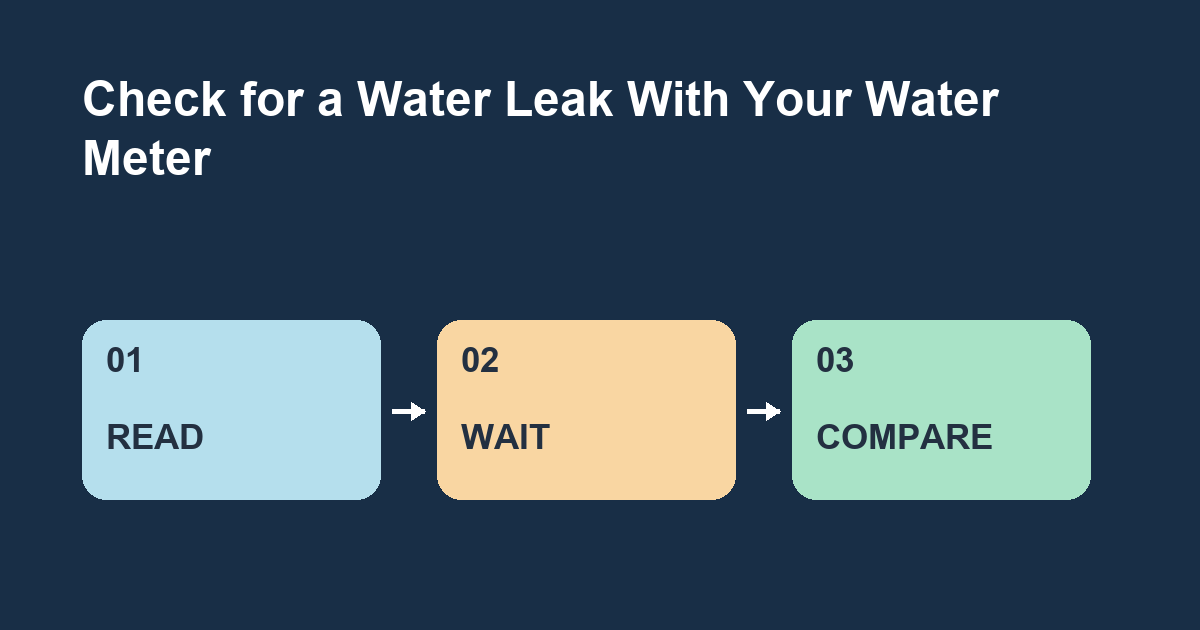
Record the water meter reading, avoid water use for two hours, and read it again. A change indicates water flowed during that time. Account for automatic water use before attributing it to a leak.
Pick a quiet window
Tell everyone when the test starts so nobody flushes a toilet, runs laundry, or uses a tap. Consider scheduled irrigation, an ice maker, and a water softener. Ask building management whether a shared meter can isolate your unit. Follow your utility's directions for reading an accessible meter and leave sealed or unsafe access covers to the utility.
Compare the same digits
Photograph or write down the reading and time. Use the same units at the end. If the display moves from 1542.0 gallons to 1542.6, the difference is 0.6 gallons. A dishwasher started during the window could account for a change, so repeat the test in a quieter window if necessary.
Follow up on an unexplained change
Look for a toilet refilling between flushes or an obvious dripping tap. Share both readings and the time window with the utility, building manager, or plumber. A steady reading describes the test period and may miss a slow or intermittent leak.
Plan a test
Which device could draw water in your home without anyone opening a tap? Write it down before choosing the test window.
Make a reading log
Give each test a start time, an end time, the two readings, and a note about possible water use. Suppose you test from 2 to 4 p.m. and see a change, but remember that someone watered the balcony halfway through. Mark that trial as interrupted. A clean repeat the following day gives you something better to compare than a single number with an unknown cause.
Know what the display can show
The last digit matters. If the meter shows only whole gallons, a small change may fall below what you can read in a short test. Keep the same units throughout, and use your utility's instructions if the display alternates between screens. Compare the cumulative reading at the start with the cumulative reading at the end. Copy any decimal places that are visible.
Leave a useful record
If the meter changes again in a quiet window, write down what you checked and what you could hear or see. A toilet that refills after everyone has gone to bed is a more specific clue than a general impression that the bill went up. Bring that record when you contact the person responsible for the plumbing.