Crack recipe eggs one at a time into a separate bowl
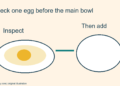
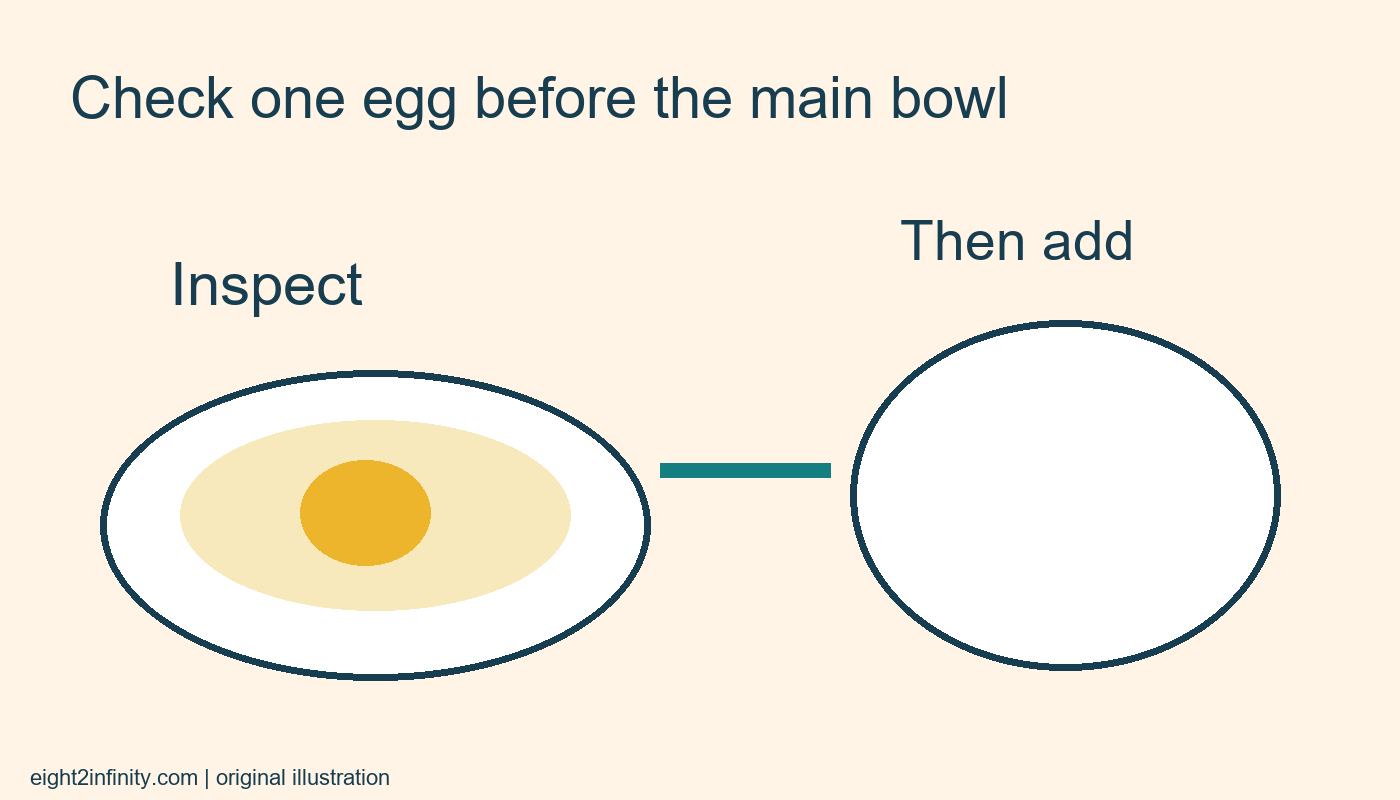
Crack each recipe egg into a small separate bowl, inspect it for shell fragments, and then transfer it to the main mixture when the recipe calls for it. Empty the small bowl before cracking the next egg. This makes an accidental shell fragment easier to find and helps you keep track of additions. It is a preparation habit, not a way to establish that a raw egg is safe to eat.
The method is useful when a recipe asks for several whole eggs. It gives you a checkpoint between opening each shell and adding its contents to a larger bowl. King Arthur Baking includes this separate-bowl approach in its baking guidance and in specific recipes. The routine below adds an original counting and workspace method without changing the quantities or mixing sequence of your chosen recipe.
Read what the recipe actually asks for
Check whether the recipe calls for whole eggs, yolks, whites, or beaten egg measured by weight. Those are different preparation tasks. This article focuses on whole eggs added individually. If your recipe requires separating whites and yolks, follow a suitable separation method instead of assuming that the whole-egg routine covers that additional step. Also check the specified egg size when one is given.
Read the addition instruction before cracking anything. Some recipes ask you to beat several eggs together first, while others call for adding them one at a time to a mixture. A separate inspection bowl can support either preparation, but it does not replace the stated mixing sequence. Decide where each inspected egg goes next so you are not holding an opened shell while trying to reread the recipe.
Arrange a clear workspace
Set a small clean bowl beside the main mixing bowl and provide a place for discarded shells. Keep the recipe visible and leave room to work without reaching over other ingredients. Wash your hands before handling food and after contact with raw egg as appropriate, and clean utensils and surfaces that contact it. Follow current official food handling guidance for storage and thorough cooking.
Use a light-colored or otherwise clearly visible interior for the inspection bowl if you have one available. This can make a contrasting shell fragment easier to notice, but it is not a guarantee that every tiny piece will be visible. The point is to make inspection practical, not to claim that a particular bowl color provides a food-safety test. Keep lighting and an uncluttered work surface in mind too.
Inspect one egg before transferring it
Crack one egg using a method you can control and open it over the small bowl. Put the empty shell in its designated place rather than leaving it on the recipe or beside a clean utensil. Look through the egg for visible shell pieces before moving on. If you see a fragment, remove it with a suitable clean utensil while the egg is still isolated.
Do not taste a raw egg or a raw mixture as part of checking it. If anything about an ingredient raises a safety concern, follow official guidance and discard it when appropriate rather than treating this visual check as proof of safety. The separate bowl mainly helps with handling and visible shell detection. It cannot detect all hazards or reverse poor storage conditions.
Transfer and count immediately
Once inspected, add the egg to its next destination according to the recipe. Then record that addition before cracking another. For an original example, suppose a cake recipe calls for three whole eggs added individually. Draw three small empty circles on your working note. Mark the first circle after the first egg enters the mixture, the second after the second, and the third after the third.
Marking the transfer rather than the crack keeps the count tied to what actually entered the main bowl. An egg could be cracked but set aside, discarded, or still sitting in the inspection bowl. Counting shells alone can therefore be misleading. If you are interrupted, look at both the note and the bowls before continuing. Do not add an extra egg merely because you cannot remember the last step.
Preserve the mixing sequence
When a recipe says to mix after each addition, complete that step before transferring the next inspected egg. The small-bowl routine should fit around the recipe's instructions rather than encouraging you to pour all eggs in at once. If the method specifies a texture or mixing endpoint, use that guidance. This article does not prescribe one universal mixing time for every cake, dough, or batter.
If a powered mixer is involved, follow the appliance's instructions for safe ingredient addition and keep the inspection bowl, shells, utensils, and hands clear of moving parts. Stop the machine when necessary to inspect or scrape according to the recipe and appliance guidance. A tidy preparation method is most useful when it also keeps unnecessary objects away from the active mixing area.
Resolve an uncertain addition
If your note says two eggs but you suspect three were added, pause and review what you can actually verify. Do not use the number of shell halves as unquestionable evidence, especially if some shells were moved away. Check whether an egg remains in the small bowl and whether the recipe stage offers a clear record. When the count cannot be recovered, acknowledge the uncertainty rather than inventing a correction.
For your next appropriate recipe, try the separate bowl and transfer-based count with the exact number of eggs specified. Afterward, clean the work area and note whether the checkpoint made shell inspection and counting easier. No comparative baking test is claimed here. Which part was most helpful in your kitchen: seeing the egg separately, keeping shells out of the main bowl, or marking each addition at the moment it happened?
Sources and related reading
Check the Butter and Sugar Creaming Step Before Adding Flour