Scrape the mixing bowl before transferring cake batter
Before transferring cake batter, stop the mixer and scrape the bowl's sides and bottom with a suitable flexible spatula, then combine the gathered mixture according to the recipe. This brings residue back into the batter instead of leaving a different mixture in the bowl. Follow any earlier scraping steps in the recipe too; a final check is useful but does not replace the stated mixing method.
King Arthur Baking explains that ingredients can remain on bowl surfaces during mixing. This guide turns that principle into a practical inspection routine with original examples. It does not reproduce the bakery's tests or claim that every cake needs the same mixing time. Cake methods differ, especially when whipped foams or delicate folded mixtures are involved, so the recipe and appliance instructions remain the main guide.
Prepare the spatula before mixing
Choose a clean flexible spatula suitable for the bowl and the mixture. Inspect it for damage and make sure its head is secure. A broad flexible edge should follow the bowl's curve more easily than a rigid spoon. Keep it within reach before you start so scraping at a recipe's specified pause does not require searching through a drawer with batter already waiting.
Read the recipe from beginning to end. Mark the stages where it directs scraping, adding eggs, adding flour, or transferring the batter. The scraping step has a purpose within that sequence. It may help recombine a butter mixture before the next ingredient, or gather dry material after a mixing stage. Do not postpone every scrape until the end simply because the bowl will eventually be emptied.
Stop the appliance completely
Turn the mixer off and wait until the beaters or paddle have stopped before bringing a spatula near them. Follow the appliance instructions for lifting or removing attachments and accessing the bowl. Never try to scrape around a moving beater. A quick attempt to save a few seconds can pull the utensil into the mechanism and damage equipment or cause injury.
For a hand mixer, rest the stopped appliance safely according to its instructions while you work. Keep the cord away from the batter and work surface edges. For a stand mixer, make sure the bowl remains securely supported. This is a deliberate pause in mixing, not an operation performed while the machine continues running at a lower speed.
Follow the inside wall downward
Hold the bowl securely and draw the spatula down one section of the wall toward the center. Turn the bowl and repeat until you have worked around its circumference. Look for pale butter streaks, dry flour, or thicker residue that differs from the main mixture. The point is to gather material that the attachment may not have reached, not to beat the batter vigorously by hand.
Use the edge gently against the bowl. A flexible spatula can conform to a curve without heavy pressure. If the mixture is very stiff, use a utensil appropriate to that dough or batter and follow the recipe's method. Do not bend a weak spatula excessively or use a sharp implement that may scratch the bowl or leave damaged material behind.
Check the bottom curve
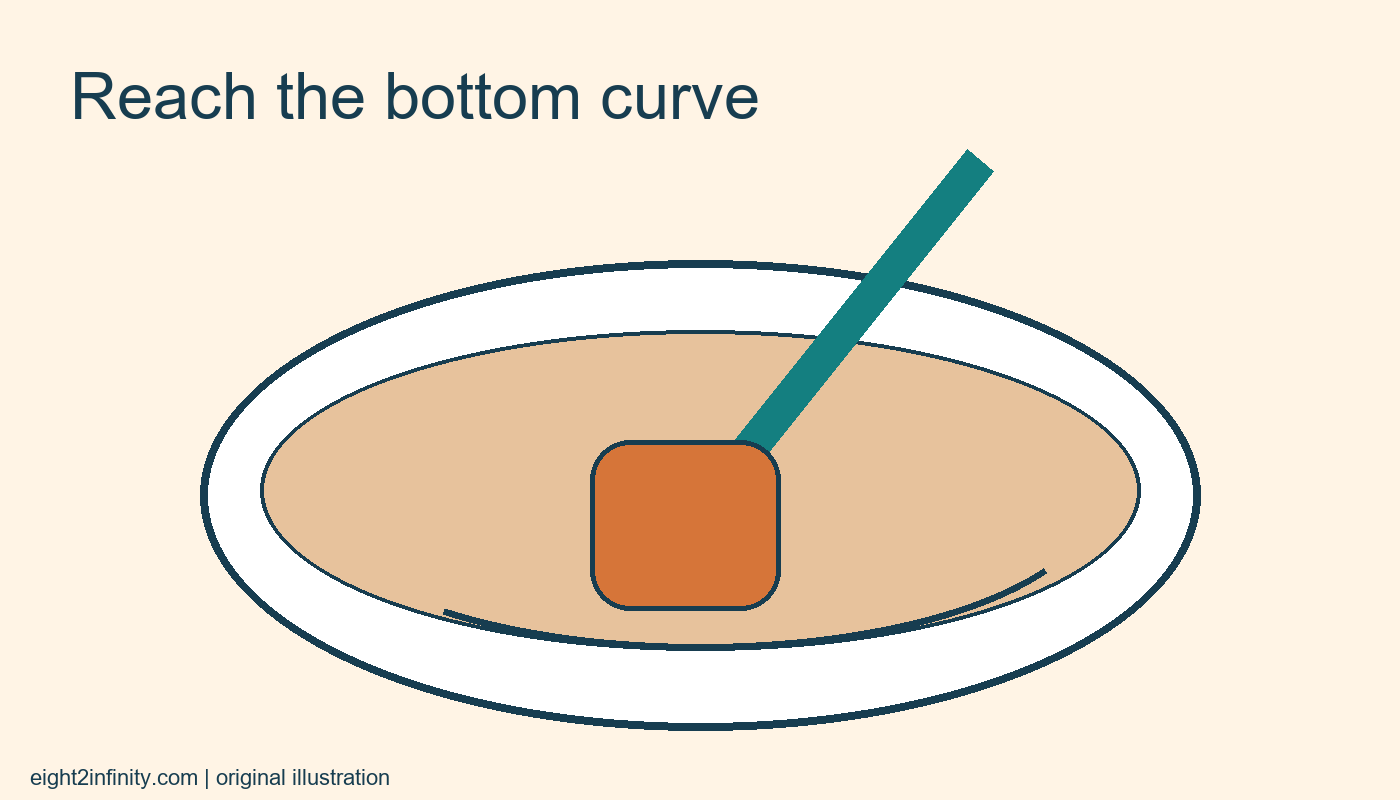
Sweep through the lower curve where the wall meets the base, then across the bottom. This area can hide residue even when the upper sides look clean. Lift a small amount from the bottom into view. If it looks different from the rest, gather it into the main mixture before proceeding with the recipe's specified combination step.
Imagine a fictional butter cake whose surface appears smooth but whose bottom holds a thin floury streak. Pouring immediately would leave some ingredients behind and might deposit an uneven final portion in the pan. The useful observation is the visible difference in mixture, not a guaranteed diagnosis of the baked result. Several other factors also affect cake texture and shape.
Recombine using the recipe's method
After gathering residue, combine it as directed. A recipe may specify a short additional mix at a particular speed or gentle folding by hand. Do not add an arbitrary extra minute of high-speed mixing. The amount of mixing appropriate before flour is added can differ from what is appropriate after flour, and foam-based cakes require their own handling.
Inspect the mixture again after the stated step. Look for obvious pockets of unmixed material while respecting intentional ingredients such as chocolate chips, fruit, or chopped nuts. A uniform batter does not necessarily mean perfectly smooth with no visible pieces. The recipe's intended texture gives the standard; the goal is incorporated ingredients rather than the removal of every lump regardless of its origin.
Transfer without losing the last check
Prepare the pan before the batter reaches its final stage. When the recipe says to transfer, use the spatula to guide the mixture from the bowl into the pan. Watch what remains in the lower curve. If a distinct pocket of unmixed ingredients appears, pause and assess it rather than simply dropping it as a lump onto the batter already in the pan.
Avoid tasting raw batter containing flour or eggs. The scraping check is visual and procedural; it does not require eating the mixture. Follow the recipe's baking instructions and food-safety guidance for the ingredients. Do not assume that a clean-looking bowl proves the batter has been mixed or baked correctly in every other respect.
Build a useful baking note
After baking, note whether the recipe's scraping stages were easy to follow and whether residue was found at the bottom. Record the recipe name and your observation without claiming that one factor caused every result. If you change the process next time, keep the ingredient amounts and other major steps consistent enough to make your notes useful.
For your next suitable cake recipe, identify the first scraping instruction before starting. At that pause, check the wall and bottom separately, then follow the specified mixing step. Which area held the most residue? A short factual note about that observation can improve your routine more than a vague judgment that the batter looked fine from above.
Sources and related reading
Check the Butter and Sugar Creaming Step Before Adding Flour