Chop a chocolate bar into deliberate pieces for baking
To prepare a chocolate bar for a recipe, use a stable cutting board and an appropriate knife, work in controlled cuts, and check the piece size against the recipe's purpose. Chocolate intended for melting benefits from reasonably even small pieces, while chocolate folded into cookie dough may be deliberately chunkier. Read the recipe before chopping so you do not turn a bar into fine shavings when it asks for visible chunks.
This guide explains preparation choices for adults already comfortable using a kitchen knife. It is not a lesson in advanced knife handling or a request to work with children around a blade. If you are not comfortable cutting a hard bar safely, choose an appropriate prepared chocolate product that your recipe allows. The useful outcome is chocolate sized for its job, with the fine pieces kept under control.
Identify the intended use
Read whether the recipe asks for chopped chocolate to melt, chocolate chunks to fold into dough, or a fine garnish. Those phrases describe different results. Also check the specified chocolate type and cacao percentage if given. Chopping a different product into the right shape does not guarantee that it behaves like the ingredient the recipe writer intended.
For example, an original planning note might say Cookie dough, visible chunks, retain fine pieces if recipe permits. A second note might say Melting, smaller reasonably even pieces. Keeping those notes separate prevents a common preparation error: doing the mechanical work first and deciding what the ingredient was meant to do afterward. If the recipe supplies a size description, use that description rather than a generic target from this article.
Set up a controlled work area
Use a clean, dry cutting board on a stable surface with enough space to contain fragments. Prevent the board from sliding using a suitable method for your board and counter. Keep wrappers, cords, and other ingredients out of the cutting area. Dry equipment also matters if the chocolate is later intended for a melting process, so avoid introducing water while arranging the workspace.
Unwrap only the amount you need and check for bits of packaging before cutting. Weigh the chocolate according to the recipe, noting whether the requested amount is measured before or after any trimming. Keep the remaining bar wrapped and separate so fragments from the working board are not confused with an unmeasured portion. Preparation is easier to verify when the measured ingredient has a clear boundary.
Choose a suitable tool
King Arthur Baking's comparison of chopping methods favors a serrated knife for its trials. That is a useful tool suggestion, not a guarantee that every bar and every cook will behave identically. Use a knife you can control safely and keep your supporting hand clear of its path. Do not balance a hard bar on a small unstable edge to make a cut easier.
Avoid applying uncontrolled force when a piece resists. Reposition the chocolate on the flat board and reassess the tool and the task. Very thick blocks may need a different preparation approach or a prepared ingredient. A recipe's demand for chopped chocolate is not a reason to improvise an unsafe cutting arrangement. The process should remain controlled from the first cut to the final fragments.
Work toward the required size
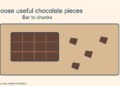
Cut manageable portions and examine them as you go. For melting, look for pieces in a broadly similar size range rather than a few huge blocks mixed with powder. For cookie chunks, preserve enough substance to match the recipe's intended texture. Some variation is normal when chopping a bar, but deliberate variation differs from ignoring a few pieces far larger than the rest.
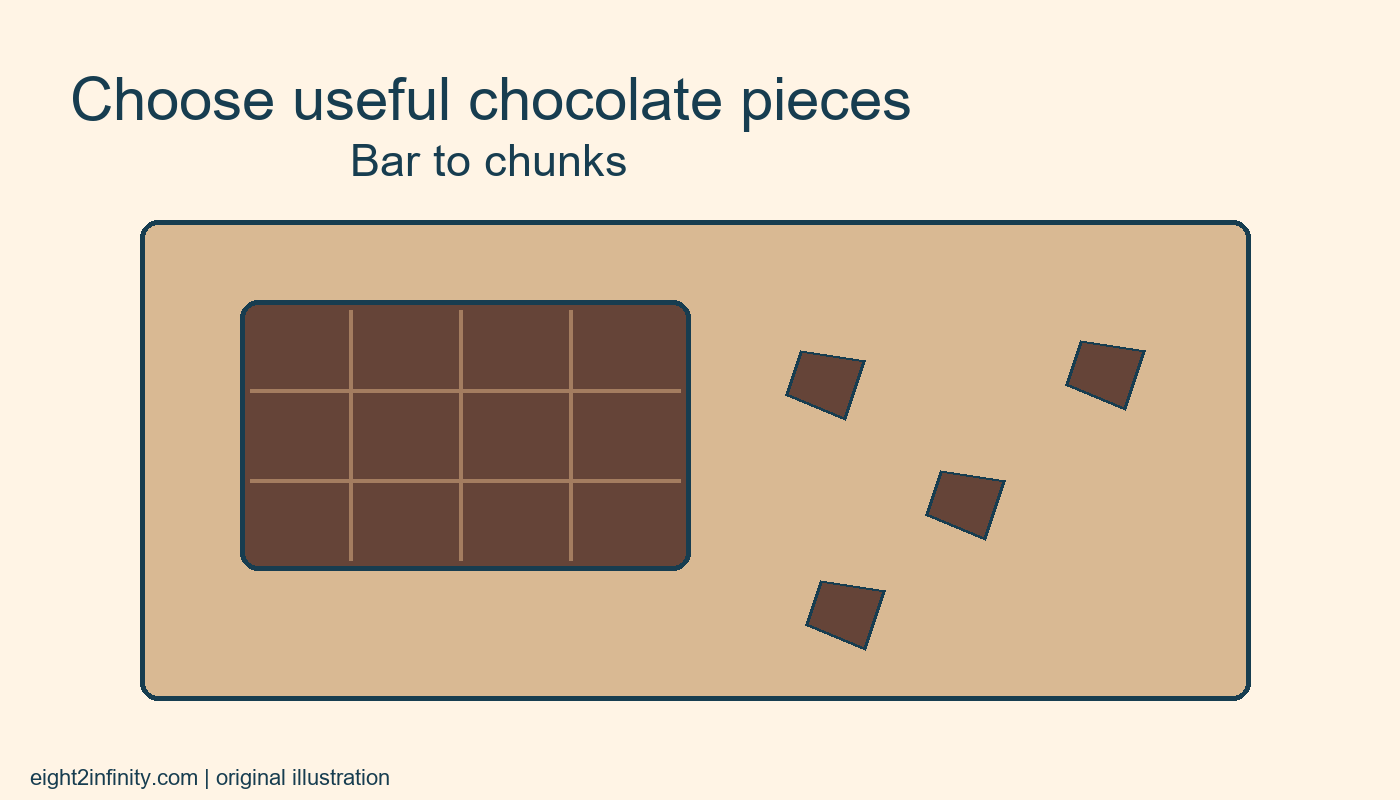
Pause once part of the bar is prepared and compare it with the recipe's wording or illustration. This is a better moment to adjust than after reducing the entire bar to tiny pieces. You can usually make a chunk smaller with more cutting; you cannot restore its original size by pushing shavings together. Let the intended use guide when you stop.
Account for the small fragments
Chocolate dust and little shards are part of chopping. Gather them from the board with an appropriate scraper or the safe side of a tool, keeping fingers away from sharp edges. Check the recipe before deciding whether all fragments belong in the mixture. In a dough, fine chocolate may affect the appearance differently from large chunks, so do not claim that every size distribution produces the same result.
Recheck the prepared weight if a significant amount has scattered or been left behind. A recipe calling for a measured amount of chocolate should not lose an unnoticed portion on the counter. Transfer the pieces to a clean dry bowl and inspect the board for packaging fragments before adding the ingredient to anything else. This keeps the handling stage separate from mixing or melting.
Keep chopping separate from melting
Chopped chocolate is prepared chocolate, not melted chocolate. If your recipe requires melting, follow its specific heating method and endpoint after the cutting is complete. Do not assume that a bowl of smaller pieces can be heated indefinitely without attention. Likewise, do not add water or another liquid simply to help the pieces come together unless the recipe explicitly calls for that ingredient.
For a recipe that uses chunks directly, keep them ready beside the dough's other additions and add them at the instructed stage. Avoid moving the cutting board full of fragments over an open mixer or crowded bowl. A clean intermediate bowl makes the measured ingredient easier to inspect and transfer without introducing the knife into the mixing area.
Review the preparation result
Before continuing, ask three concrete questions: Is this the specified chocolate, is the quantity correct, and are the pieces suited to the stated use? These checks are more useful than judging whether the pile looks professionally styled. The cited source reports its own chopping trials; this article does not claim to repeat those experiments or establish one universal best method.
For your next suitable recipe, write down the requested use and piece description before unwrapping the bar. After chopping, compare the largest pieces with that note and record whether you needed an adjustment. What would you change next time: the tool, the amount prepared at once, or the point at which you paused to inspect the size?
Sources and related reading
Check the Butter and Sugar Creaming Step Before Adding Flour