Fold a cloth napkin into a simple cutlery pocket
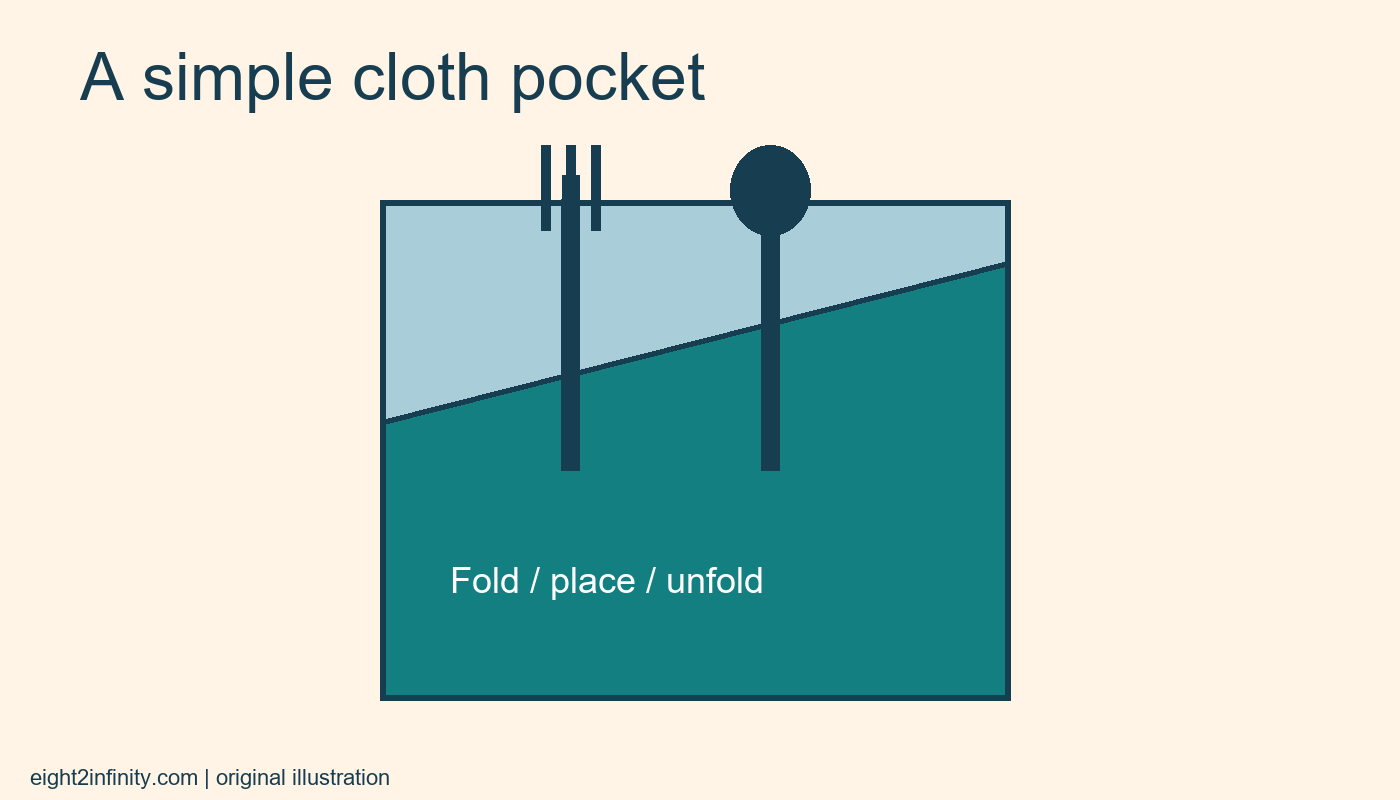
To make a simple cutlery pocket from a square cloth napkin, fold it into quarters, turn one top layer diagonally down, then fold the sides behind to form a narrow rectangle. Place a clean fork and spoon in the visible diagonal pocket and check that the fold holds on the table. Use a clean napkin and work on a clean surface. This is a decorative table-setting method, not protective packaging or a way to keep utensils sterile.
Choose a manageable napkin
Begin with an ordinary square cloth napkin that lies reasonably flat. A medium-weight fabric is easier to practice with than a very slippery or extremely thick one. It does not need to be new or bought for this fold. The EPA encourages reusable dishes and cloth napkins as a broad waste-reduction approach; the pocket fold described here is an original practical walkthrough rather than an agency instruction. Use whatever suitable napkin you already have before considering additional table accessories.
Lay the napkin fully open with its corners pointing toward the corners of your work surface. Smooth it gently with your hands. If it has a clearly preferred display side, place that side downward for the initial fold and check the final appearance during practice. A busy print can make layers harder to distinguish, so a plain napkin is helpful for the first attempt. Avoid ironing during the folding exercise unless the care label permits it and you are using appropriate equipment safely.
Fold the square into quarters
Fold the bottom half up to meet the top edge, making a horizontal rectangle. Then fold the left half over to meet the right edge, making a smaller square. Align the edges approximately rather than stretching the fabric to make every corner exact. You should have four layers at the open corner. Rotate the folded square so that the open corner points toward the upper right. The closed folded edges should be toward the left and bottom.
Lift only the uppermost layer at the open upper-right corner. Bring that corner diagonally down toward the lower-left corner, exposing the next layer beneath it. Smooth the diagonal fold lightly. This creates the visible opening that will become the pocket's upper edge. If you lift two layers together, the fold may still look decorative but the available pocket will differ. Unfold that step and separate the layers deliberately while learning the sequence, so you can reproduce the same result later.
Turn the square into a pocket shape
Keeping the diagonal layer in place, turn the folded napkin over carefully. Fold the right third toward the middle, then fold the left third over it. The exact overlap can vary with napkin size and thickness. You are aiming for a narrow rectangle that sits flat, with the side folds concealed on the back. Hold those folds gently and turn the napkin face up again. The diagonal opening should now be visible across the front.
If the back unfolds immediately, check whether the fabric is too stiff, the side folds are too shallow, or you lifted the whole piece too abruptly. Re-form the thirds and place the napkin directly on the table rather than carrying it around by one corner. This simple fold relies on the layers resting together. It is not meant to support a hanging load. A neat result on a plate is sufficient; it does not need to stay assembled when shaken or held upright.
Add utensils without overfilling
Slide a clean fork and spoon gently into the diagonal pocket, with their handles extending upward enough to grasp comfortably. Use a normal table-setting quantity rather than filling every possible gap. Keep sharp knives out of a beginner's folding practice, particularly around children. For an actual place setting, arrange any knife according to your usual safe table-setting convention and make sure all items are stable. The cloth should not be asked to secure sharp utensils for transport.
Look at the napkin from the seated diner's position. The opening should be obvious, and the utensils should be easy to remove without pulling the whole arrangement apart awkwardly. If their heads disappear too deeply, shorten the pocket by adjusting the folds or choose a larger napkin. If the utensils make the front sag, reduce the contents. The useful outcome is a pleasant, practical place setting, not a tightly packed fabric envelope that the diner has to puzzle open.
Adjust the fold for your table
Try setting the folded napkin on an empty plate and beside the plate. Choose the position that leaves comfortable room for the other items you need. A small table may suit a narrower fold, while a wide plate can accommodate a slightly broader one. Avoid making a complicated centerpiece compete with an already crowded setting. The fold works best when it quietly organizes a few utensils and still leaves the napkin easy to use during the meal.
For a practice exercise, fold the same napkin twice and note which step is hardest to remember. Write a short cue such as quarters, one diagonal layer, sides behind. Then ask another person to remove the fork and open the napkin naturally. If the action feels awkward, simplify the fold or use a plain folded napkin instead for that occasion. Reusability comes from ordinary repeated use and proper care, not from achieving a particular decorative shape every time you set the table.