Sort spare clothes hangers by the job they can do
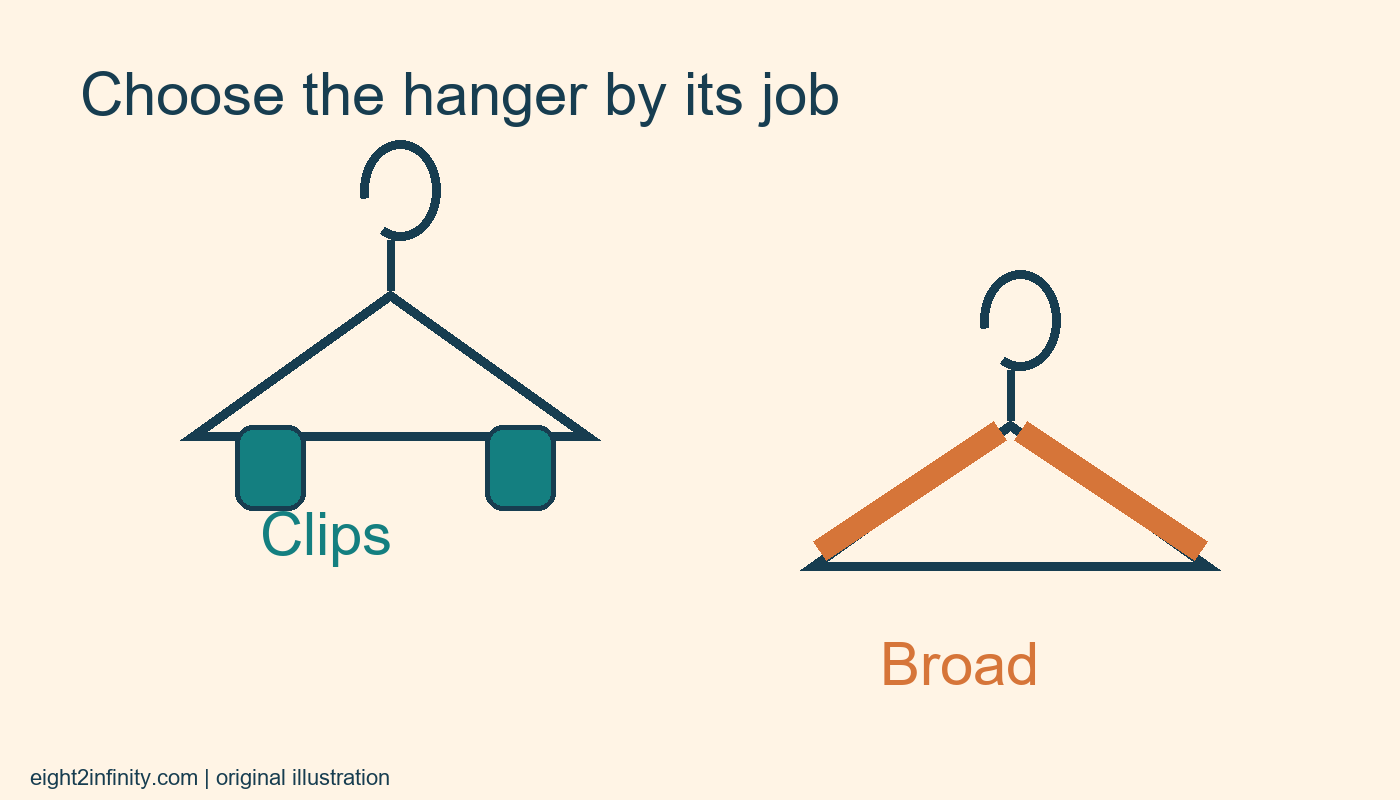
Sort spare hangers by function before deciding how many to keep: ordinary shirt hangers, broad shoulder hangers, clip hangers, and any specialist designs you actually use. Give the selected spares a bounded storage space and remove damaged ones from the ready group. This makes it easier to retrieve a suitable hanger without treating every spare as interchangeable.
The categories below are an original household organization suggestion. EPA guidance supports looking after and reusing suitable items broadly, but it does not supply these categories or verify that a particular hanger suits a garment. Follow garment-care guidance and the hanger's intended use. A tidy spare collection is useful only if the individual hangers remain fit for the clothes they will hold.
Start with a limited collection
Gather the spare hangers from one closet rather than emptying every wardrobe at once. Leave hangers currently supporting clothing in place. Put the spares on a bed or table where hooks will not scratch a delicate surface. Count roughly how many are present, then notice which styles occur. You may discover that the apparent surplus is mostly one type while another type is rarely available.
Use a fictional collection of twelve: six slim shirt hangers, two broad hangers, three clip hangers, and one bent hanger. The numbers are an exercise rather than a recommended allowance. A household's clothing and laundry habits determine useful quantities. Do not discard a specialist hanger simply because it appears only once; identify whether there is a garment for which it is deliberately kept.
Inspect condition before grouping
Look for broken hooks, sharp edges, cracked plastic, bent wire, or clips that no longer work properly. Set damaged pieces aside so they cannot be selected accidentally. Do not straighten or repair an unfamiliar design under load. A hanger that appears almost usable can still snag fabric or fail when carrying an item, so appearance alone does not establish fitness.
Check surfaces that touch clothing. A sticky residue, rust mark, or rough patch needs attention before the hanger returns to service. Follow suitable cleaning or care guidance for the material. If you cannot make it fit for use, keep it out of the ready group. Local recycling and donation rules vary; do not assume a mixed-material hanger belongs in ordinary curbside recycling or that a charity accepts it.
Define groups in ordinary words
For the fictional set, make three usable groups: shirts, broad shoulders, and clips. Write the names on temporary paper labels while you work. The labels describe intended jobs rather than promising universal garment suitability. A clip hanger may suit one skirt but leave marks on another fabric, so check how the particular garment should be stored before choosing it.
Keep an unusual design separate until you understand it. If it belongs to a specific garment, attach a removable note to the storage area rather than covering the hanger's working parts with tape. An unknown piece should not silently join the general shirt group just because it has a hook. The purpose of grouping is to reduce mistaken choices, not merely create visually uniform rows.
Choose an accessible spare area
Reserve a short section of rail or another appropriate space for the selected spares. Keep the hooks facing consistently so the hangers are easier to lift apart. Avoid forcing a large bundle into a narrow space where clips and hooks interlock. If using a storage holder, make sure it is suitable for the hanger shapes and the available support.
Separate groups with a simple removable divider or a small label visible near the rail. Leave room for your hand to lift one hanger without pulling several down. The storage location should serve the person putting away laundry, not merely hide the surplus. A high shelf with a tangled pile may look clear from below while making the actual retrieval task harder.
Set a practical quantity boundary
After sorting, select an initial number based on a normal laundry cycle and the spare rail space. Observe whether that amount works before treating it as a permanent rule. If six shirt hangers are repeatedly unused while clip hangers run short, adjust the mix. A single total count cannot tell you whether the useful types are available.
Keep any undecided surplus outside the ready space with a review note. Do not mix it back immediately because a temporary gap feels untidy. Offer suitable usable extras only through a recipient or service that accepts them. If disposal is necessary, check local instructions for the actual material. The organization task does not require buying matching hangers or making unverified recycling claims.
Maintain the groups through real use
Return empty spare hangers to their own group after laundry. If several people share the closet, use group names they understand and keep the system small. Replace a vague label such as Special with a more useful description when possible. A damaged hanger discovered later should leave the ready group immediately rather than wait for a complete annual reorganization.
For an exercise, sort the fictional twelve hangers and explain where each belongs, including the bent one. Then try retrieving a shirt hanger and a clip hanger without moving the other group. What obstruction slows you down? Change the spacing or grouping before adding a new storage product. The useful measure is whether the next suitable hanger is easy to find and remains in good condition.