Fold a soft reusable tote into a flat rectangle
To fold a soft reusable tote, empty it, flatten the fabric, bring the sides inward, and fold the lower section upward until it fits its intended storage space. Tuck the handles into the fold without forcing them. This is a simple option for unstructured cloth bags; stiff shopping bags, insulated bags, and designs with a sewn storage pouch may need a different method or their manufacturer's instructions.
The goal is an easily reopened bag with the handles and seams resting comfortably. This article offers an original household folding routine. EPA guidance supports reusing and caring for items generally; it does not prescribe these folds or guarantee a particular environmental saving. Start with one bag you already own so you can judge whether the method suits its fabric and your storage space.
Inspect the bag before folding
Remove receipts, loose objects, and anything caught in the bottom corners. Open the bag fully and check that it is clean and dry. Follow its care label if washing is needed, and let it dry before storage. Folding is a storage step, not a cleaning method, so it should not conceal dampness, spilled food, or damage that needs attention.
Look at the construction. A thin cotton tote usually flattens differently from a bag with a padded base, rigid insert, zipper, or reinforced corners. Do not bend a removable base board unless it was designed to fold. If the bag resists a particular crease, choose a broader fold or store it flat. The method should fit the object rather than damage it to meet a predetermined size.
Establish a flat starting shape
Lay the empty tote on a clean table with its opening at the top. Smooth the front and back together using your hands. Pull the lower corners gently into place so one side is not twisted underneath. If the bag has a soft gusset, settle it inward along its existing seams so the base lies as flat as the construction allows.
Bring the handles down across the body of the bag. Keep them inside the outer edges where practical, leaving them flat rather than knotted. Handles that protrude can catch on neighboring objects during storage. For a long strap, lay it in a loose curve that follows the bag's surface. Avoid tightening a strap around the folded body merely to make it appear compact.
Fold toward a useful width
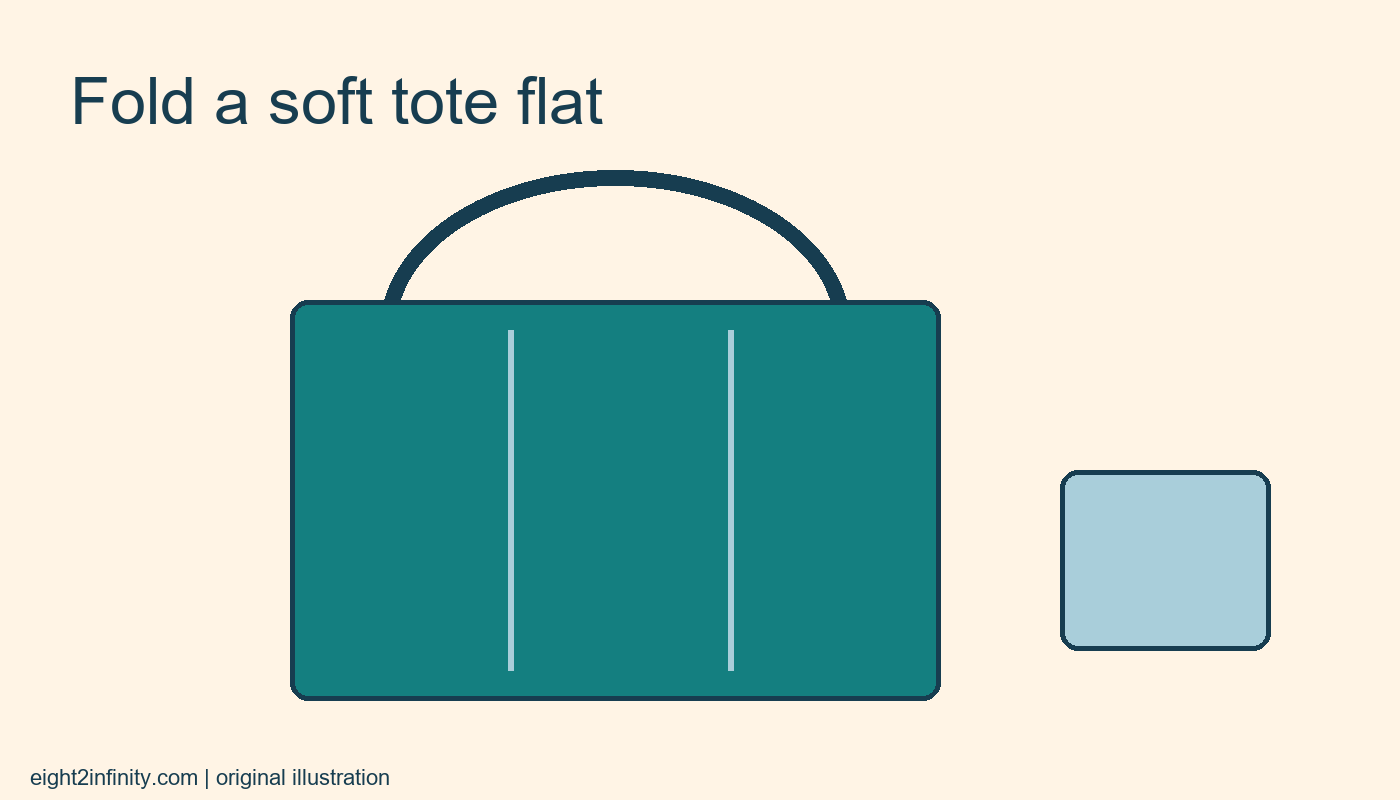
Bring one side inward, then the other, making a long rectangle. Choose the width by the space where the bag will live. For example, if an open drawer area is about twenty centimeters wide, aim for a folded shape comfortably narrower than that opening. The exact fraction of the bag folded inward is less important than avoiding a tight fit.
Check that the handles remain inside and that the side seams are not sharply strained. A lumpy overlap often means a corner or strap is trapped underneath. Open the last fold, smooth the obstruction, and try again. Do not press heavily on a zipper or buckle to flatten it; place that feature where it can rest without taking the load of other items.
Finish the rectangle without compressing it
Fold the bottom upward once, then again if the fabric and bag size allow. A broad two-part fold can be easier to reopen than a very small bundle. Stop when the folded tote sits comfortably in your chosen space. There is no requirement to make every bag the same thickness; different materials will retain different amounts of volume.
Hold the rectangle gently and turn it over to see whether the handles escape. If they do, unfold the final section and reposition them. Some bags will not remain folded without a pouch or compartment. In that case, an open basket or a loose divider can contain them. Avoid adding a tight elastic band that creates unnecessary pressure on seams or leaves a difficult bundle to unpack.
Store for retrieval
Place the folded bag where you can see and reach it. A small row of folded totes is easier to inspect than a compressed pile with unrelated items on top. Leave enough room to pull one out without dragging the others. If the drawer is crowded, reduce the number stored there rather than repeatedly folding the same fabric into a smaller and smaller shape.
Keep a separate place for a bag awaiting cleaning or repair so it does not rejoin the ready group accidentally. A paper note can identify why it is out of use. Do not interpret a neatly folded bag as proof that it is clean or suitable for carrying a particular food or load. Follow the bag's intended use and care instructions.
Adjust after a real use
Open the folded tote and carry a few light, non-fragile practice objects across the room. This is a check of convenience, not a load-rating test. Empty it and repeat the fold. If the steps are too fiddly, use one fewer fold or choose a larger storage space. A routine that takes little attention is easier to maintain than a tiny bundle that requires careful tucking every time.
For a small exercise, compare a broad fold and a narrow fold using the same tote. Which one fits your drawer while remaining easy to open? Write the preferred storage width on a removable divider if that helps other household members. Keep the method flexible: the useful result is a dry, ready bag that returns to service easily, with no claim that folding alone measures waste reduction.