Keep ribbon spools identifiable without loose tangles
Keep craft ribbon on its original spool when practical, secure the loose end gently, and arrange the spools so you can identify the width and color without unrolling them all. Start with a small existing collection rather than buying a large organizer. This original method focuses on finding and returning ribbon for ordinary paper crafts. It is a storage suggestion, not a conservation method for valuable textiles or a claim about how every fiber should be treated.
Inspect the collection on a clear surface
Gather the spools from one drawer or project box and place them where you can see the labels. Separate complete spools from loose lengths. Read any material or care information supplied with the ribbon before choosing clips, tape, or other fasteners. Some surfaces can mark or pull delicate material. If you are unsure, test the restraint on an expendable end or use a gentler way to keep the length together.
Choose a sorting rule that matches how you select ribbon. For card making, width may matter before color because a wide ribbon can cover the message area. For gift wrapping, color might be your first decision. There is no single correct order. Select one primary rule and keep it visible, such as narrow on the left and wide on the right. A simple arrangement you understand is more useful than several overlapping categories.
Secure ends without hiding them
Wind a loose end back onto its spool without pulling it unnecessarily tight. Keep a short identifiable end accessible so you can begin the next project without searching around the roll. Use a restraint suited to the material and spool, avoiding adhesive directly on a delicate visible surface. The goal is to prevent a loose tail from catching on neighboring spools while keeping the ribbon easy to release.
Do not assume a metal pin or a tight elastic band is appropriate for every ribbon. A fastener that punctures, creases, stains, or catches the material defeats the purpose of organized storage. For a basic paper-craft ribbon, a loose paper band around the spool may be sufficient if it stays in place. The specific restraint is a judgment based on the actual item, not a mandatory accessory.
Work through a three spool example
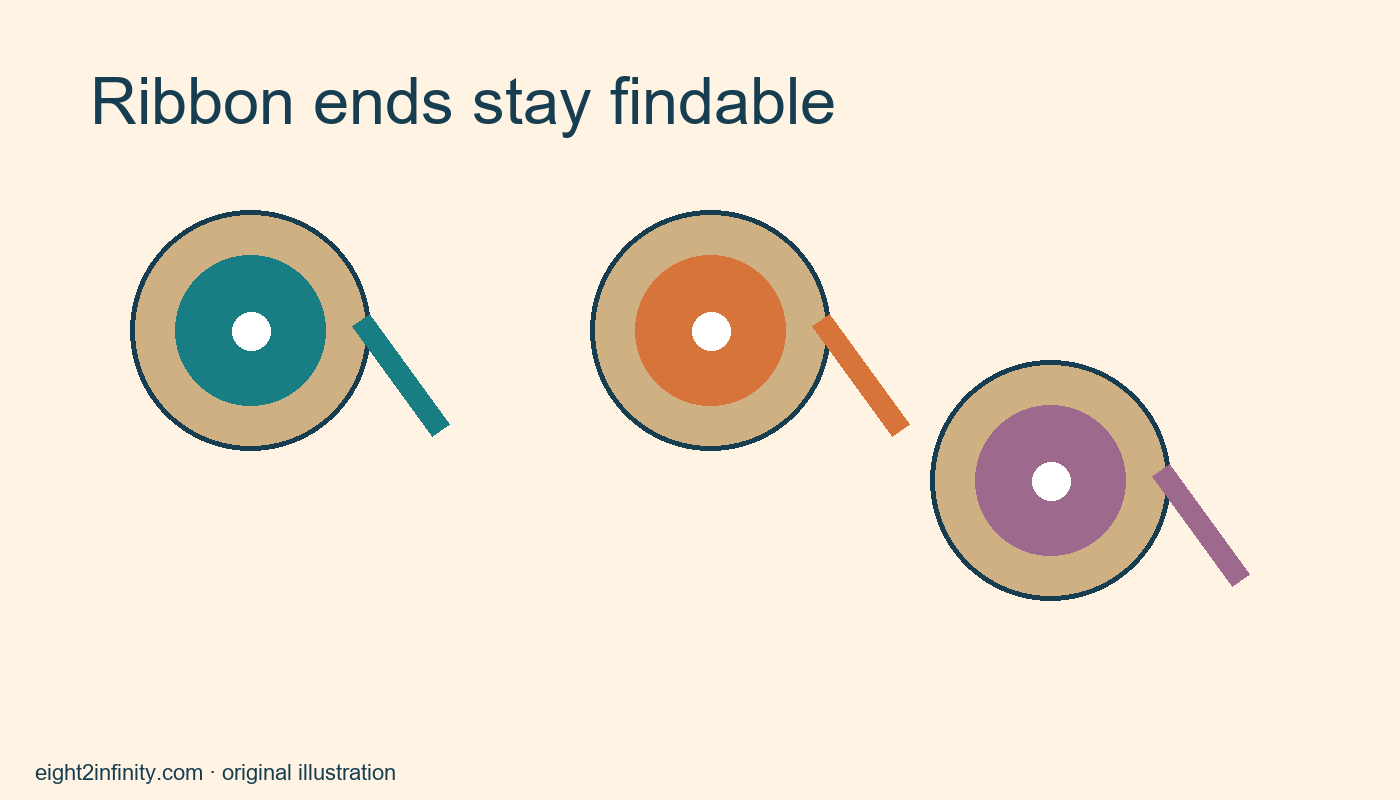
Imagine three rolls: narrow green ribbon, medium orange ribbon, and wide purple ribbon. Place them in width order with the spool faces visible. Keep the product labels if they contain useful width or material information. If a label is missing, add a removable note based on what you can actually measure or observe. Do not invent the fiber content or original length because a neighboring roll looks similar.
For this example, use a short green piece on a handmade card, then return the roll immediately to the narrow position. Check that the remaining tail is secured before putting the spool away. The return step matters as much as the initial sort. If you routinely leave half-unwound rolls on the worktable, a more elaborate drawer layout will not solve the main problem.
Give loose lengths a separate rule
Loose pieces without a spool can be folded or wound around a suitable smooth card if that does not damage them. Label the usable length when it is worth knowing, and distinguish an actual measurement from an estimate. Keep these pieces together so a short remnant is considered before you cut into a new roll. Avoid hiding loose lengths underneath the spools, where they can become an invisible tangled layer.
Set a realistic lower limit for what you keep. If you never use pieces shorter than the ribbon needed for one card, do not retain a bag full of tiny ends just because they are colorful. You can also designate a few specific small craft uses. The important question is whether a remnant has a plausible next use and can be retrieved without turning the collection into a sorting project every time.
Match the container to retrieval
Use a shallow existing box or drawer section if it lets the spools remain stable and visible. Check its internal height before standing rolls on edge. A lid that presses against the ribbon or a drawer that catches a protruding spool is a sign to change the arrangement. Leave enough room to remove one roll without lifting the whole collection. Storage capacity should include the space needed to use the contents.
If the collection is shared, add a brief return instruction such as Secure end and return by width. Avoid a complicated numbering system unless it solves a real identification problem. Three rolls rarely need a spreadsheet. A larger collection might benefit from a simple width label, but only after you test whether the physical arrangement already answers the common question of where to find the right roll.
Test the arrangement with a real project
Choose ribbon for one small paper craft without emptying the container. Afterward, rewind and return it. Inspect whether another spool's end caught on it during removal. Change the restraint or spacing if needed. The EPA reference supports general reuse; this particular craft workflow is an original application. Which selection rule would help you most: width, color, or material, and what actual project makes that choice useful?