Make a jigsaw box record without claiming every piece is present
A useful jigsaw inventory distinguishes what the box says from what you have checked. Record a short ID, a lid photo or written title, the printed piece count, and a separate contents-status note. Do not label a puzzle complete just because its box is full. This original household record helps identify stored puzzles and preserve honest notes when you lend or revisit them.
Begin with one puzzle box
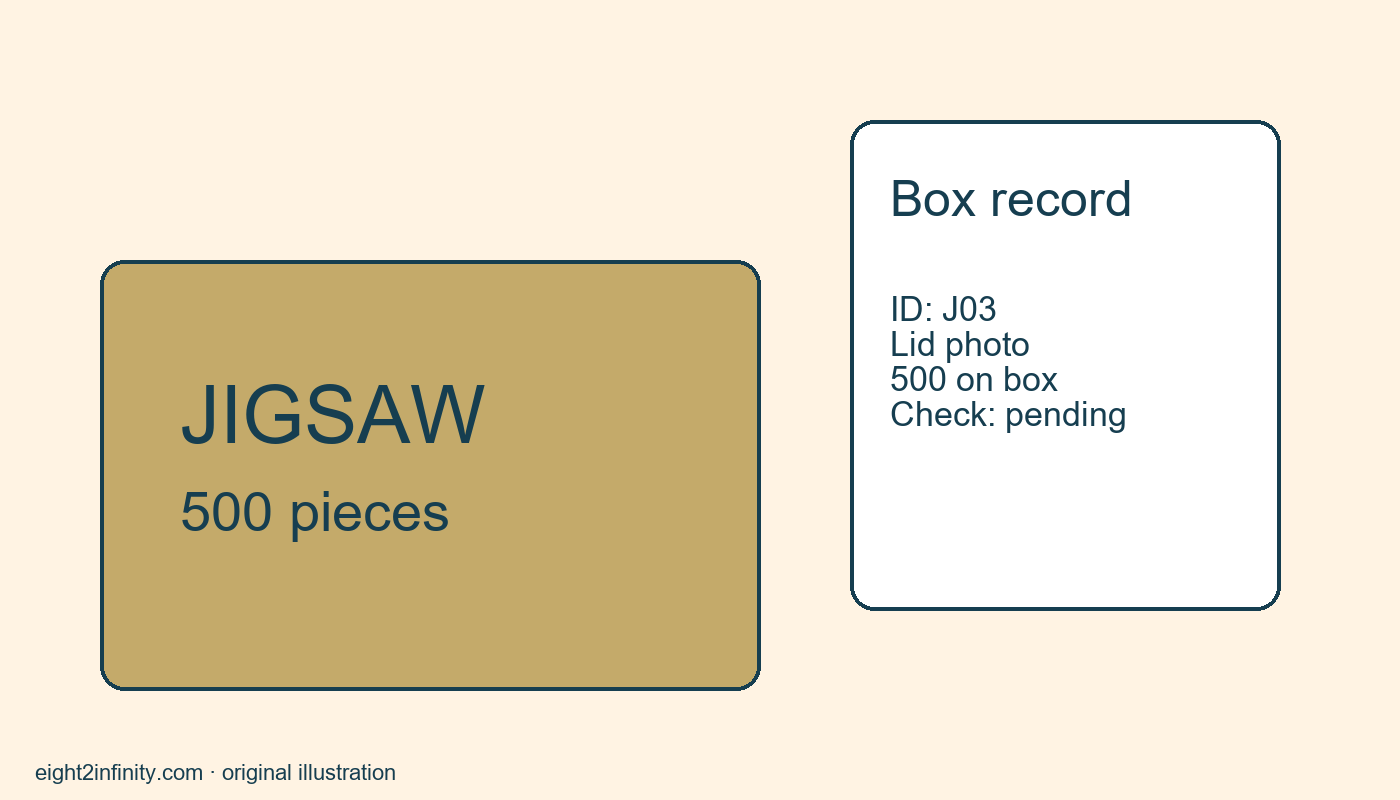
Choose a box you already own. Give it a short local ID such as J03 and write that ID on a removable label if doing so suits the box. Record the puzzle title as printed, the manufacturer when visible, and the piece count stated on the lid. Keep these as identifying information. The printed number tells you the product's intended count; it does not confirm the current contents of your particular box.
Take a clear lid photo if that will help you recognize the image later. Keep the photo with the same ID in its filename or nearby record. A photograph of a box is a reference aid, not a contents inspection. If you prefer paper, a short description such as coastal houses, blue sky, 500 on box may be enough. Avoid collecting more details than you use when choosing a puzzle.
Separate three kinds of information
Use an identity section for the title and printed count. Use a location field for the shelf or cupboard. Use a status field for what you actually know: not checked, assembled on a particular date, or missing pieces observed. These fields answer different questions. A puzzle can be easy to identify and easy to locate while its completeness is still unknown. Keeping the fields separate prevents an attractive record from implying certainty.
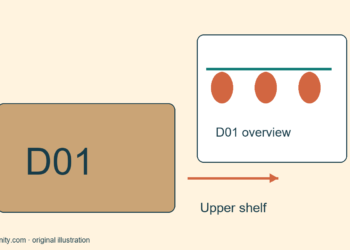
For the invented J03 example, write Printed count: 500; Location: hall cupboard, upper shelf; Contents check: pending. That is already a useful record. You can find the box and understand what has not been verified. Do not fill the pending field with Complete simply to make the record look finished. An honest unknown is more useful than an unsupported assurance, especially if another person plans to borrow the puzzle.
Record an actual observation carefully
If you assemble the puzzle later, add the date and your observation in plain language. For example, Assembled on November 22; one gap visible in the lower-left sky area. That says what you observed without guessing why the piece is missing or when it disappeared. If you counted loose pieces instead, describe that method and its limitations. Counting can be interrupted or mistaken, so do not silently equate every count with a verified finished image.
Keep an earlier note when it still matters. If a loose piece is found after the assembly, append Found one matching-looking piece; fit not yet checked until you actually test it. A small record does not need an elaborate history, but overwriting uncertainty with confidence too early can confuse the next person. The goal is a reliable household aid, not a formal appraisal or a product-quality claim.
Make borrowing notes concrete
If you lend J03, write the borrower's agreed identification and the loan date in a private household record. Share only the information needed for the loan. Include any known missing-piece note before the puzzle leaves, so the borrower understands its condition. Avoid treating an unchecked box as complete when describing it to someone else. Clear wording can prevent a disappointing puzzle session and an unnecessary disagreement later.
On return, put the box back in its recorded location and update the loan note. Do not automatically change Contents check to complete because the borrower returned it neatly. If they report an observation, attribute it as their report unless you checked it yourself. A simple phrase such as Borrower reported no gaps during assembly is more precise than quietly converting that account into your own test result.
Keep pieces and records together
Inspect whether the box closes properly and whether any loose pieces remain on the table after use. If you use an inner bag, choose one appropriate to the household and keep it inside the box. Do not add small loose labels among the pieces where they may be mistaken for part of the puzzle. Store the ID on the box and the inventory, where it helps identification without interfering with play.
A record should not become a reason to keep puzzles you no longer want. If you decide to pass one on, describe its known condition honestly and update your inventory to show that it left. The EPA reference below supports reuse in general; it does not establish that a particular recipient accepts incomplete puzzles. Check the actual recipient's requirements rather than assuming every donation outlet wants the same items.
Try an honest inventory exercise
Record two boxes, giving each a distinct ID and a separate contents status. Ask another household member to find one using only your location note. Then ask what they believe the record proves about the pieces. If they infer completeness from the printed count, improve the labels. What single field would help your household more: a shelf location, an assembly date, or a clear note that the contents remain unchecked?