Plan a full laundry load without overfilling
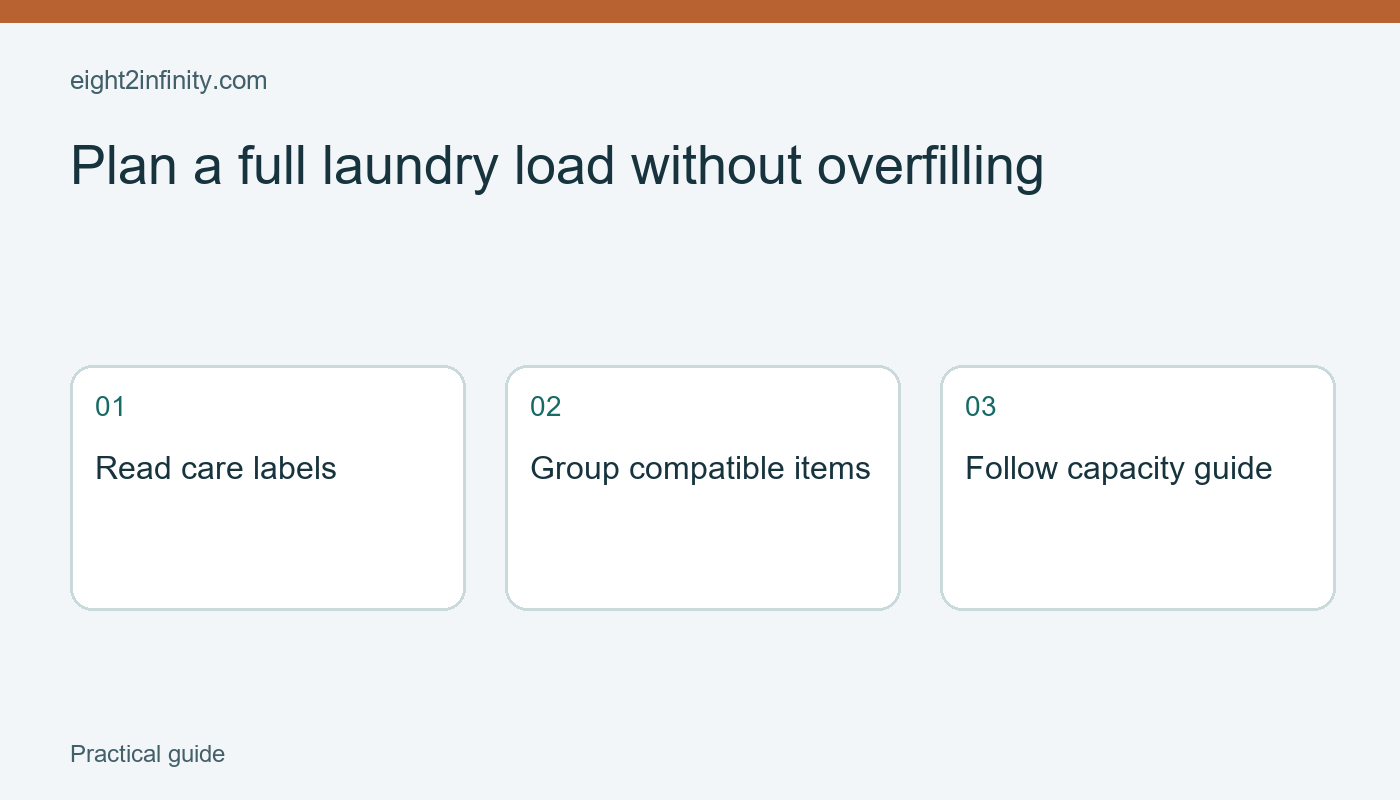
Plan a full laundry load by grouping compatible items and following your washer's capacity instructions. Full does not mean tightly packed. Read garment care labels and the machine manual before choosing a cycle or temperature. ENERGY STAR recommends full loads where practical and cold water when suitable, but your fabrics, stains, and appliance instructions determine the right combination. This guide offers a small planning exercise rather than a universal weight limit or a promised saving.
Start with one ordinary load
Choose a small group of routine washable clothes, such as several everyday shirts and similar lightweight items. Leave specialist garments, delicate fabrics, and anything with an unfamiliar care symbol out of the first exercise. Put a notepad beside the laundry basket and write the date, the group you intend to wash, and the reason the items belong together. You are building a repeatable household habit, not trying to force every item from the basket into one cycle.
Read each care label before combining the group. Two shirts that look similar may have different washing instructions. Separate items that need a different process, and set aside anything whose label you cannot interpret confidently. If one garment needs special attention, follow its instructions rather than increasing the temperature for the entire group by default. Do not use this exercise for contaminated laundry or situations that call for specialist hygiene guidance. Keep the scope to ordinary household washing.
Find the machine specific limit
Look up your exact washer model in the manufacturer's manual. Check how the maker describes loading, supported fabrics, and cycle capacity. A stated maximum can apply under particular conditions and may not be the right target for every program. Avoid borrowing a drum-filling rule from a different machine. Record the relevant manual page or section beside your notes so another household member can check the same instruction without searching from the beginning.
Load the compatible items according to that guidance, without compressing them to make more fit. If the group exceeds the recommended amount, split it. A second manageable load is preferable to treating capacity as a challenge. Bulky articles deserve special attention because their volume and behavior differ from a collection of light shirts. If you are unsure whether an article belongs in the washer, stop and check the garment and appliance instructions rather than experimenting on something valuable.
Choose settings for the actual items
Use a cycle and temperature that suit the care labels and the machine's instructions. For suitable routine items, consider whether cold water meets the need. ENERGY STAR identifies cold washing as an energy-saving practice, but that does not mean every stain or fabric should receive the same treatment. Avoid quoting a fixed household saving from this decision unless you have measured the relevant consumption and costs. The useful immediate goal is an appropriate, consistently loaded cycle.
Measure detergent using the product label and the guidance for your washer, water conditions, and load. More detergent is not a substitute for correct loading. Put the container away after use and keep laundry products out of children's reach. In your notes, record the product and the amount you chose so you can understand the result later. Do not mix cleaning products or improvise additives as part of a load-planning experiment; this workflow does not need them.
Inspect the result before repeating
When the cycle finishes, inspect several representative items before drying them. Check whether the routine soil was removed and whether any visible detergent residue or unusual creasing suggests a problem worth investigating. These observations do not diagnose a mechanical fault, but they can prompt you to reread loading and dosing instructions. If the result is poor, change one relevant variable at a time in a later appropriate load rather than changing every setting simultaneously.
Write a short factual note, such as Six lightweight shirts washed together on the recommended cycle; one cuff still needs attention. Avoid declaring the load perfect merely because the machine completed its program. Equally, do not assume that a remaining stain proves the washer was overloaded. Stain type, fabric, pretreatment, detergent, and program can all matter. Follow the garment's care instructions for further treatment and consult the appliance maker if you notice recurring operational problems.
Make the plan usable next week
Create a brief household note with the washer model, the manual location, and the ordinary groups you commonly wash. Keep it flexible: the next basket may contain different fabrics or more bulky items. A reference note should help people make a decision, not replace reading the care labels. If someone else uses the machine, walk through one ordinary group together and agree where items requiring special care should wait so they do not get included accidentally.
As a reader exercise, examine ten items from your next routine laundry basket. Which can share a cycle, which need a different process, and which require more information? Explain each decision from the labels and manual rather than from appearance alone. Then choose a compatible group that fits the manufacturer's guidance without compression. The successful outcome is a clear, repeatable loading decision and a checked result, with no need for a universal basket size or a guessed capacity rule.