Create a borrowed item return log
Keep a borrowed-item return log with four essentials: what was borrowed, who it belongs to, the agreed return date, and whether it has been returned. A paper note or small digital table is enough. Start with ordinary objects such as books or a board game. The method below is an original household workflow for keeping lending arrangements clear. Sharing and reuse can reduce unnecessary purchases, but the record should respect the owner's preferences and your household's privacy.
Agree before recording a date
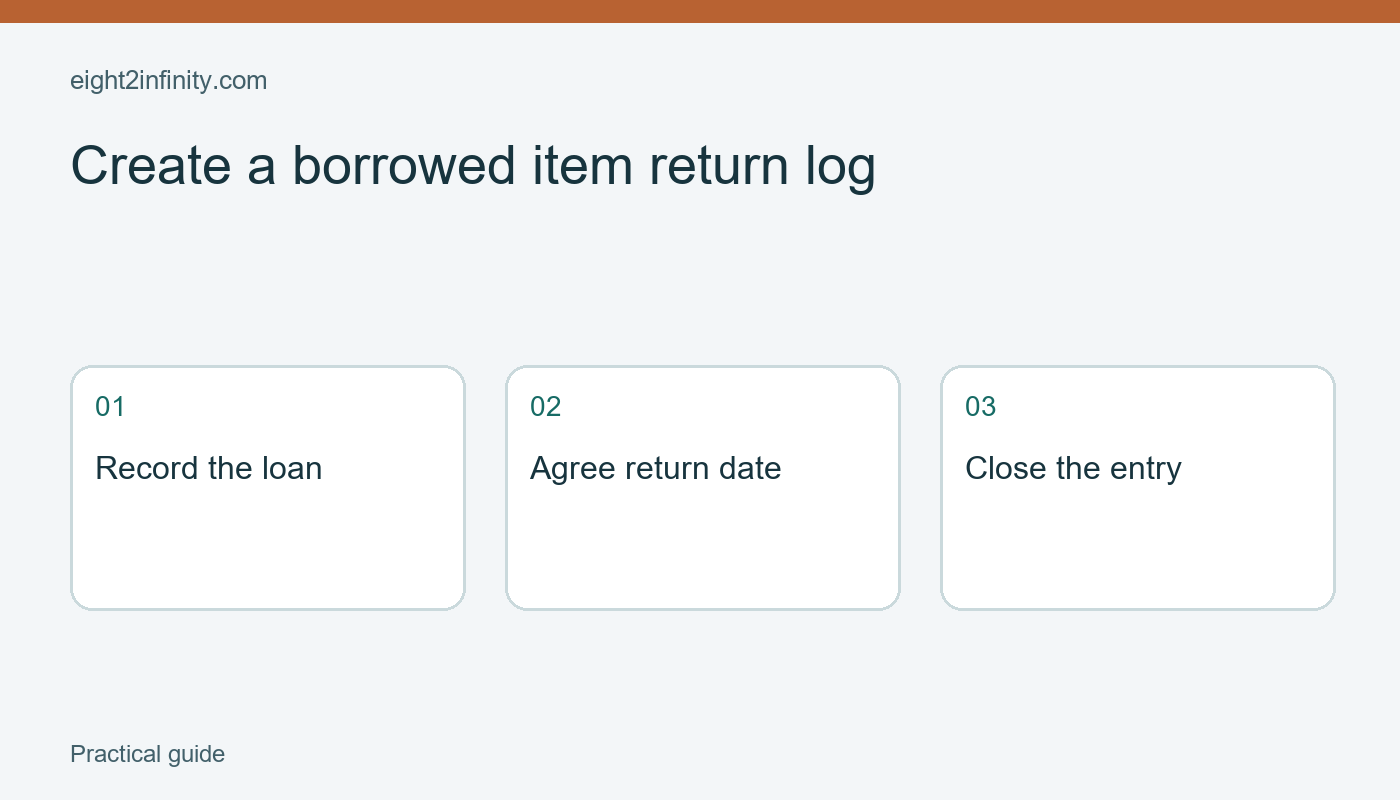
Ask the owner when they need the item back and how they would like it returned. Do not assume that a casual loan has an unlimited duration. For a fictional example, Maya lends you a board game on November 14 and asks for it back the following Saturday. Write the actual calendar date after confirming it together. A phrase such as Next weekend can become ambiguous once several days pass, especially if people remember the conversation differently.
Give the item a recognizable description. Blue strategy game in square box is more helpful than Game, but a title is better if it is available. Record accessories that matter to a complete return, such as a rulebook and score pad. You do not need to count every game piece unless that is relevant and agreed. The purpose is to prevent avoidable confusion, not to turn a friendly loan into a burdensome inventory exercise that nobody wants to maintain.
Use a compact record
Create columns for item, owner, borrowed date, return date, current location, and status. Add a notes field only if it serves a real need. For the example, the location might be Living room shelf, upper left, and the status Borrowed. A separate location field helps you find the object when the deadline arrives. Keep private contact information out of a log displayed in a shared space, and avoid recording details you already have safely elsewhere.
If you also lend objects, label the direction clearly: Borrowed from Maya or Lent to Omar. Otherwise a list of names and objects can become confusing after a few weeks. One household may prefer separate incoming and outgoing sections. Choose whichever arrangement you can understand immediately. The columns are a suggested structure, not a requirement to use a particular app. A half-page notebook can work well if it is kept in a predictable place and reviewed consistently.
Connect the record to a physical place
Choose a sensible holding area for borrowed objects when they are not in use. Keep a book away from spills and a game with its components together. Do not place borrowed objects in donation boxes or mix them into a large storage collection. A temporary tag can help when several people share a room, provided it does not damage the item. Ask before sticking labels directly onto another person's property; a note beside the item may be safer.
For the board-game example, put the rulebook back in the box after each session. When someone moves the box to another room, update the location if the change will persist. You do not need to record every brief movement, but the log should point to the place where the object normally waits. If updating the record feels excessive, reduce the number of fields rather than abandoning the few details that make return possible. Keep the system proportional to the loan.
Review before the deadline
Choose a regular moment to glance at active loans, such as your weekly household planning session. If you use calendar reminders, add one early enough to arrange a handoff, but keep the agreed date in the log as well. A reminder is a prompt, not evidence that the item has been returned. Check the physical object and confirm the return plan. If circumstances change, ask for an extension before the deadline rather than silently editing it.
Suppose you discover that the board game cannot be returned on Saturday because you will be away. Contact the owner, explain the situation, and agree on another arrangement. Record the new date and a brief note that it was agreed. Do not erase the original arrangement in a way that creates confusion. If an item is damaged or a component is missing, tell the owner promptly and ask how they want to resolve it instead of trying to conceal the problem.
Close the loan clearly
When the owner receives the item, mark Returned and write the date. Avoid marking it returned merely because you packed a bag or left it near the door. Those are useful preparation steps, but the handoff is still pending. Keep completed entries for a short period if that helps answer later questions, then remove personal details you no longer need. A simple log should not become an unnecessary permanent record of other people's habits or possessions.
As a reader exercise, write one fictional incoming loan and one outgoing loan. Ask whether another household member can tell who owns each object, where it is, and what happens next. Then check one real borrowed item, if you have one, and confirm the return arrangement with its owner. What detail would have prevented your last awkward search or late return? Add that detail to the record only if it earns its place through a practical use.