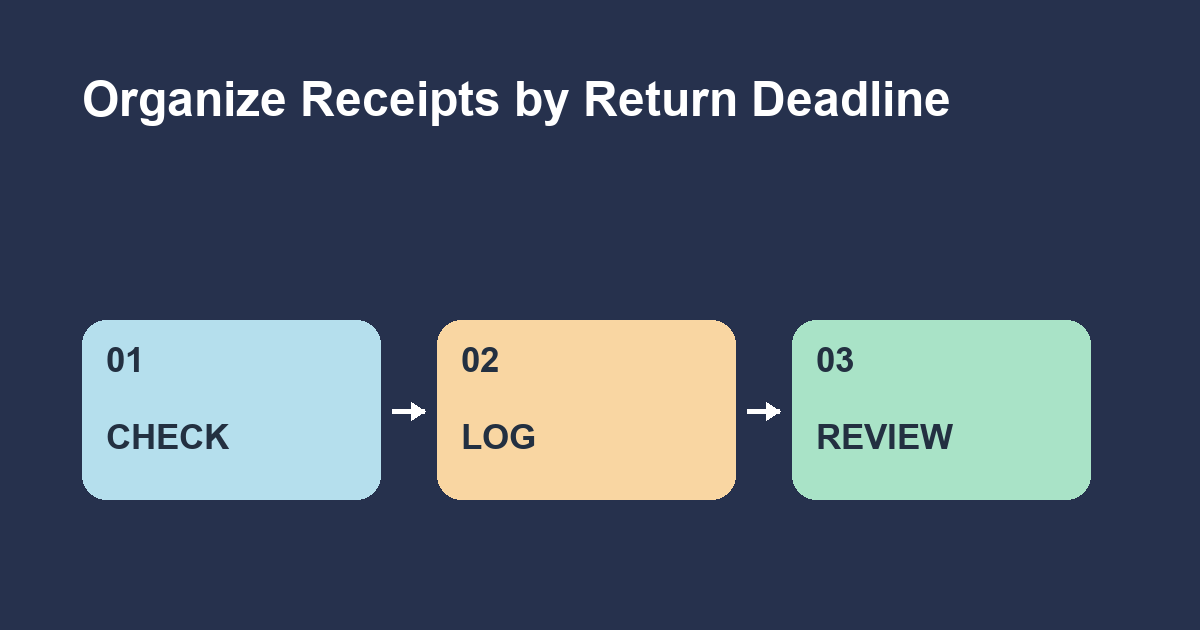
Keep a short list of open return windows and sort it by the date you need to act. Link each row to the receipt and use the seller's stated return terms to determine the date.
Make a small return queue
Create fields for item, seller, order number, action date and receipt location. Record whether the policy counts from purchase, delivery or another event. In a fictional example, a sweater delivered November 8 has a seller-confirmed return deadline of November 22. If the package must reach the seller by that date, set your own action date earlier to allow for the stated process.
Keep the proof close
Save the confirmation and policy text together so you can recover the terms later. Record whether the return requires an authorization, original packaging or a particular drop-off point. When you ship the item, add the tracking reference and change the row from open to sent. Close the entry after verifying the resolution.
Test the queue on three purchases
Write down one unopened item, one item you have decided to keep, and one item already sent back. Which entry still needs a calendar reminder? Archive the completed entries so the open list shows the decisions you still need to make.