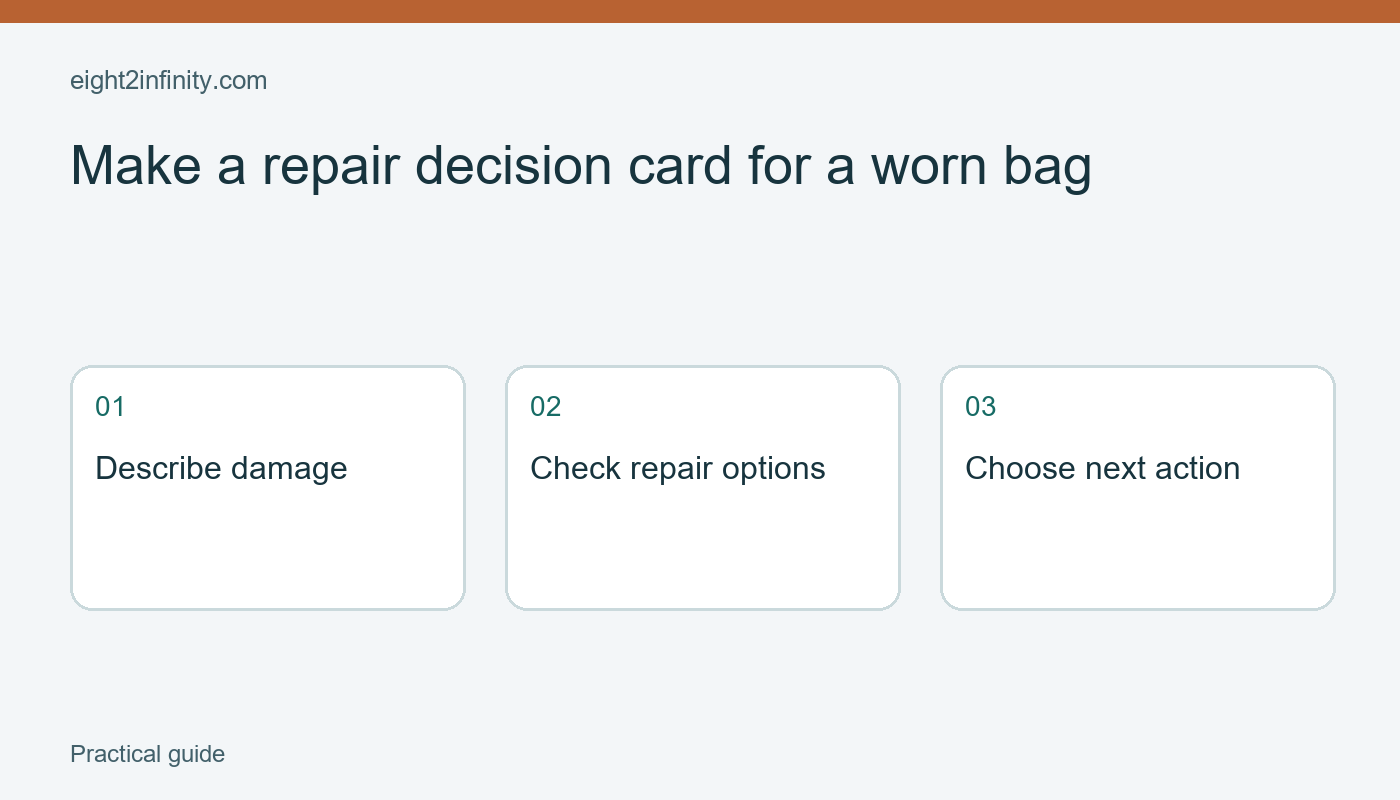
Make a repair decision card for a worn bag
For a worn everyday bag, write down the damage, the job the bag must perform, and the next safe repair inquiry before deciding whether to replace it. A simple decision card prevents a repairable item from sitting indefinitely in a cupboard. EPA guidance encourages considering repair before disposal. The card below is an original household planning method, not a technical sewing lesson or a guarantee that every damaged bag can be made serviceable.
Define what the bag needs to do
Choose one ordinary tote, school bag, or shopping bag that you already own. Empty it onto a clear surface and remove personal documents before photographing anything. Write the bag's purpose at the top of a sheet: Carry a light lunch and notebook to class, for example. Its intended use matters. A decorative tear in an outer pocket and a failing load-bearing strap create different decisions, even if the damage appears similar at first glance.
For the fictional example, imagine a canvas tote with a loose inner pocket seam and intact handles. The intended job is carrying a notebook and a light cardigan. Write those details plainly. Do not start by choosing a repair technique from a short online video. First establish what has actually failed and what conditions the bag must withstand. If it is specialist protective equipment or carries a safety-critical load, use the manufacturer's process rather than this ordinary household exercise.
Describe the damage without guessing
On the card, add three fields: observed damage, location, and uncertainty. For the tote, write Pocket stitching open along one edge; inside front panel; unsure whether surrounding fabric is weakened. This is more useful than Broken bag because it helps you or a repairer inspect the right area. Take a clear photograph in good light if that will help explain the issue. Keep the photo private if it reveals names or identifying labels.
Inspect the empty bag gently without pulling damaged parts under load. Look for additional obvious problems that could affect the decision, such as a second opening or a badly worn handle attachment. Do not conduct an improvised strength test that could cause injury or destroy the item. Write observations rather than a diagnosis. A loose seam might be a small job, but fabric condition, construction, and intended use can change the answer once a competent repairer examines it.
Make one specific inquiry
Choose an appropriate next step: consult the maker's care and repair information, ask a local repair service, or seek help from someone with relevant sewing experience. Give them the observed damage and intended use. Ask whether repair is feasible, what it would involve, and whether they need to inspect the bag in person. A photo can support an inquiry, but it may not be enough for a reliable assessment or a firm quotation.
Record a date for that inquiry and any quoted cost or turnaround time. Keep estimates separate from confirmed arrangements. In the example, the card might say Ask repair shop Saturday; bring empty bag; request pocket repair assessment. That sentence creates a real next action. It is easier to follow than Repair someday. If the bag is inexpensive, you can still value familiarity and waste reduction, but avoid assuming that repair will always cost less than replacement.
Compare realistic options
Use three columns on the card: repair, repurpose, and replace. Under repair, record verified advice and expected usefulness afterward. Under repurpose, describe a lower-demand use only if the item's condition suits it. Under replace, note whether you already own an alternative that can do the job. You do not need a numerical score for every preference. A short explanation of reliability, time, cost, and household need is often clearer than an elaborate spreadsheet.
For the example tote, a repaired pocket might restore the intended use, while an unrepaired bag could still be unsuitable if small objects fall through the opening. Do not donate a damaged item without checking the recipient's acceptance rules and disclosing its condition. Likewise, do not assume that textile collection or recycling is available locally. EPA's general repair principle does not specify your municipality's collection program. Verify local options before choosing a disposal or transfer route.
Close the decision instead of storing it forever
Give the card a review date. If the inquiry has not happened by then, decide whether to schedule it concretely or choose another suitable option. Keep the bag in a clearly identified place while waiting, with small detached components contained safely if relevant. Avoid creating a large repair pile that blocks normal storage. One active decision is easier to manage than a cupboard full of objects whose problems and next steps nobody remembers.
After a repair, inspect the work and follow the repairer's use and care advice. Record what was done and whether it meets the intended ordinary task; do not claim a strength rating you have not established. As a reader exercise, write a card for one worn bag with just five lines: purpose, observed damage, unanswered question, next inquiry, and review date. Can another household member understand the decision from those lines? If so, the card is doing useful work.