Make an identification card for a spare cable pouch
Store a spare cable with a card that identifies its intended device, the visible connector types, and where you confirmed that information. Give the pouch and card the same short identifier, such as Cable 04. This makes a small cable collection easier to search without assuming that matching plugs guarantee electrical compatibility. Follow the device and cable specifications before connecting anything; the card is an organization aid, not a substitute for technical instructions.
Start with a cable you can identify
Choose one spare cable whose original purpose you know. Unplug it before organizing and inspect its condition without opening or modifying it. If it is damaged or its purpose is uncertain, keep it out of the ready to use pouch until you can identify an appropriate next step. Do not treat an unidentified cable as safe because it fits a socket. Similar looking connectors can support different power or data capabilities.
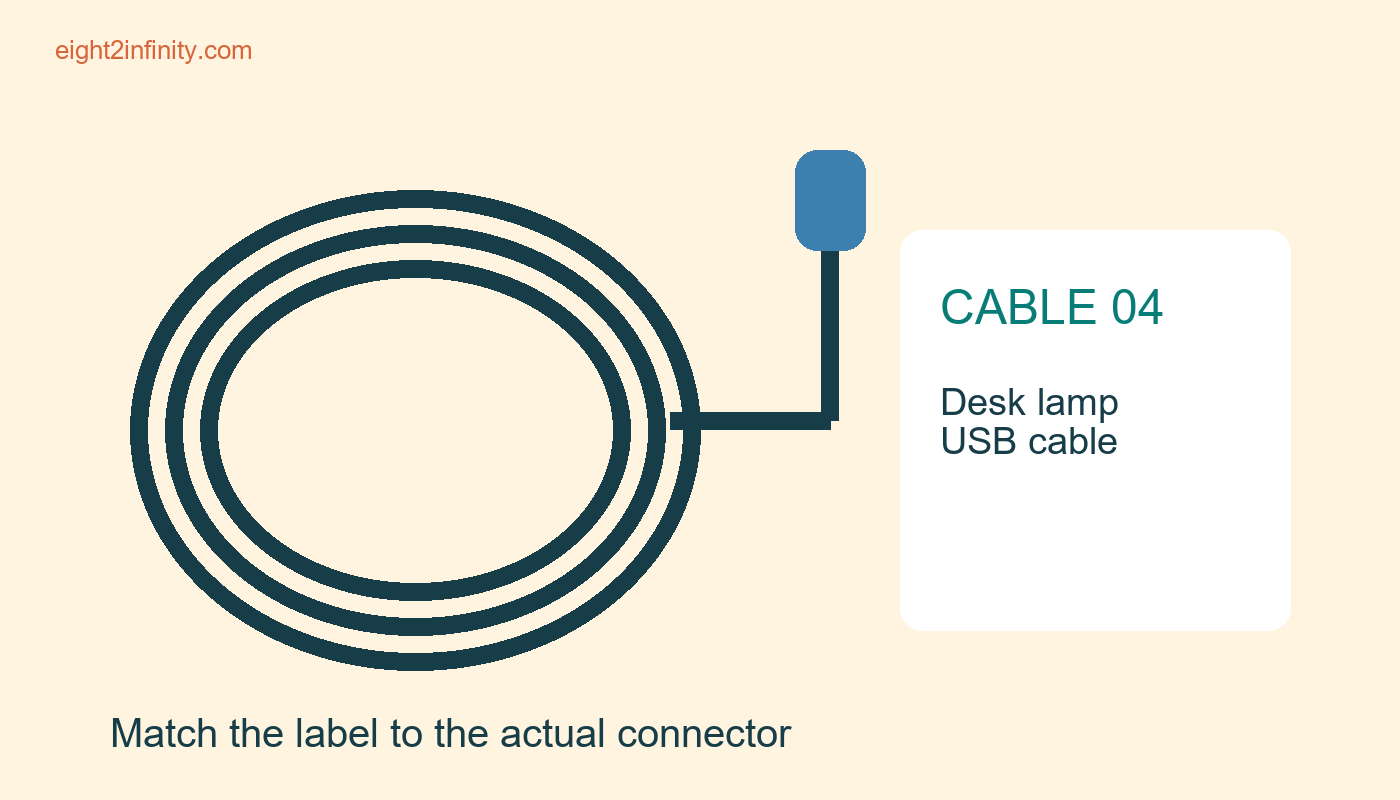
For an original example, imagine the supplied USB cable for a small desk lamp. Use the actual device manual or supplied labeling to confirm the cable's role. Do not infer a voltage, current limit, data speed, or charging capability from this article's illustration. Our example deliberately leaves those details to the real specifications. If you cannot confirm them, write Purpose unconfirmed on the card and keep it separate from cables that are ready for ordinary use.
Record facts that help you find it
On a small card, write Cable 04 as the heading. Add Intended device, Connector at device end, Connector at other end, and Reference. Fill these fields using plain descriptions that match what you can actually see or verify. A reference might be the device manual's filename and page or a photograph you have taken of the original packaging. Keep the note concise enough to read while standing beside the storage box.
Add a simple sketch or your own clear photograph of the connector ends if names alone are confusing. Do not draw an invented pin arrangement or write a guessed technical standard. The identification goal is to distinguish this physical cable from the neighboring cables in your home. A visible feature such as a right angled connector or a short lead can help, but should supplement the verified purpose rather than replace it.
Match the pouch to the card
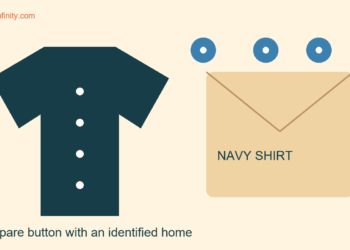
Use an existing pouch, envelope suitable for the object, or a small compartment. Label it Cable 04 and place the card where it can be read without emptying the whole box. Coil the cable loosely according to any manufacturer guidance and avoid forcing sharp bends. Do not tightly fasten a label around a section that will be flexed in use. The storage method should protect the item while leaving its identification easy to inspect.
Put only that cable and its card in the pouch during the first trial. Mixing several cables under a label such as USB makes the card much less useful. If two identical spares genuinely share the same specifications and purpose, record the quantity deliberately. Otherwise give them separate identifiers. This is a small inventory of physical objects, so the label should tell you what is actually inside rather than what you vaguely remember owning.
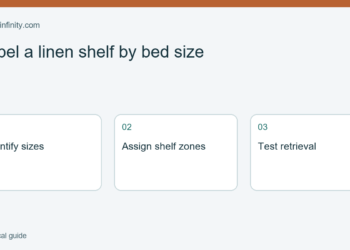
Test retrieval without plugging it in
Close the pouch and put it in the normal cable box. Later, ask someone to find the desk lamp cable using only the labels and card. They should be able to select Cable 04 and explain why it is the right candidate. This is a retrieval exercise, not a functionality or safety test. Verify the specifications and condition again before actual use, especially if the card is old or the device has changed.
If the person opens every pouch anyway, improve the visible description. A card hidden beneath a tightly packed coil is not doing its job. Move the device name to the front or use a clearer photograph. Avoid adding more technical fields until the basic identification is readable. Many small collections need a plain device name and a reliable reference more than a complicated spreadsheet that nobody updates when a cable leaves the box.
Review uncertain and obsolete items separately
Create a temporary area for cables awaiting identification. Set a review date so uncertainty does not become permanent storage. If a cable no longer has a useful role, follow suitable local reuse, donation, or electronics recycling guidance. The Environmental Protection Agency encourages reuse and repair where appropriate; it does not certify the compatibility of any particular spare cable. Only offer a cable to another person with an honest description of what is known about it.
When a device leaves the household, review its spare cable card. You might send the verified matching cable with the device or update the card if another legitimate use is confirmed. Do not leave the old label unchanged while using the pouch for an unrelated object. A tidy container with misleading information wastes time and can encourage incorrect assumptions. The system succeeds when the description, the object, and the reference continue to agree.
Try a two cable comparison
Make a second card for a different verified cable and compare them without connecting either one. Can you distinguish their purposes from the front labels? Which details are confirmed and which remain unknown? If a field is uncertain, write that openly rather than filling it with a guess. Keep the smallest set of fields that lets someone retrieve the right candidate and consult the correct specifications before use.