Pack a reusable day bag for one ordinary outing
Pack a day bag by starting with the actual outing, selecting a few items you expect to use, and checking the loaded bag before leaving. For a short library and grocery trip, that might mean a filled bottle, a folded reusable shopping bag, a small notebook, and the essentials you normally carry. This is a simple planning exercise, not a universal travel or emergency packing list. Adapt it to the person, weather, transport, and destination.
Describe the trip before collecting objects
Write a single sentence such as Walk to the library, return two books, then buy bread on the way home. That sentence makes the bag's job concrete. Returning books requires space for those books; buying bread requires a way to carry something that should not be crushed. A vague goal such as Be prepared for everything can encourage an overfilled bag without making the actual trip easier. Start with what you know you will do.
Check any destination rules and your own needs separately. Some venues restrict bags or containers, and an ordinary outing may involve accessibility requirements that this generic example cannot predict. Do not omit essential personal items merely because they are absent from someone else's list. The point is to make the bag support your day, not to meet a minimalist target or copy a photograph of neatly arranged objects.
Select the container you already have
Empty an existing bag and inspect it. Remove old receipts, unnecessary objects, and crumbs before loading. Check that its handles, strap attachments, and closures are suitable for the intended contents. This is a visual household check, not a load rating test. Follow the bag manufacturer's limits where provided and do not use a damaged bag for a heavy load. A smaller trip may need a different container from a trip involving several large books.
Put the books in first for this example, with their edges protected from anything likely to mark them. Add a closed bottle in a stable position, keeping it away from paper if leakage would damage the books. Check the cap before packing. A reusable bottle is useful only if it is appropriate for the drink and can be carried securely. Avoid treating a pouch or fabric lining as a guarantee that a leaking container will not wet the rest of the bag.
Make space for the return journey
Leave enough room for the folded shopping bag to open later. Bread should not have to sit beneath the books. You can carry the shopping separately or reserve a suitable area for it. Think about the journey home before filling every pocket at the door. A bag that closes comfortably on departure may become awkward after you add borrowed books or groceries, even if each individual item seems small when viewed on the table.
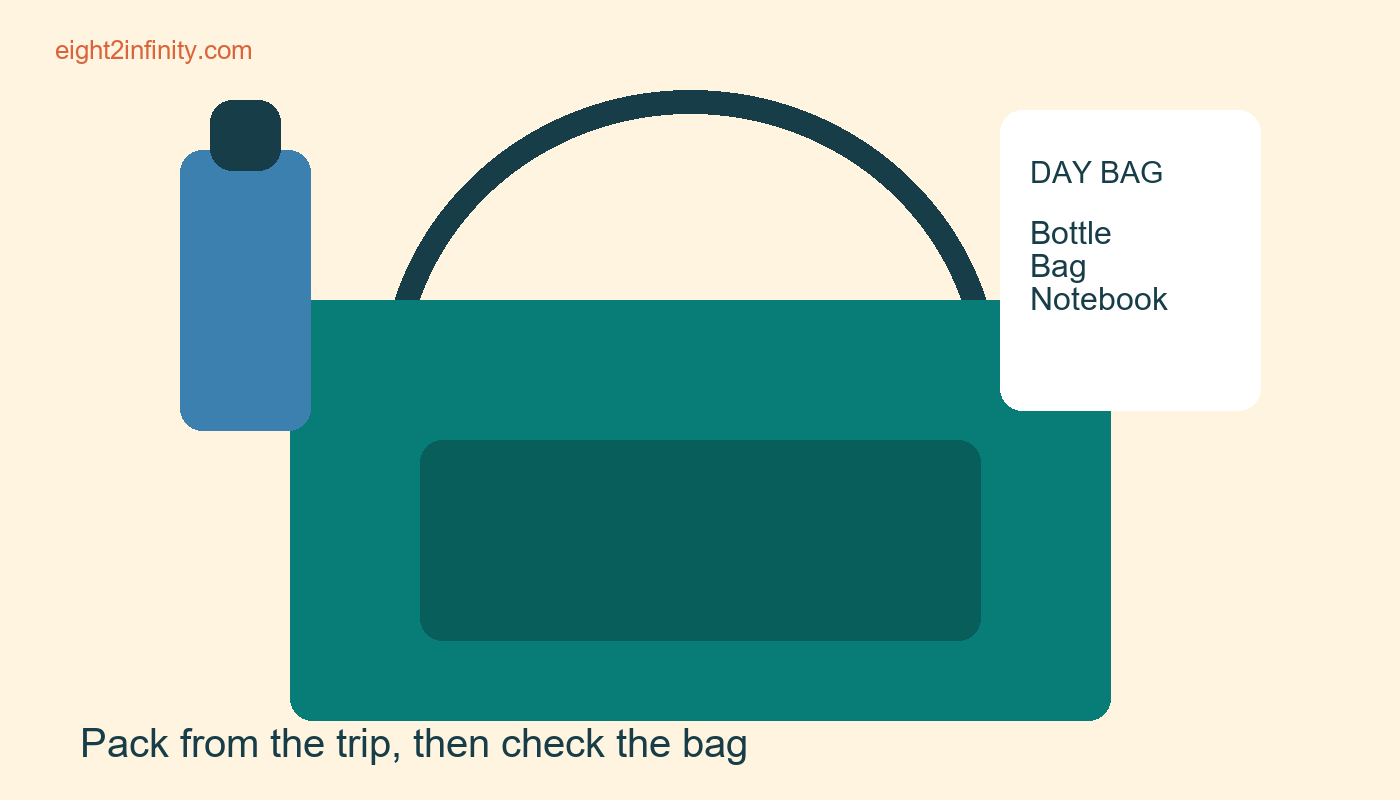
For a concrete rehearsal, load the two books, bottle, notebook, and folded reusable bag. Close the bag and lift it normally. If it feels unwieldy for you, remove optional items or change how you plan the errands. Do not force yourself to carry an uncomfortable load to satisfy the example. This is not an ergonomic assessment; it is an invitation to notice a practical problem while you still have time to change the plan.
Use a short departure card
Make a card with three trip specific prompts: Books to return, Bottle closed, and Shopping bag packed. Put it beside the place where the bag waits. These prompts should refer to things you can actually verify, rather than broad words such as Ready. A household member should be able to read the card and check the contents without guessing what you intended. Keep personal information off a card that might be visible to others.
Reusable items fit the broader reduce and reuse approach described by the Environmental Protection Agency. The particular day bag layout here is an original suggestion, not a measured environmental comparison between products. You do not need to buy a new bag or bottle to complete the exercise. Use suitable belongings you already have, and judge the arrangement by whether the items are used and the trip is easier to carry out.
Reset the bag after the outing
When you return, empty anything that should not stay inside. Put returned or borrowed materials in their intended place, clean reusable containers according to their instructions, and remove damp items so they are not forgotten. Return the folded shopping bag to its chosen location when it is clean and dry. A reset keeps tomorrow's packing decision separate from today's leftovers. It also lets you notice whether something was carried but never needed.
After two or three outings, review the card. Replace an unused optional item with a prompt you actually missed, or shorten the list if it repeats habits you already perform reliably. Keep specialized equipment on a separate trip list. A rainy outing, a long journey, and an ordinary short errand should not automatically inherit the same contents. Your plan should become more specific with experience rather than steadily accumulating every object that might conceivably be useful.
Make your own version
Choose one familiar outing and write its purpose in one sentence. Pack from that sentence, rehearse the return load, and make a card with three observable checks. After the trip, ask which item helped, which stayed unused, and which omission caused inconvenience. What would you change next time? Keep that answer with the card so the routine improves from your own experience rather than from an arbitrary list of must carry objects.