• About
  • Contact
  • Privacy Policy
  • Terms
  • Editorial Policy
  • Affiliate Disclosure
No Result
View All Result
  • Login
Eight to Infinity
  • Home
  • Parenting
    • Child Safety
    • Family Wellness
    • Kids Activities
    • School & Learning
  • Practical Living
    • Cleaning
    • Home Décor
    • Home Improvement
    • Organization
    • Pest Control
  • Pet Care
    • Bird Care
    • Budgie Care
    • Beginner Pet Guides
  • Technology
    • AI Tools
    • Apps
    • Online Safety
    • How-To Tech
  • Money & Work
    • Career
    • Entrepreneurship
    • Financial Planning
    • Investment Advice
    • Making Money Online
  • Food
    • Cooking Tips
    • Recipes
  • Health
    • Healthy Eating
    • Mental Health
    • Wellness
  • Education
    • Career Education
    • Student Guides
    • Study Abroad
  • Travel
    • Destinations
  • Science
    • Facts
  • Lifestyle
    • Beauty
    • Fashion
      • Footwear
    • All Post
No Result
View All Result
Eight to Infinity
No Result
View All Result
Home Education
Convert a fraction to a decimal by dividing the numerator

Convert a fraction to a decimal by dividing the numerator

by Nahida Azmin Nishu
November 22, 2026
in Education
0
ADVERTISEMENT
3
SHARES
20
VIEWS
Share on FacebookShare on Twitter

Convert a fraction to a decimal by dividing the numerator

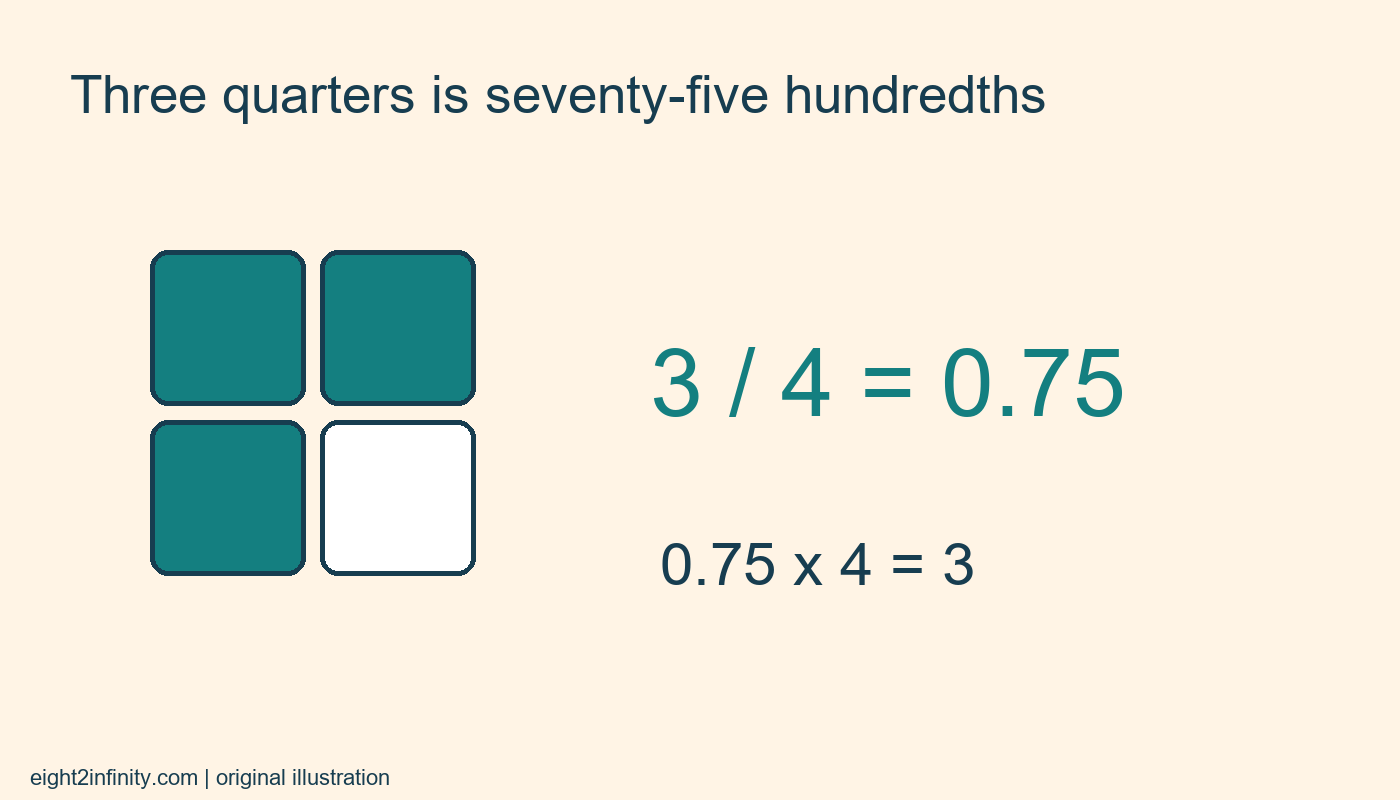
To write a fraction as a decimal, divide its numerator by its denominator. For example, 3/4 means 3 divided by 4, which is 0.75. Keep the fraction visible while you work so you do not accidentally reverse the division. This lesson uses terminating decimals with small denominators, then explains why a calculator's displayed digits are not always an exact final answer for every fraction.

The practical question is how two different written forms can represent the same quantity. Three quarters of a unit and seventy-five hundredths of a unit identify the same amount. Long division shows the connection step by step. You do not need to memorize a table of common fractions before understanding the method, although familiar results can later help you check your arithmetic.

ADVERTISEMENT

Read the fraction as division

Write 3/4 on paper and label 3 as the numerator and 4 as the denominator. Say Three divided by four. The denominator tells you how many equal parts make a whole; the numerator tells you how many of those parts are being considered. For this conversion, the numerator is the dividend and the denominator is the divisor. Reversing them would solve 4/3, a different problem.

Before calculating, make an estimate. Since 3 is less than 4, the fraction is positive and less than one. Your decimal should therefore lie between 0 and 1. This simple boundary check will catch an answer such as 1.33 immediately, even if you do not yet know the correct decimal. Estimation helps you inspect the setup as well as the arithmetic.

Work through three quarters

Set up 3 divided by 4. Four does not fit into three whole units, so the whole-number part is 0. Add a decimal point and view 3 as 3.00 for the division. Thirty tenths divided by 4 gives 7 tenths with a remainder of 2 tenths. Write 7 in the tenths place. Bring down the next zero to continue with twenty hundredths.

Twenty hundredths divided by 4 gives 5 hundredths with no remainder. Write 5 in the hundredths place. The result is 0.75. You can check it by multiplying 0.75 by 4 to recover 3. The zero remainder is why the division stops exactly here; you have not merely stopped because the answer looks familiar or because two decimal places are usually convenient.

Connect the result to equal parts

Draw a square and divide it into four equal smaller squares. Shade three. Then imagine the same whole divided into one hundred equal little squares: the shaded part corresponds to seventy-five of them. This connects 3/4 with 75/100, which is 0.75. The picture supports the division result, provided your four original parts really are equal.

ADVERTISEMENT

Do not use the visual as a measuring trick when the drawing is rough. The mathematical relationship comes from equal parts, not from the exact area of your pencil shading. If you prefer arithmetic, multiply the numerator and denominator of 3/4 by 25 to obtain 75/100. That is another check for this particular denominator, though direct division works more generally.

Try fifths and a mixed example

Convert 2/5 by dividing 2 by 5. The result is 0.4, which you can verify because 0.4 times 5 equals 2. You can also write 2/5 as 4/10. Notice that 0.4 and 0.40 are the same value. A trailing zero after the decimal does not make the quantity larger, even though it changes how the value is displayed.

For a fraction greater than one, try 7/4. Estimate first: seven quarters is more than one whole and less than two wholes. Division gives 1.75. Alternatively, separate 7/4 into 1 and 3/4, then use the result already established for three quarters. This second method checks the whole-number part and helps explain why the decimal is no longer below one.

Recognize when division continues

Not every fraction has a terminating decimal. If you divide 1 by 3, the remainder pattern continues and the decimal repeats. A calculator can display only a finite number of digits, so its screen does not contain the whole infinite expansion. Do not treat a displayed approximation as an exact replacement unless the context permits rounding and you clearly state the chosen precision.

For this lesson, keep the main practice to 1/2, 1/4, 3/4, 2/5, and 7/4. These allow exact terminating results and make it easier to learn the division setup. Introduce repeating notation separately once the method is comfortable. Combining long division, repeating notation, rounding, and percentage conversion in one first exercise can obscure the basic relationship you are trying to understand.

Check common mistakes

If your answer for 3/4 is greater than one, inspect whether you divided in the wrong direction. If your answer is 0.075, check the placement of the decimal and the meaning of tenths versus hundredths. If you stop with a remainder, either continue the division or explain that you are making an approximation. Do not silently discard the unfinished part of the calculation.

OpenStax's decimal material supports the fraction-as-division method; the examples and checking routine here are original. For your exercise, convert 1/4, 4/5, and 9/4, then verify each result by multiplication. The answers are 0.25, 0.8, and 2.25. Which check helped you more: estimating the interval before dividing, or multiplying the decimal by the denominator afterward?

Sources and related reading

Primary reference and scope

Build equivalent ratios with a pencil packing example

Tags: convert a fraction to a decimal by dividing the numeratorEducation
Previous Post

Compare negative integers by their position on a number line

Next Post

Crack recipe eggs one at a time into a separate bowl

Nahida Azmin Nishu

Nahida Azmin Nishu

Related Posts

Compare negative integers by their position on a number line
Education

Compare negative integers by their position on a number line

November 22, 2026
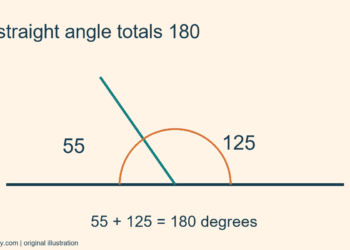
Find a missing angle beside a straight line
Education

Find a missing angle beside a straight line

November 22, 2026
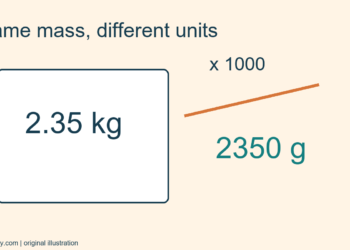
Convert kilograms to grams while keeping the units visible
Education

Convert kilograms to grams while keeping the units visible

November 22, 2026
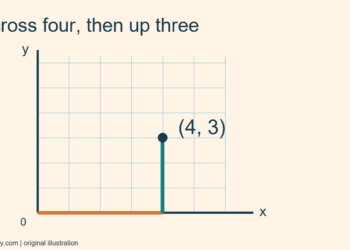
Plot a first quadrant point by moving across then up
Education

Plot a first quadrant point by moving across then up

November 22, 2026
Next Post
Crack recipe eggs one at a time into a separate bowl

Crack recipe eggs one at a time into a separate bowl

No Result
View All Result
ADVERTISEMENT

Categories

  • All Post (4)
  • Business and Finance (61)
  • Education (94)
  • Facts (28)
  • Food and Drink (94)
    • Cooking Tips (27)
  • Health and Fitness (85)
    • Mental Health (13)
  • Lifestyle (106)
  • Parenting (51)
  • Pet Care (53)
  • Practical Living (104)
    • Organization (26)
  • Science (15)
  • Technology (102)
  • Travel (78)
    • Destinations (10)

Recent.

Chop a chocolate bar into deliberate pieces for baking

Chop a chocolate bar into deliberate pieces for baking

November 22, 2026
Crack recipe eggs one at a time into a separate bowl

Crack recipe eggs one at a time into a separate bowl

November 22, 2026
Convert a fraction to a decimal by dividing the numerator

Convert a fraction to a decimal by dividing the numerator

November 22, 2026
ADVERTISEMENT
Facebook Youtube Instagram

Eight to Infinity is a online magazine website where you can find something that you might interested to know or find something new to know.

Category

  • All Post (4)
  • Business and Finance (61)
  • Cooking Tips (27)
  • Destinations (10)
  • Education (94)
  • Facts (28)
  • Food and Drink (68)
  • Health and Fitness (72)
  • Lifestyle (106)
  • Mental Health (13)
  • Organization (26)
  • Parenting (51)
  • Pet Care (53)
  • Practical Living (78)
  • Science (15)
  • Technology (102)
  • Travel (78)

Tags

and Australia awareness bedtime routine toddlers benefits Bird Care climate change college students Cooking Tips dos Education exploring fashion future Galah Cockatoo German culture hair care health Healthy Lifestyle higher education home remedies how how to get rid of fruit flies impact Instant Noodles intersection mental health education mental illness natural remedies Nutrition Organization parakeet care Parenting Tips Pet Birds Practical Living Rome screen time rules for kids stigma street technology the travel wildlife Windows 11 world

© 2024 Eight to Infinity - Developed by ZaeimTech.

Welcome Back!

Login to your account below

Forgotten Password?

Retrieve your password

Please enter your username or email address to reset your password.

Log In
Ads Blocker Image Powered by Code Help Pro

Ads Blocker Detected!!!

We have detected that you are using extensions to block ads. Please support us by disabling these ads blocker.

Refresh
No Result
View All Result
  • Home
  • Parenting
    • Child Safety
    • Family Wellness
    • Kids Activities
    • School & Learning
  • Practical Living
    • Cleaning
    • Home Décor
    • Home Improvement
    • Organization
    • Pest Control
  • Pet Care
    • Bird Care
    • Budgie Care
    • Beginner Pet Guides
  • Technology
    • AI Tools
    • Apps
    • Online Safety
    • How-To Tech
  • Money & Work
    • Career
    • Entrepreneurship
    • Financial Planning
    • Investment Advice
    • Making Money Online
  • Food
    • Cooking Tips
    • Recipes
  • Health
    • Healthy Eating
    • Mental Health
    • Wellness
  • Education
    • Career Education
    • Student Guides
    • Study Abroad
  • Travel
    • Destinations
  • Science
    • Facts
  • Lifestyle
    • Beauty
    • Fashion
      • Footwear
    • All Post

© 2024 Eight to Infinity - Developed by ZaeimTech.

This website uses cookies. By continuing to use this website you are giving consent to cookies being used. Visit our Privacy and Cookie Policy.