Index wrapping paper rolls by usable width
Organize wrapping paper by the width you can actually use, then keep a short index that helps you choose a roll before pulling everything out. Measure the remaining usable width, record the pattern and location, and mark partial or damaged areas honestly. This method is useful when several rolls look similar from the outside but differ in size. It does not require buying a special organizer or estimating an exact remaining area from an uneven roll.
Bring the rolls into one place
Choose a clean floor or table with enough space to unroll a small section without creasing it. Gather only the wrapping paper you want this system to cover. Keep tissue, ribbons, and gift bags outside the first pass so the task stays manageable. The example index uses three rolls: blue dots, plain brown, and narrow stars. These are invented household examples, intended to show the recording method rather than recommend particular products or storage furniture.
Check each roll for crushed ends, dampness, torn margins, or tape stuck to the usable paper. A roll can be wide overall while only a narrower section remains suitable for a neat wrap. Do not discard a whole roll because one edge is imperfect; first decide whether the paper has a realistic smaller use. Conversely, do not describe badly damaged material as full-width stock simply because the cardboard core is long. The index should reduce surprises during wrapping.
Record the width that matters
Measure across a clean usable section of paper, perpendicular to the roll's length. Write the measurement with its unit. For example, record Blue dots, 58 cm usable width, upper shelf tube. If an edge is damaged along much of the roll, note the narrower clean width or add a clear condition note. Keep the original full width separate if you choose to record both. A vague entry such as Large blue roll does not answer whether it will fit a particular box.
Do not try to calculate the entire remaining length by guessing from the roll's thickness. Paper thickness, winding tightness, and hidden scraps can make that estimate misleading. A simpler availability description can be more honest: several wraps, one medium wrap likely, or short piece only. If a specific project depends on having enough paper, unroll and measure the required section before promising the result. The index is a selection aid, not a substitute for the final fit check.
Give each roll an easy identity
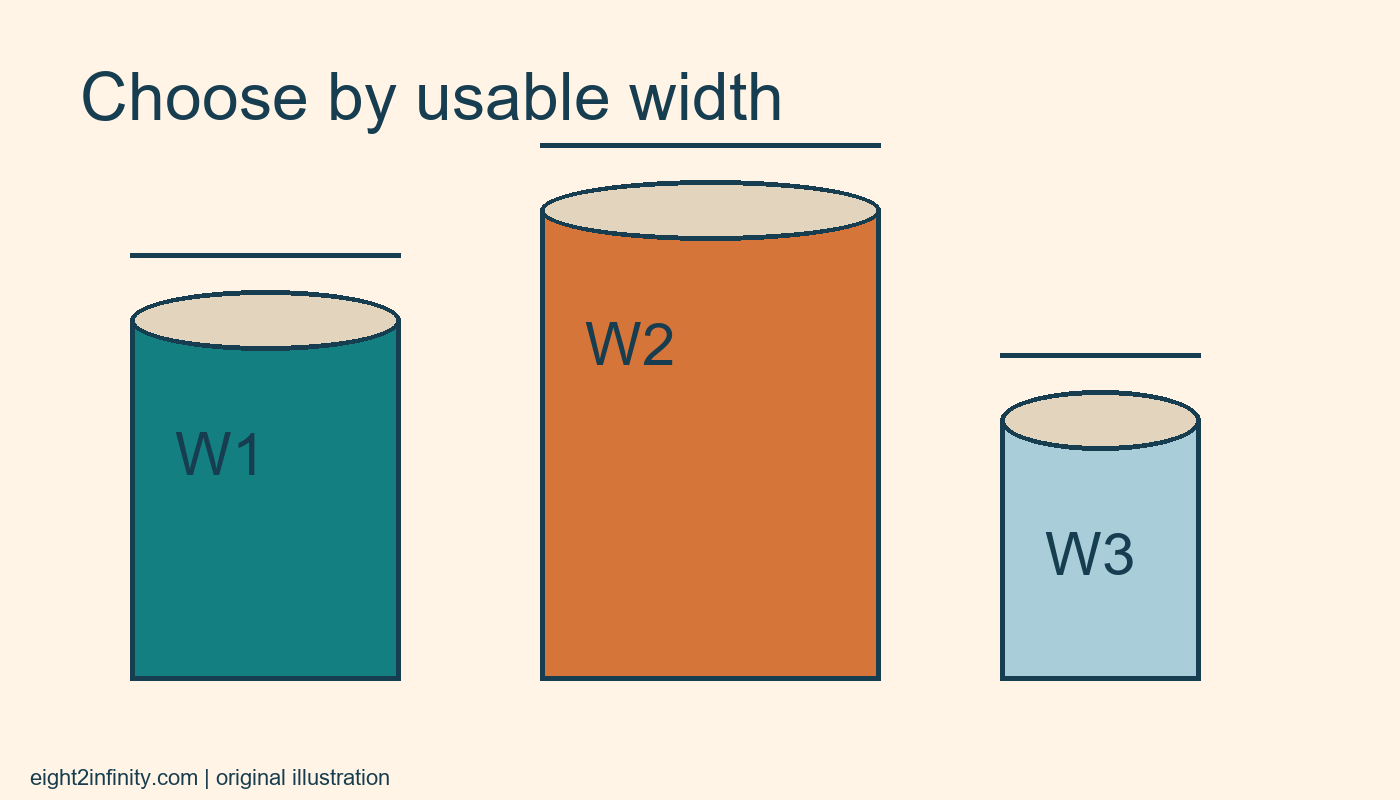
Assign a short identifier such as W1, W2, and W3 if patterns are difficult to distinguish. Put the identifier on a removable paper band around the roll rather than on exposed wrapping paper. Avoid adhesive directly on a decorative surface that may tear when removed. The band can also stop the roll from unfurling. Make it loose enough to slide off without crushing the tube. A saved strip of clean paper can serve as a band for this purpose.
Write the same identifier on the index next to pattern, usable width, condition, and storage location. Keep the index where wrapping begins, or take a readable photo of it for your own reference. Do not add details you will not maintain. A five-column list that stays accurate is more useful than a detailed inventory abandoned after the first gift. If several people share the supplies, use plain location names such as Hall cupboard lower shelf instead of private abbreviations.
Match a roll to a real box
Bring the intended box to the wrapping surface and check how the paper will travel around it. Width is only one dimension; you also need enough length to go around the box with a suitable overlap. Use the index to shortlist rolls, then perform the physical fit check before cutting. Avoid selecting the narrowest possible roll solely to use it up if it leaves no workable margin at the ends. Awkward joins can waste more paper than a better initial choice.
For instance, a small box may suit the narrow stars roll even though the wider brown roll would also work. Choosing stars preserves the versatile wider paper for a larger package. This is a practical judgment, not an optimized cutting calculation. Keep a clean offcut only when you can name a likely next use, and label its dimensions separately. Do not return loose scraps inside a roll if they make the index appear to describe a continuous sheet that is no longer there.
Maintain the index after cutting
After a wrapping session, update only the entries that changed. If W2 is now a short piece, replace the previous availability note. If you moved a roll, correct its location before putting the index away. Store paper dry and supported so the ends are not crushed by heavier objects. The EPA's general reuse guidance supports making practical use of existing materials, but it does not prescribe this indexing system or guarantee that every coated wrapping paper can be recycled locally.
Try a ten-minute exercise with three rolls and one sample box. Write the index, choose a candidate without opening every roll, and then verify the fit physically. Note any information you wished the index had included. Add that field only if it will help the next selection. Which roll is genuinely versatile, and which one is worth keeping only for a narrow task? Answering those questions makes future storage decisions easier than merely arranging rolls from tallest to shortest.