Track the magazine issues you actually keep
Track a small magazine collection with an issue checklist that records what you own, where it is stored, and why you kept it. Use the printed issue date or number rather than the cover image alone. This helps you avoid buying a duplicate and find a specific article without pulling every magazine from the shelf. Begin with one title and one shelf so the list stays manageable.
The checklist is an original organizational method, not a recommendation to collect more magazines. EPA reuse guidance provides general context for keeping useful materials in service, while the fields below are tailored to retrieval. Do not describe the collection as complete unless you have checked an authoritative issue list. A personal inventory answers What do I have? It does not automatically answer What was ever published? Those are different questions and require different evidence.
Define a modest boundary
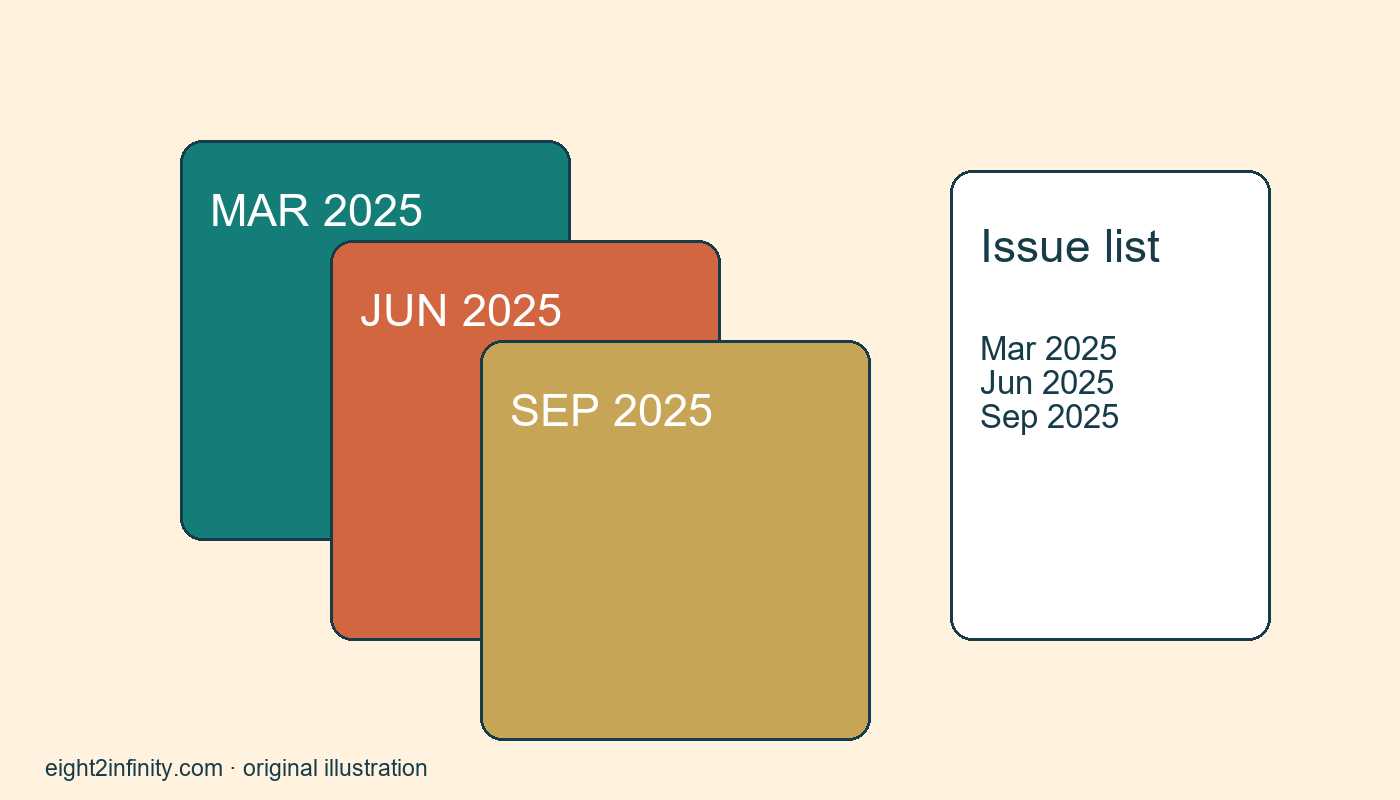
Choose a fictional gardening magazine called Balcony Notes for the worked example. Gather the three issues you actually have: March 2025, June 2025, and September 2025. Keep supplements beside the issue they came with while you inspect them. Do not mix the list with unrelated titles yet. A narrow boundary makes it easier to notice inconsistent dates, special editions, or an issue that uses a number instead of a month on its cover.
Create a paper table with Title, Issue, Kept for, Location, and Checked date. For the first row write Balcony Notes, March 2025, container layout article page 18, shelf B left file, and today’s date. Use the date you actually inspected the issue rather than inventing a publication verification date. The checked date tells a future reader when the physical inventory was last confirmed. It does not establish when the magazine was released or whether its advice remains current.
Copy identifiers from the issue itself
Look for the printed month, year, volume, or issue number and reproduce the useful identifiers accurately. If the cover says Spring while the inside publication details give issue 12, record both when that would help distinguish it. Do not infer a monthly schedule from three copies. Special issues and irregular publication patterns can make a guessed sequence misleading. Use a note such as Special edition when the magazine itself identifies the issue that way.
For June 2025, record pot arrangement photographs page 24. For September 2025, record small-space tools checklist page 10. These are invented article descriptions for the exercise. In your own collection, copy enough information to find the material without transcribing the article or reproducing copyrighted pages. A page number and a short personal description are usually sufficient for retrieval. If the useful item spans several pages, record the starting page and a short note rather than building an elaborate article database.
Match the list to a stable location
Put the three issues in a suitable existing magazine file or upright support. Label the location B left if that matches the shelf description in the list. Arrange issues in date order, then verify that each checklist row corresponds to one physical copy. Leave enough space to remove an issue without tearing its cover. If the shelf is overfull, reduce the scope or choose another suitable place instead of forcing the magazines into an unsuitable gap.
Keep the checklist where you will use it. A paper list can sit at the front of the file. A digital note can be convenient when checking a possible duplicate away from home. If you use both, choose one as the main version and avoid letting them diverge. You do not need a spreadsheet for three issues unless you prefer it. The method is successful when it answers the retrieval question quickly with little maintenance, regardless of whether the list is handwritten or typed.
Separate missing from unowned
Suppose you remember an article about watering but cannot find it in the three issues. Do not add April 2025 as Missing merely because the dates have a gap. You may never have owned that issue, and the magazine may not even publish monthly. Instead write Search note: watering article, source not yet identified. Keep speculative notes separate from confirmed holdings. This prevents a guess from becoming a false inventory entry that sends someone looking for an object that was never there.
If you lend an issue, add the temporary location and an agreed return note that suits your situation. If you permanently give it away, remove it from active holdings or mark it as no longer kept. A checklist that retains every former possession becomes misleading. Likewise, when a useful article is no longer relevant to you, reassess whether the whole issue still deserves shelf space. The inventory should support your actual interests rather than obligate you to maintain a collection you no longer use.
Test the checklist before expanding
Ask someone to locate the container layout article using only the list. They should find March 2025 on shelf B left and open near page 18. If they cannot distinguish the issues, add the printed issue number or another stable identifier. Do not solve every ambiguity by adding a cover photograph unless a photo would actually help. A precise written identifier is often easier to update and search than an image whose subject must be recognized visually.
For an exercise, imagine you find a second copy of June 2025 and a special edition with no month on the cover. How would you record the duplicate and identify the special edition without inventing a date? Inspect the publication details and record only what you can verify. Expand to another title only after the small list works. The useful result is an accurate record of the issues you keep, their purpose, and their location, with uncertain memories clearly separated from confirmed physical holdings.