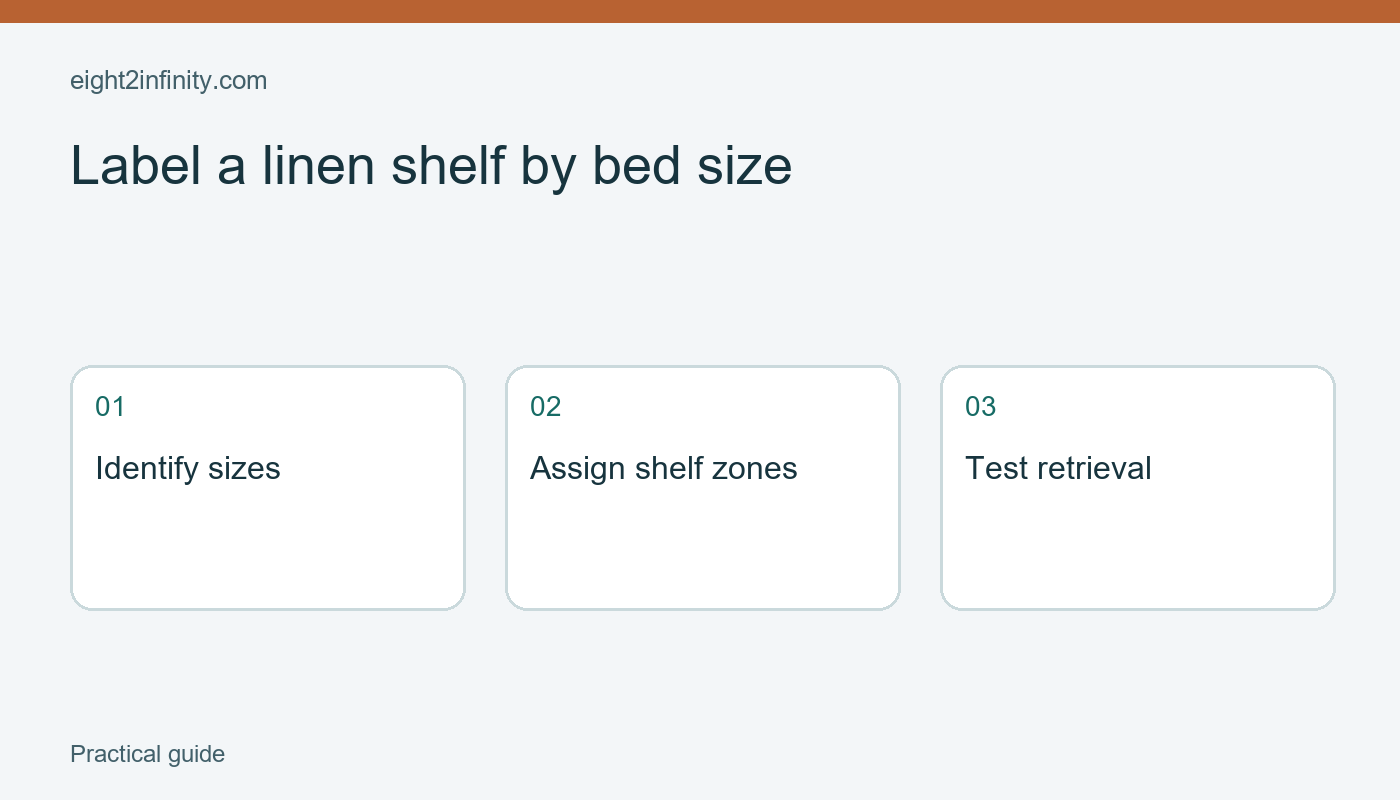
Label a linen shelf by bed size
Label a shared linen shelf by the bed size each set actually fits, then keep matching pieces together in a simple, consistent zone. Start by reading the labels and checking uncertain items against the intended bed. A shelf organized only by color can look tidy while leaving everyone unsure which fitted sheet to take.
This guide is a household sorting exercise, not a textile-care or mattress-sizing standard. Bed-size names and dimensions vary between countries and manufacturers. Use your own linen labels, mattress dimensions, and product information rather than assuming that a familiar size word means exactly the same thing everywhere.
Establish the useful categories
Choose one shelf and list the beds it serves. For an original example, imagine a guest bed and a child's bed that need different fitted-sheet sizes. The useful categories might be Guest bed and Small bed, with the actual mattress dimensions recorded on a separate reference card. Names based on the destination can be easier for visitors to understand than unfamiliar size terminology.
Gather only the linens associated with that shelf. Check care labels and any size information. Set aside uncertain pieces for identification rather than dropping them into a confident-looking category. If a label is unreadable, compare the item with a known matching piece or check the manufacturer's information when you can identify the product.
Do not assume that two pieces belong together just because their colors match. Sets can contain similar patterns in different sizes, and separately purchased pillowcases may be compatible without belonging to the original set. Decide what matching means for your household: exact set, compatible size, or a deliberate mixed combination.
Make a temporary shelf map
Before buying dividers or containers, clear a small area and assign temporary zones. Place a paper label at the front of each zone. In the example, put Guest bed on the left and Small bed on the right. Keep a separate spot for spare pillowcases if they serve both beds and would otherwise confuse the sets.
Use a shelf that can be reached comfortably. Heavy stacks and awkward overhead retrieval can make a neat system inconvenient. Keep pathways clear while sorting and avoid leaving piles where someone could trip. If the shelf is high, limit it to items that can be handled safely and follow the furniture's intended use.
Return one known set to each zone and look at the shelf from the position where you normally retrieve linen. Can you read the labels without moving the stacks? A label hidden under the bottom sheet does little work. Place it where the user sees the decision before pulling anything out.
Keep pieces together simply
Fold the pieces using a method that fits the shelf and is easy to repeat. You do not need a special folding technique for this system to work. The important relationship is that the fitted sheet, flat sheet if used, and suitable pillowcases remain associated with the same destination.
If you use an existing container or wrap to group a set, make sure it does not obscure the size label or make retrieval harder. Avoid tightly compressing everything just to fit more into the shelf. A little room around the groups makes it easier to return clean linen without dismantling the neighboring stack.
Write a short contents note if sets differ. For example, Guest bed set A might contain one fitted sheet and two pillowcases, while set B includes a flat sheet as well. The note prevents someone from searching for a piece that was never part of that group. Keep notes factual rather than implying that every bed needs the same arrangement.
Handle uncertain and surplus pieces
Create a small temporary review pile for unidentified items. Give that pile a deadline or a concrete next action, such as compare with guest mattress on Saturday. Without an action, Uncertain can become a permanent overflow category. Do not let the temporary pile quietly occupy the space you just made usable.
Check condition and follow care labels before deciding how to use or pass on linens. Local donation organizations have their own acceptance rules, and textile recycling arrangements differ. Verify the actual destination rather than assuming all fabric belongs in a recycling bin. General reuse guidance supports keeping useful belongings in service, but it does not determine what a local collection program accepts.
If the shelf remains crowded, count complete usable sets rather than individual pieces. Four fitted sheets and one suitable pillowcase do not necessarily represent four ready sets. Compare what you own with your household's actual change-and-laundry routine. Choose a manageable quantity based on that routine rather than a universal rule about how many sets everyone should keep.
Test the labels during a real change
Ask someone who did not sort the shelf to choose linen for one bed. Watch which label or piece causes hesitation. If they need to unfold every fitted sheet, the category or label needs work. Improve that one decision point instead of adding decorative labels to every individual item.
For a reader exercise, create two temporary shelf zones and use them through one linen-change cycle. After washing and following each item's care instructions, return the pieces to their assigned homes. Could you identify incomplete sets before putting them away? Keep the labels that helped and revise the ones that required an explanation.