Sift measured cocoa powder to break up visible lumps
If a recipe calls for measured cocoa powder that needs lump removal, pass it through a suitable fine sieve into a bowl before incorporating it as directed. Gentle agitation helps fine powder fall through while visible clumps can be broken up. Follow the recipe's measurement order: cocoa measured before sifting is not automatically interchangeable with a volume measured after sifting.
King Arthur Baking describes sifting as a way to remove clumps from dry ingredients, including cocoa. This article focuses on a small cocoa preparation task with original handling checks. It does not recommend substituting one cocoa type for another or changing a recipe's leavening. Natural and Dutch-process cocoas can play different roles in a formula, so use the type the recipe specifies.
Read the ingredient line carefully
Check whether the recipe gives cocoa by mass or volume and whether the word sifted appears before or after the amount. If the instruction is to measure cocoa and then sift it, obtain the stated amount first. A scale can make the sequence easier to follow when the recipe provides grams, because the target mass remains the same while the powder's looseness changes.
Do not invent a gram conversion from a random cup measure. Use the recipe writer's stated mass or an appropriate ingredient reference when one is supplied. The purpose of this task is removing visible lumps while preserving the intended amount. A neat bowl of sifted powder does not compensate for selecting the wrong cocoa type or measuring a different quantity.
Prepare a dry work area
Set a clean dry bowl on a stable counter and choose a sieve wide enough to sit safely above it. Check the mesh for tears and dried residue. Moisture can make cocoa cling and form new clumps, so dry the utensils before beginning. A second small bowl can hold the measured cocoa while you arrange the sieve.
Choose a receiving bowl larger than the pile of powder you expect. This gives room for the sieve and reduces spills at the edge. Place it away from a fan or open window blowing directly across the work area. Cocoa is a fine powder, and vigorous movement can send it into the air. Slow handling keeps the operation easier to control.
Add a manageable portion
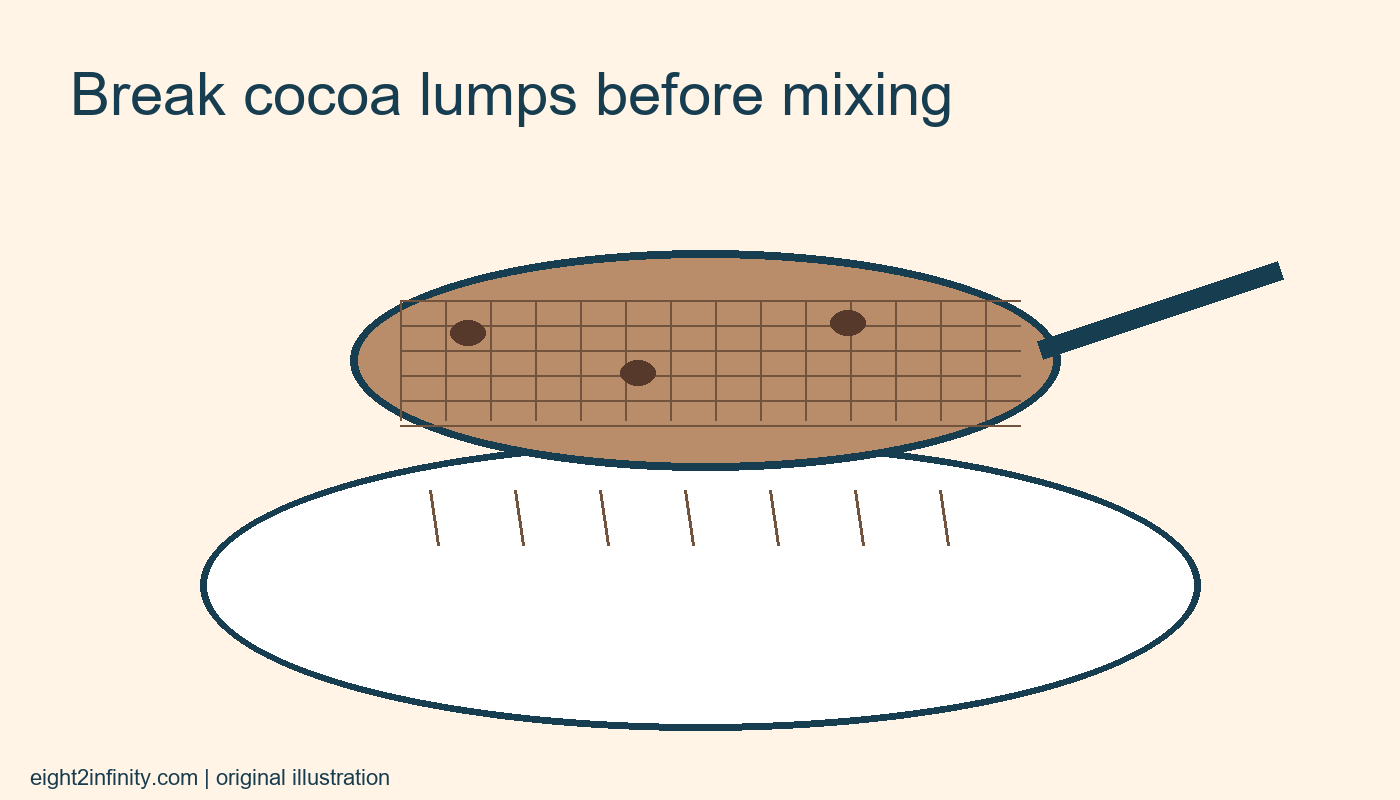
Tip some measured cocoa into the sieve without filling it to the rim. Hold it over the receiving bowl and tap or move it gently so powder passes through the mesh. If the measured amount is large for your sieve, work in portions. Crowding the mesh makes it harder to see remaining lumps and can encourage shaking that spills powder beyond the bowl.
Watch the underside as fine cocoa falls. The process should not require dramatic tossing or forceful impacts. Keep your face away from the powder path and avoid creating a cloud. This is ordinary dry-ingredient preparation, not an attempt to aerate the room. A few controlled movements are more useful than speed when the goal is keeping the measured ingredient in the bowl.
Handle the remaining clumps
Use a suitable dry spoon to press ordinary cocoa clumps gently against the mesh if needed. Do not scrape so hard that the sieve is damaged. If a hard foreign piece or unexpected material remains, investigate it rather than forcing it through. Sifting can reveal something unusual, but it does not make spoiled or contaminated ingredients safe to use.
Check the ingredient's condition and storage history if the powder has unexpected dampness, odor, discoloration, or other concerns. Follow the product's labeling and suitable food-safety guidance. Do not disguise a questionable ingredient by pulverizing it. This guide assumes cocoa that is suitable for use and simply contains the ordinary visible lumps that dry-ingredient preparation can address.
Keep the measured amount together
Gather the sifted cocoa from the receiving bowl according to the recipe's next step. A small amount can cling to the sieve, spoon, or measuring bowl, so use careful transfers to minimize avoidable loss. If a spill removes a substantial portion, do not guess that the remaining amount is close enough for every recipe. Re-establish the required quantity with an appropriate measurement.
If the recipe calls for sifting cocoa together with other dry ingredients, follow that combined instruction rather than automatically processing everything separately. Keep track of what has already been added. A written ingredient checklist can prevent a second measure of cocoa being included because the first portion has changed appearance after sifting.
Incorporate as directed
Some recipes combine cocoa with dry ingredients, while others mix it with liquid at a specified stage. Sifting does not override that sequence. Read the next instruction before pouring. Adding all the cocoa directly to finished batter because it looks ready can create a different mixing problem from the lumps you just removed.
Use the temperature, mixing method, and cocoa type specified by the recipe. This article does not supply a complete cake or frosting formula. Its narrow purpose is to make one preparation step easier to inspect. Keep any observation specific: fewer visible dry clumps before mixing is something you can see, whereas a guaranteed better finished texture would require more evidence.
Try a preparation observation
For a recipe you already intend to make, note the amount and type of cocoa, the measurement order, and whether visible lumps remain after gentle sifting. Do not add extra cocoa simply to create an experiment. Compare the measured powder's appearance before and after the step, then continue with the recipe exactly as directed.
Ask yourself three practical questions: did the sieve fit securely over the bowl, did the powder stay inside the receiving area, and did the recipe's intended amount reach the next mixing stage? If one answer is no, adjust the bowl size, portion size, or transfer method next time. Those small procedural improvements make the task more reproducible without promising a particular baking result or changing the recipe.
Sources and related reading
Check the Butter and Sugar Creaming Step Before Adding Flour