Keep one bedding set together inside its pillowcase
For a compatible bedding set, fold its clean, completely dry pieces together and place them inside one matching pillowcase. Add a visible size label if similar sets are easy to confuse. This is an original storage option for keeping related pieces together, not a rule for every fabric or cupboard. Follow textile care labels, and avoid packing a set so tightly that it is difficult to remove or identify.
The method works best when the pieces actually belong together and the pillowcase can comfortably contain them. Start with one set you already use rather than buying matching organizers. Broad EPA reuse guidance supports making use of existing items, but the particular folding and labeling arrangement below is a household design choice. Your shelf dimensions, bedding sizes, and fabric requirements should determine whether it suits your home.
Define what belongs in the set
Lay the clean, dry pieces on a suitable surface. Identify the fitted sheet, top sheet if used, and the pillowcases that serve that bed. Households use different combinations, so write down your own definition of a complete set. Do not add an unrelated spare just to fill the pillowcase. The bundle should answer a clear question: what pieces do I need when changing this particular bed?
For an original example, a double-bed set might contain one fitted sheet, one top sheet, and two pillowcases. One of the pillowcases becomes the outer holder, while the other joins the sheets inside. Another household might use a duvet cover instead of a top sheet. Keep the arrangement consistent with the bedding you actually use rather than treating the example's contents as a standard everyone must follow.
Check dryness and condition first
Inspect seams, elastic, and obvious worn areas before folding. A clean but damaged piece may need attention before it returns to the ready shelf. Keep an uncertain item separate with a note so a neatly packaged bundle does not falsely imply that everything inside is ready. Small repairs and laundering decisions should follow the textile's care information and your normal household practice.
Ensure all pieces are completely dry before enclosing them. A pillowcase is not a solution for damp laundry. If any section still feels damp or has not finished its normal drying process, leave the set out of closed storage until it is ready. Avoid promising that a particular fabric holder prevents odor or damage; those outcomes depend on conditions beyond the simple organization method described here.
Fold to the available holder
Fold the sheets into a compact shape that fits the chosen pillowcase without force. You do not need a showroom-perfect fold. Aim for a reasonably flat bundle with no large loose section dragging behind it. Lay the spare pillowcase alongside the sheets and compare the bundle with the holder's opening. If it is clearly too large, choose a different storage method rather than stretching the opening or overfilling it.
Slide the folded pieces inside gently. Leave enough room that someone can grasp and remove them without pulling hard on seams. Fold any excess holder fabric loosely over the opening if that works with the shape. Do not tie it in a tight knot. The goal is to keep related pieces together while allowing straightforward access, especially when another person is changing the bed.
Make the size visible
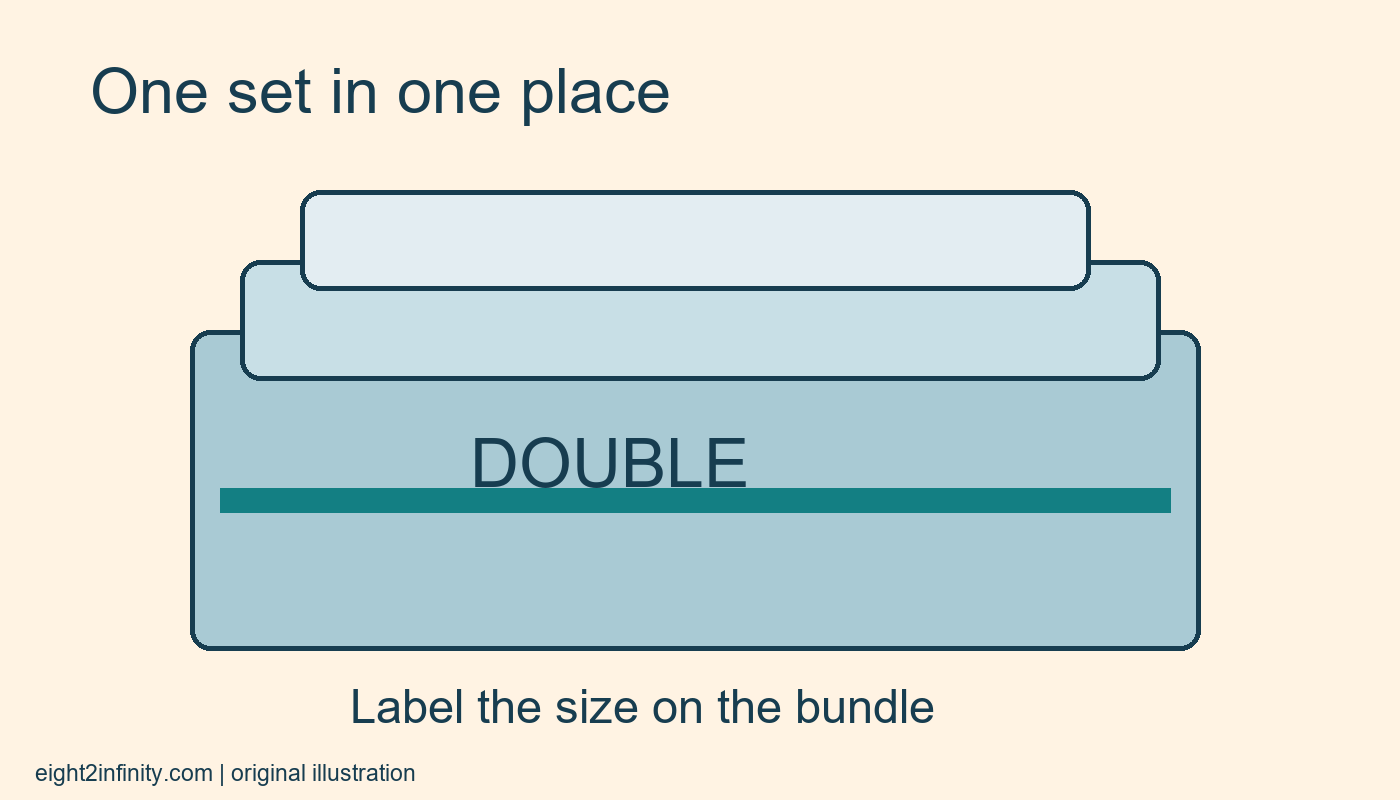
If you own visually similar sets for different beds, attach a suitable removable label or place a labeled divider beside the bundle. Write a familiar size and, if needed, the room it serves. Double, guest room is more informative than Blue because color alone may not distinguish two nearly identical sets. Avoid adhesive directly on fabric unless it is intended for that use and compatible with the material.
Keep the label visible from the shelf's normal viewing angle. A note buried underneath the bundle will not help during selection. If household members use different size terms, agree on the wording together. You can add a simple bed reference such as Guest bed A instead of relying on a measurement label that only one person understands.
Store without crowding
Place the bundle on a suitable clean, dry shelf with enough space to lift it out. Do not compress several bundles so tightly that taking one disturbs every other set. If the shelf is shallow, check that the bundle sits securely rather than protruding into a walkway or falling when the door opens. Adjust the fold or the number of bundles instead of treating available space as unlimited.
Keep everyday sets easier to reach than rarely used ones if that arrangement suits the household. A simple front-to-back rotation can work, but only if labels remain readable. Do not add complicated rotation rules merely to make the system feel complete. The useful outcome is that someone can identify and retrieve one appropriate set without assembling it from several shelves.
Run one change day trial
On the next bedding change, use the bundle and check its contents against your definition of a complete set. Note whether anything was missing, whether the pieces were difficult to remove, and whether the size label was clear. After laundering and drying, rebuild the bundle using the same convention. This trial tests your arrangement with real household behavior rather than claiming the method will suit every user.
Your exercise is to prepare one set and ask another adult which bed it serves and what pieces it contains. If they must open several bundles to find the answer, improve the label or the set definition. If the holder is too small, choose a shelf divider or another suitable existing container. What would make this method easier for the person who usually changes that bed?