Check whether a flour instruction means sift before or after measuring
Before sifting flour, read both the ingredient line and the method to determine the intended measurement order. A request for a measured amount of flour that is then sifted can differ from a request for an amount of already-sifted flour, especially when measuring by volume. Follow an explicit recipe instruction or seek clarification rather than silently choosing the order. Not every recipe needs sifting, and adding the step automatically does not guarantee a better bake.
Separate three decisions
First identify the flour type. Second identify the quantity and whether it is given by weight or volume. Third identify whether the recipe calls for sifting and when. These are separate pieces of information. Sifting an incorrect flour type does not make it the right ingredient, and carefully following the order does not fix an incorrectly measured amount. Read the full recipe before starting so a later method sentence can clarify a short ingredient line.
King Arthur's baking reference explains that sifting breaks up lumps and aerates dry ingredients, and that it can be useful in particular recipes. It also explains why modern flour does not universally require the step. Use that background to understand the instruction, not to override the recipe author. A delicate bake may have a reason for a preparation step that a different everyday recipe omits.
Interpret the wording cautiously
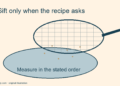
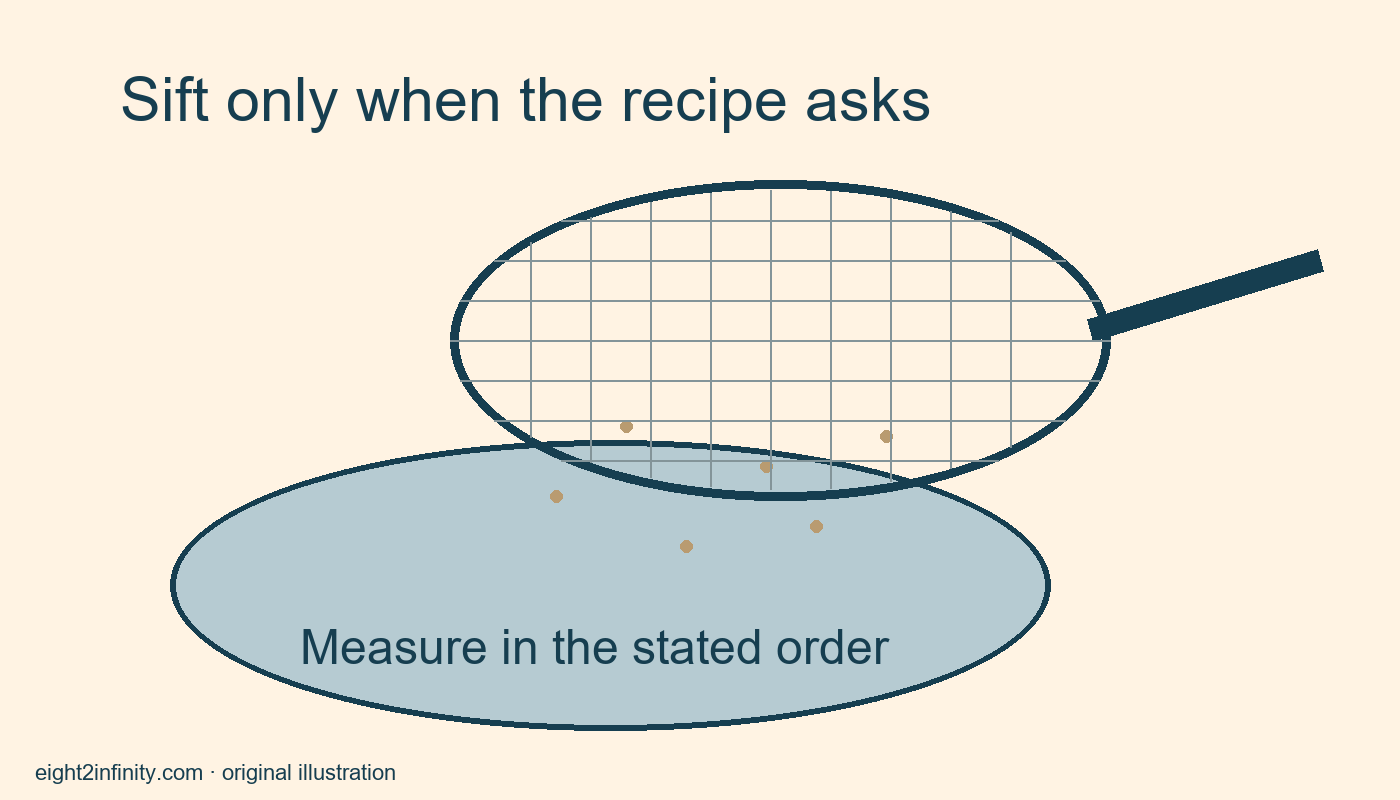
Consider two teaching phrases: one cup flour, sifted; and one cup sifted flour. The usual reading is to measure the first quantity before sifting and to sift before measuring the second. These phrases illustrate why word order matters. They are not a substitute for a recipe's explicit method, which may clarify or occasionally conflict with the short ingredient line. If the instructions remain ambiguous, ask the recipe source or choose a clearer recipe.
Write the sequence in ordinary words beside the recipe. For the first phrase, your note might say Measure flour, then sift that measured flour. For the second, it might say Sift flour, then measure the requested volume. A short note can prevent you from changing the order halfway through preparation. Do not rely on memory when two similar-looking instructions have different intended sequences.
Prepare equipment around the sequence
For an instruction that clearly says measure then sift, place a clean bowl ready to receive the sifted flour. Measure the requested flour using the recipe's method, then pass that measured amount through an appropriate sieve or sifter into the bowl. Keep the receiver large enough that flour is not easily spilled over the edge. Work gently rather than shaking vigorously near unrelated open ingredients.
For an instruction that clearly says sift then measure, sift a suitable amount into a bowl first, then measure the specified volume from that prepared flour according to the recipe. Keep the original flour container distinguishable from the prepared bowl. The physical separation helps you avoid accidentally measuring unsifted flour after you have already established the intended order. Follow the recipe for any excess rather than mixing uncertain quantities into the measured bowl.
Use weight information when provided
If the recipe supplies a reliable weight for the flour amount, weigh that amount as directed and follow its stated sifting step. Aerating flour changes how it occupies a cup, but it does not create more flour mass. A scale can therefore remove one source of volume ambiguity, although it still needs to be used correctly. Tare the receiving container and confirm the displayed unit before adding flour.
Do not invent a universal grams-per-cup conversion from this article. Different flour types and recipe conventions can use different reference weights. Prefer the weight supplied by the recipe author. If a recipe gives only volume and you are unfamiliar with its measuring convention, read its measurement guidance before baking. An unsupported conversion can introduce a larger error than the sifting distinction you were trying to resolve.
Avoid creating extra changes at once
If you want to learn what a particular recipe's preparation steps do, make it first as written. Do not simultaneously change the flour type, reduce liquid, alter mixing time, and add extra sifting. Several changes make an outcome hard to interpret. Keep a brief note of what you actually did so the next attempt can be compared honestly. This is a suggested learning method, not a claim that this article tested a recipe.
If you see lumps remaining after gentle sifting, inspect them rather than forcing unknown material into the bowl. Use flour that is appropriate and in acceptable condition. Sifting is not a way to rehabilitate spoiled or contaminated ingredients. Likewise, avoid treating a sifted dry mixture as ready to eat; follow the recipe's cooking instructions and ordinary food-handling guidance. The purpose here is preparation order, not a food-safety treatment.
Test your understanding on paper
Write an instruction card for a clearly stated measure-then-sift recipe and another for a clearly stated sift-then-measure recipe. Put the actions in order without handling any flour. Then compare them against the actual method text. If the sequence is still unclear, mark that uncertainty before beginning the bake. What wording would you add to a recipe so a new baker could tell exactly when the quantity should be measured?
Sources and related reading
Illinois Extension recipe wording, April 9 2021
Check the Butter and Sugar Creaming Step Before Adding Flour