Set Up a Small Household Donation Station
A useful donation station is one small, clearly labelled container for items you have decided to pass on, paired with a named destination and a realistic drop-off date. The container collects the decision. The destination and date complete it. Start with ordinary, clean, usable household belongings and check the recipient's current acceptance rules before putting anything in the box.
The aim is to create a reliable route out of the house, rather than another permanent pile. The US Environmental Protection Agency encourages reuse and passing along useful belongings as part of waste reduction. The specific routine below is an original household organizing suggestion. It does not assume that every charity accepts every item or that donating an object guarantees it will be reused.
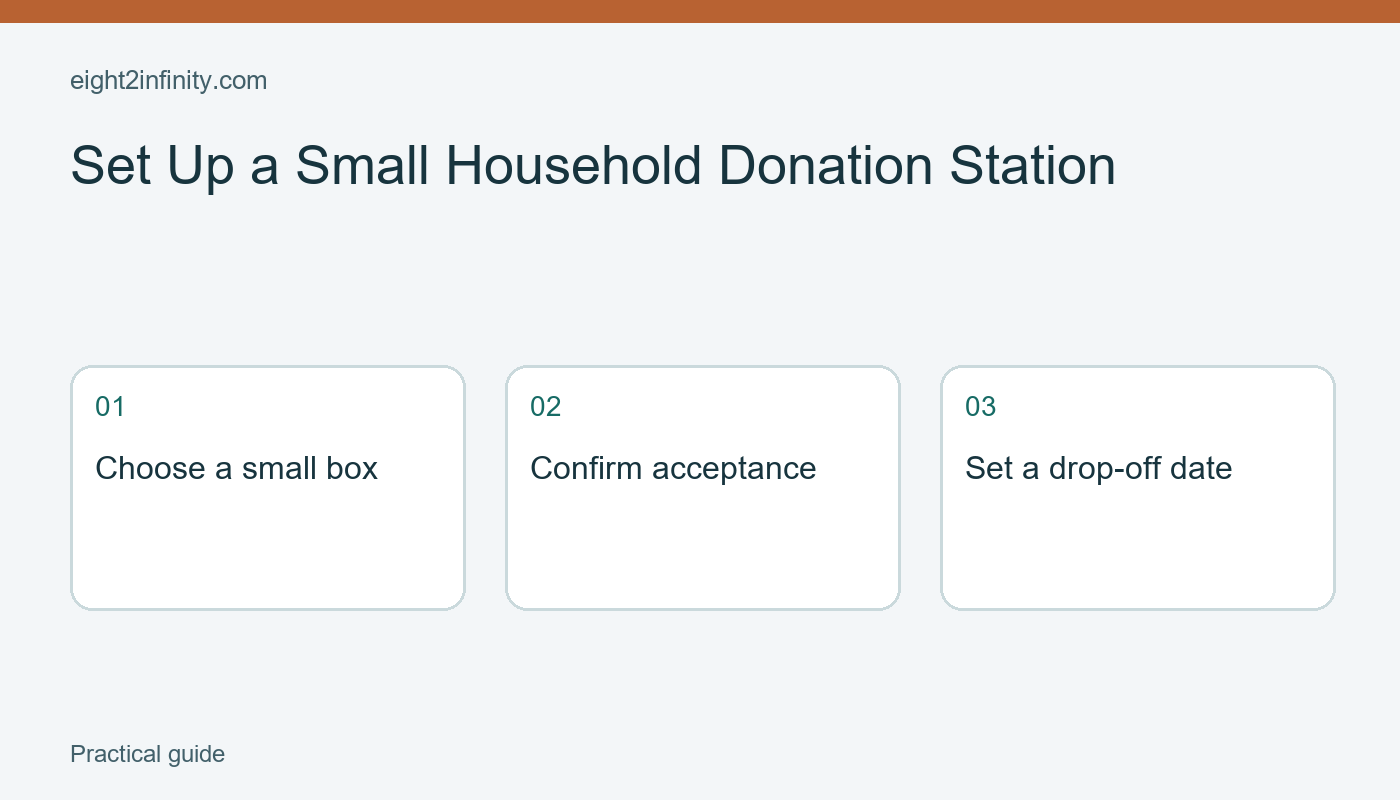
Choose a container that limits the project
Use a box or basket you already own. Pick a size you can comfortably lift when it is full. Place it somewhere dry and accessible without blocking a hallway, doorway, stair, or shared walking route. A container that makes daily life awkward will probably be moved into a less useful corner, where its contents can become another forgotten storage category.
Label it clearly with a phrase such as Ready to donate. Avoid a vague label such as Stuff, which could mean storage, rubbish, returns, or items still awaiting a decision. If more than one person lives in the home, agree that nobody should add someone else's belongings without permission. The station should make decisions easier to follow, not hide unresolved disagreements.
For a first trial, choose one low-risk category such as ordinary books in good condition. Exclude private notebooks, damaged items, account records, and anything that needs specialized disposal. A narrow category makes it easier to check acceptance rules and pack appropriately. You can add other categories later if the first route works reliably.
Confirm the destination before filling the box
Find a local recipient and read its own current instructions. Check accepted categories, condition requirements, opening hours, and whether an appointment is needed. Do not infer acceptance from an old social-media post or from another branch's rules. If the information is unclear, ask the recipient before transporting a large box that may have to come home again.
Write the destination and check date on a small card attached to the container. For example, a fictional card could read Community book sale, ordinary books only, instructions checked Friday. Add a line for the next action, such as Book a drop-off slot. This turns the station into a short workflow rather than a box that relies on someone remembering an unfinished plan.
Keep specialized categories outside this general routine. Batteries, electronics, chemicals, medicines, and recalled products can require separate handling or may be unsuitable for donation. Follow the relevant local collection or product guidance. Do not use a donation box as a way to avoid deciding how to dispose of something safely and appropriately.
Add only items that have a clear decision
When you put an item in the station, check that it is yours to give, suitable for the recipient, and ready to leave. A book with a family dedication may require another conversation. A small appliance with missing parts may be rejected. Cleaning or repair can be a separate task, but unfinished work should not silently become the donation recipient's problem.
If an item needs thought, put it on a short written decision list instead of creating another indefinite physical pile. Record what information is missing and who will decide. For example, a household member may want to keep a particular reference book. Resolve that question before the item enters the ready box. A small distinction between undecided and ready prevents accidental losses.
Avoid adding items back into circulation without acknowledging the change. If someone removes a book because they still use it, that is useful information about the original decision. Discuss where it belongs. Repeatedly moving the same objects between the shelf and the station suggests that the selection rule needs attention, not that the box needs a more attractive label.
Close the loop on a manageable schedule
Choose a date based on a trip you can actually make. A box with three suitable books can leave the house even if it is not full. Waiting for a perfect load can keep the station occupied for months. If your first destination cannot take the items, identify another suitable route or reconsider the contents rather than leaving them indefinitely beside the door.
After drop-off, reset the empty container and update the destination card if needed. Do not promise a tax benefit or assign a financial value without checking the rules that apply to your location and circumstances. This routine is about household organization and reuse. It does not require making tax claims, publishing donor information, or using a particular commercial collection service.
Run a seven-day trial
Pick five ordinary items, verify one recipient, and set one drop-off date. At the end of the week, check whether the items actually left and whether the container stayed easy to access. Our room-by-room home inventory guide can help you identify what you own before selecting duplicates. What caused the most friction: deciding what to give, finding a recipient, or completing the trip?