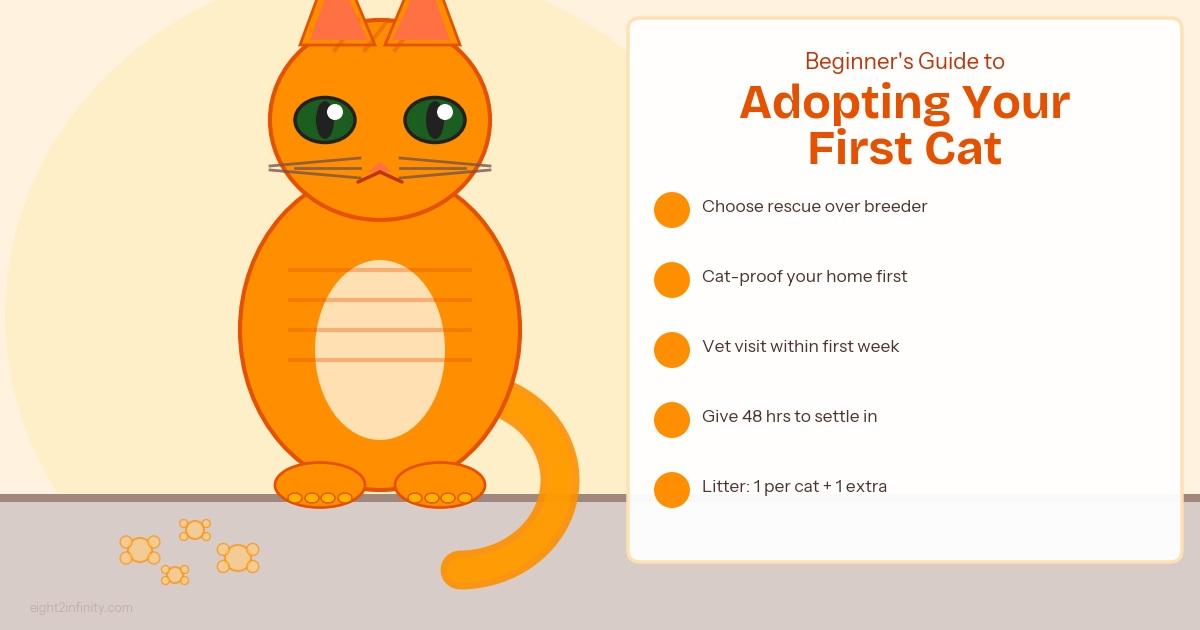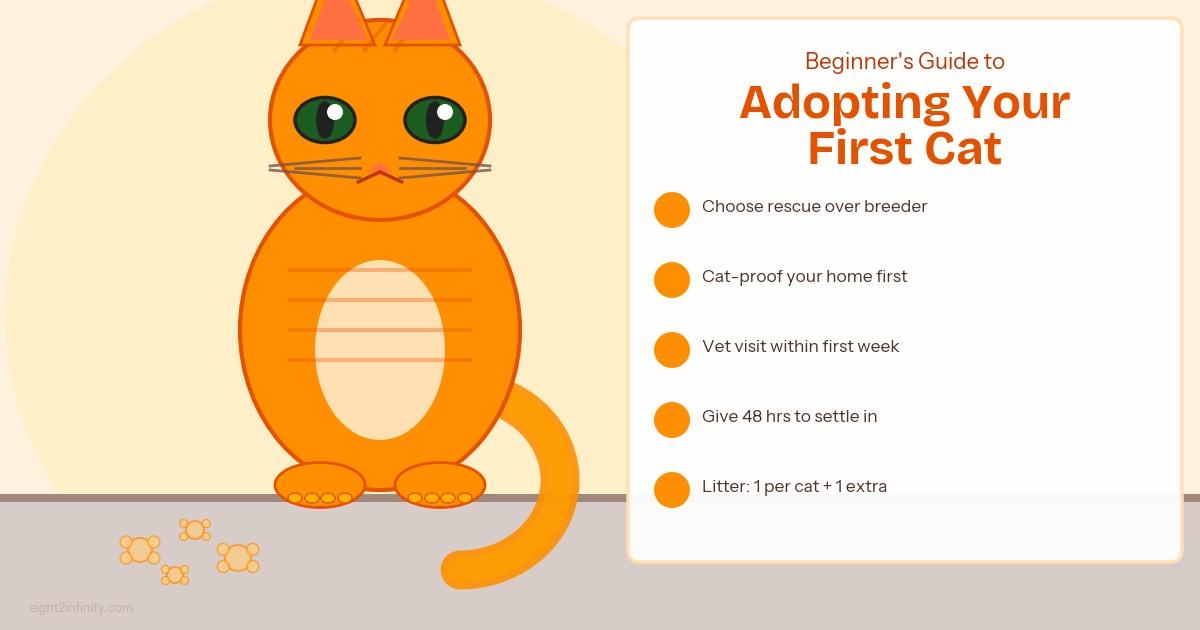
Beginner's Guide to Adopting Your First Cat
Slug: beginners-guide-to-adopting-first-catCategory: Pet Care > Beginner Pet GuidesKeyword: adopting first cat guideExcerpt: Thinking of adopting your first cat? This complete beginner's guide covers everything you need — from preparing your home to vet visits, feeding, and building trust.
Is a Cat the Right Pet for You?
Cats are often described as low-maintenance pets — and compared to dogs, they are more independent. But that doesn't mean they're care-free. A healthy, happy cat needs daily feeding, fresh water, regular litter box cleaning, veterinary care, enrichment, and genuine affection. The average cat lives 12–18 years, so adoption is a long-term commitment. If your lifestyle allows for that, a cat can be a wonderful companion.
Before You Adopt: Preparing Your Home
Cat-Proof Your Space
Remove or secure anything a curious cat could knock over, chew, or get trapped in. Toxic houseplants (lilies are particularly dangerous to cats) should be removed. Secure loose cables. Check for gaps behind appliances where a small cat or kitten could get stuck. Window screens should be secure — cats will push them out if they're loose.
Essential Supplies to Buy First
You'll need: a litter tray (ideally one per cat plus one extra), unscented clumping litter, food and water bowls (stainless steel or ceramic are easiest to keep clean), age-appropriate cat food, a scratching post, a bed or blanket, toys (a wand toy and a crinkle ball at minimum), and a carrier for vet trips. Budget £150–£300 to set up comfortably.
Choosing Where to Adopt From
Rescue centres and shelters are the recommended starting point. Cats available for adoption are typically vaccinated, microchipped, neutered, and health-checked — saving you significant early costs. Staff can also match you with a cat suited to your living situation (e.g., indoor-only cats for flats, calm cats for families with young children).
If you choose a breeder, ensure they are registered with a recognised body (GCCF in the UK, TICA internationally) and allow you to visit the kitten with its mother before purchase.
The First 48 Hours: Bringing Your Cat Home
Set up a small, quiet room as your cat's base — not the whole house immediately. Include litter, food, water, a hiding spot (a cardboard box works well), and toys. Allow your cat to come to you; don't force interaction. Many cats take 24–72 hours to emerge from hiding after a move. This is entirely normal and not a sign something is wrong.
Speak in a calm, low voice. Sit on the floor to appear less intimidating. Let the cat sniff your hand before attempting to stroke it. Patience in the first few days pays off enormously for the long-term relationship.
Feeding Your Cat
Feed twice daily (morning and evening) for adult cats, or three to four times daily for kittens under six months. Provide a mix of wet food (better for hydration) and dry food. Always have fresh water available — cats notoriously dislike water near their food, so place the bowl in a different spot. Avoid cow's milk; most adult cats are lactose intolerant.
Litter Box Rules
Scoop daily, change the litter fully at least once a week, and wash the tray monthly. Place the tray in a quiet, private location — not near food or water. If your cat stops using the litter box, it's often a sign of a health issue or stress, not bad behaviour. A vet check is warranted if this persists.
Vet Care for New Cat Owners
Register with a vet before or within the first week of bringing your cat home. Ensure your cat is vaccinated (core vaccines include cat flu and feline enteritis), neutered if not already, microchipped, and given regular flea and worm treatments. Annual health checks are recommended for adult cats; older cats benefit from checks every six months.
Explore more in our pet care guides or visit our practical living section for home setup advice.
Frequently Asked Questions
How long does it take for a cat to settle into a new home?
Most cats take one to four weeks to fully relax in a new environment. Kittens often adapt faster than adult cats. Give them time, space, and consistency — don't force affection.
Should I get one cat or two?
If you're out of the house for long periods, two cats (particularly littermates) can keep each other company and reduce separation anxiety. If you're home frequently, a single cat can thrive with your attention.
How much does it cost to keep a cat per year?
Expect to spend £800–£1,500 per year on food, litter, vet care, and insurance. Pet insurance (typically £10–£30/month) is strongly recommended to cover unexpected health costs.
Do cats need to go outdoors?
Not necessarily. Many cats live perfectly happy indoor lives, particularly in urban areas. Provide adequate enrichment — climbing structures, window perches, toys, and interactive play — to keep indoor cats stimulated.
What vaccinations does a cat need?
Core vaccines include feline herpesvirus, calicivirus (both components of cat flu), and panleukopenia. Outdoor cats may also need vaccination against feline leukaemia virus (FeLV). Your vet will advise on the right schedule.