10-Minute Morning Stretch Routine for Beginners
Slug: 10-minute-morning-stretch-routine-beginnersCategory: Health and Fitness > WellnessKeyword: morning stretch routine beginnersExcerpt: Start your day pain-free and energised with this simple 10-minute morning stretch routine — no equipment needed, suitable for complete beginners.
Why Stretching in the Morning Makes a Difference
After hours of sleep, your muscles are stiff and your joints need gentle mobilisation before you launch into the day. A short morning stretch routine improves circulation, increases joint range of motion, reduces morning aches, and — perhaps most importantly — sets a calm, intentional tone for the day ahead.
You don't need to be flexible to start. The goal of this routine is mobility, not performance. All stretches should feel like a gentle pull — never pain.
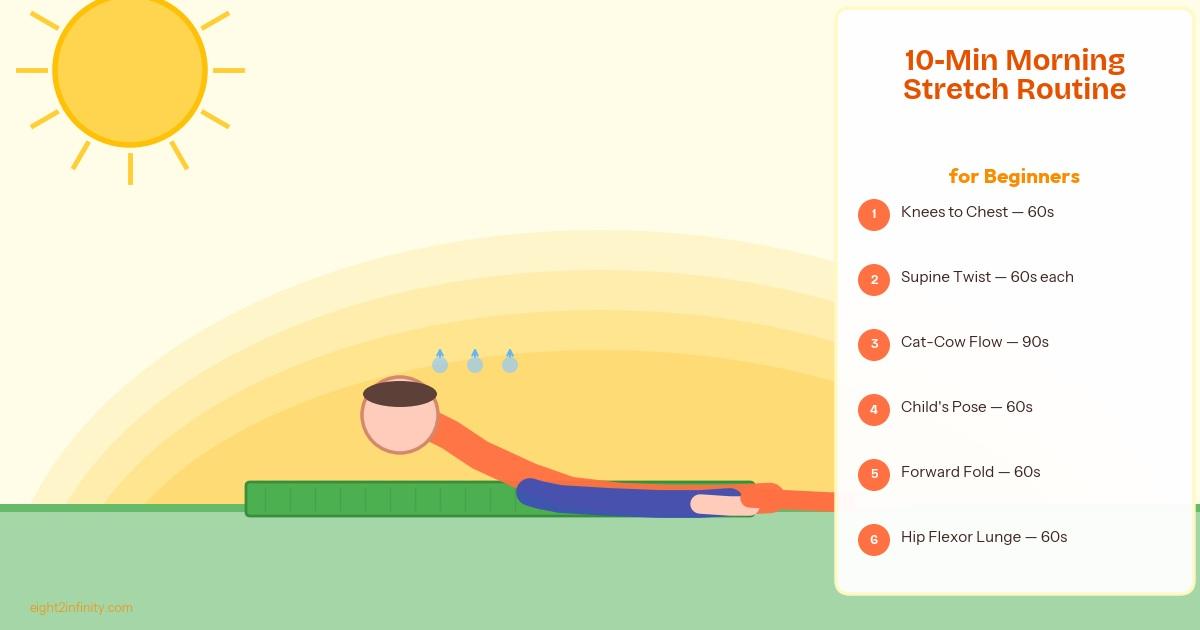
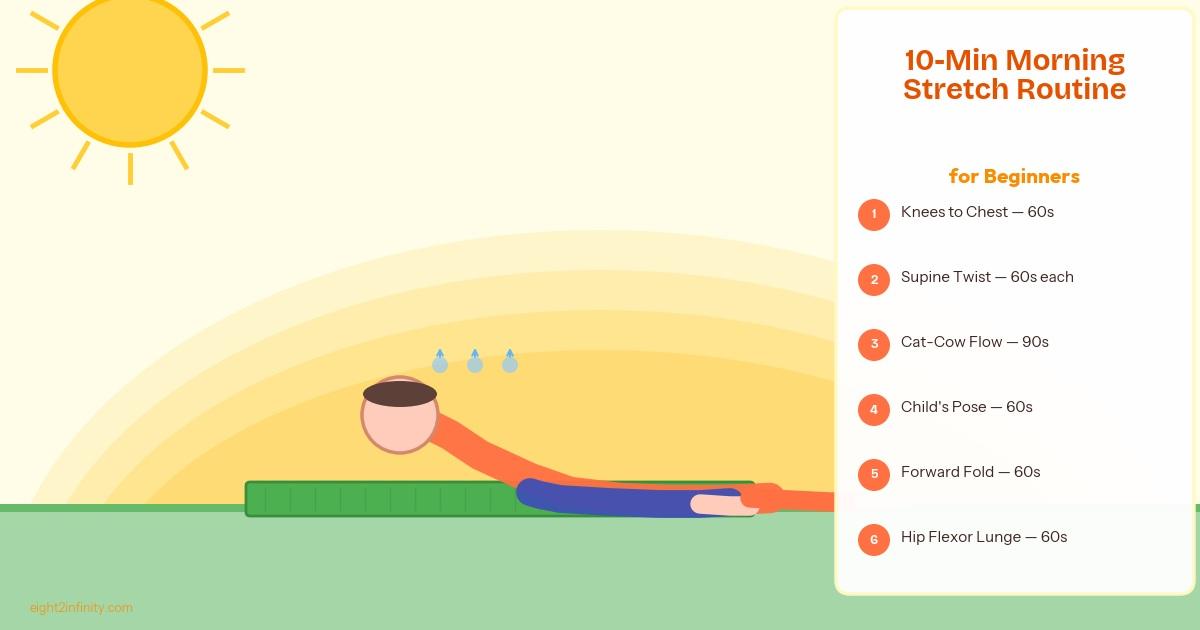
The 10-Minute Morning Routine
1. Knees to Chest — 60 seconds
Lying on your back, bring both knees to your chest and hold them with your hands. Gently rock side to side. This releases tension in the lower back and hips — areas that stiffen significantly during sleep. Breathe slowly and deeply throughout.
2. Supine Twist — 60 seconds each side
From the same position, drop both knees to one side while extending your arms out into a T-shape. Turn your head the opposite direction. Hold for 60 seconds and feel the rotation release through your spine and outer hip. Switch sides. This is one of the best stretches for desk workers with tight lower backs.
3. Cat-Cow — 90 seconds
Move onto all fours. Inhale and drop your belly toward the floor, lifting your head and tailbone (cow). Exhale and round your spine toward the ceiling, tucking your chin and tailbone (cat). Alternate slowly for 90 seconds. This mobilises every segment of the spine and is genuinely one of the most effective morning exercises available.
4. Child's Pose — 60 seconds
From all fours, sink your hips back to your heels and stretch your arms forward on the floor. Hold and breathe deeply. This stretches the hips, thighs, lower back, and shoulders simultaneously. If your hips don't reach your heels, place a pillow between your thighs and calves.
5. Standing Forward Fold — 60 seconds
Stand up slowly and fold forward from the hips, letting your head hang and your knees bend slightly. Don't force your hands to the floor — let gravity do the work. This stretches the entire posterior chain: hamstrings, calves, and lower back. Hold for 60 seconds.
6. Hip Flexor Lunge — 60 seconds each side
Step one foot forward into a low lunge, back knee on the floor. Shift your weight forward gently until you feel a stretch across the front of your back hip. Hip flexors shorten during sitting and sleep, contributing to lower back pain — this stretch directly targets that. Hold each side for 60 seconds.
7. Chest Opener — 60 seconds
Stand tall, clasp your hands behind your back, straighten your arms, and gently squeeze your shoulder blades together while lifting your chest. Hold for 60 seconds. This counteracts the forward shoulder posture that develops from screen use and driving.
8. Neck Side Stretch — 30 seconds each side
Sit or stand comfortably. Drop your right ear toward your right shoulder, keeping your left shoulder down. Hold for 30 seconds. Repeat on the left. This releases tension in the neck and upper trapezius — one of the most common areas of tightness for desk workers.
Tips for Making This Routine Stick
Place your mat next to your bed so it's the first thing you see. Do the routine before coffee, before your phone — make it the literal first activity of your day. Start with five minutes if ten feels like too much, and build up over a week or two. Consistency at five minutes beats occasional hour-long sessions. After two weeks, many people find they feel noticeably worse on days they skip it.
Explore our full Health and Fitness section for more beginner-friendly guides, and see our Lifestyle articles for morning routine ideas to pair with your stretching.
Frequently Asked Questions
Is it better to stretch before or after getting out of bed?
Starting with the lying-down stretches (knees to chest, supine twist) while still in bed is a great way to begin. Move to the floor for the rest. This eases the transition from sleep gently.
Should morning stretching hurt?
Never. Stretching should feel like a gentle pull or mild tension — never sharp or burning pain. If you feel pain, ease off and consult a physiotherapist or GP if it persists.
How long before I notice results?
Most beginners notice reduced morning stiffness within one to two weeks of consistent practice. Improved flexibility and reduced back pain typically develop over four to eight weeks.
Can I do this routine if I have back pain?
Many of these stretches are commonly recommended for mild lower back pain, but if you have a diagnosed spinal condition, disc injury, or significant chronic pain, consult your GP or physiotherapist before starting any stretching routine.
Is 10 minutes of stretching per day enough?
For general mobility, stress reduction, and daily wellbeing — yes, 10 minutes done consistently is highly beneficial. If you have specific flexibility goals, you may want to add an evening session or a dedicated yoga class once or twice a week.