
Short answer: If every irregular bill feels like an emergency, this guide explains the difference between emergency funds and sinking funds and how to use both.
A lot of people say they need a better emergency fund when what they really need is a better plan for predictable chaos. Car insurance every six months, school costs, gifts, annual fees, medical copays, travel, and home maintenance are not shocks. They are irregular, but they are not random.
That is where the difference between an emergency fund and a sinking fund matters. When you mix them together, every bill feels like a crisis. When you separate them, your money becomes easier to understand and much easier to trust.
This is general financial education, not personal investment or legal advice. The best system is the one you can maintain consistently with your real income, expenses, and responsibilities.
Important: This article is for general educational purposes only and is not financial, legal, tax, or investment advice.
What an emergency fund is actually for
An emergency fund is money set aside for the truly unplanned: job loss, a surprise medical cost, an urgent repair, or a serious disruption that threatens your ability to function or pay essentials. It is a stabilizer, not a catch-all savings bucket.
That distinction matters because emergency money should feel boring and protected. If you keep dipping into it for annual subscriptions, holiday spending, or known school fees, the fund never gets a chance to do its real job.
For many households, the first practical milestone is a small starter buffer. Even a modest cushion can prevent the next surprise from going straight onto a credit card while you continue building longer-term protection.
What a sinking fund is and why it saves your budget
A sinking fund is money you set aside gradually for a specific future expense you know is coming. The bill may not arrive this week, but it is part of real life. Tires wear out. Birthdays happen. Annual software renewals return. Kids outgrow shoes.
When you save a little toward those categories over time, the bill no longer feels like an attack on your budget. You planned for it. That is the entire point. Sinking funds turn predictable spikes into normal spending.
This is especially helpful for people with variable income, busy households, or any history of thinking, ‘I forgot that was due already.’ Sinking funds are less about perfection and more about removing preventable stress.
Good sinking-fund categories for real life
- Car maintenance and registration
- School expenses and activity fees
- Holiday and birthday spending
- Annual subscriptions or insurance payments
- Home repairs, travel, or pet care
Which one should you build first?
For most people, the most realistic answer is both, but on different scales. Start by building a small emergency buffer so every unexpected expense does not knock you over. At the same time, begin one or two sinking funds for the irregular costs that keep repeating.
This combo works because it matches how life behaves. Some costs are truly sudden; others are obvious in hindsight. If you only fund emergencies, your planned costs keep draining the account. If you only fund planned costs, one real crisis leaves you exposed.
If money is tight, start tiny and specific. For example, build a starter emergency cushion and one sinking fund for car costs or annual bills. Clarity beats ambition when the system is new.
How to keep the two funds from blurring together
The cleanest solution is simple labeling. Use separate savings buckets, separate account nicknames, or a budgeting app that lets you earmark money clearly. If the balance is one vague pool, you will eventually spend planned money on surprises or emergency money on expected bills.
A quick test helps: if you could have written the expense on a calendar, it probably belongs in a sinking fund. If the timing or event was genuinely unplanned and urgent, it is emergency-fund territory.
Review these categories once a month. If a ‘surprise’ expense keeps happening every year, move it out of the emergency bucket and into a sinking fund. That one habit makes your budget smarter over time.
A low-pressure setup you can start this week
Begin by listing the last six to twelve months of non-monthly expenses. Look for anything that made you scramble: uniforms, gifts, repairs, vet visits, subscriptions, exams, or travel. Those are your likely sinking-fund candidates.
Then choose the smallest version of the system you can maintain. One emergency buffer plus one or two sinking funds is enough to change how your month feels. You do not need ten categories on day one.
Most importantly, do not treat this as proof that you should have seen everything coming. The point is not self-judgment. The point is building a money plan that reflects how real life actually arrives.
Quick recap
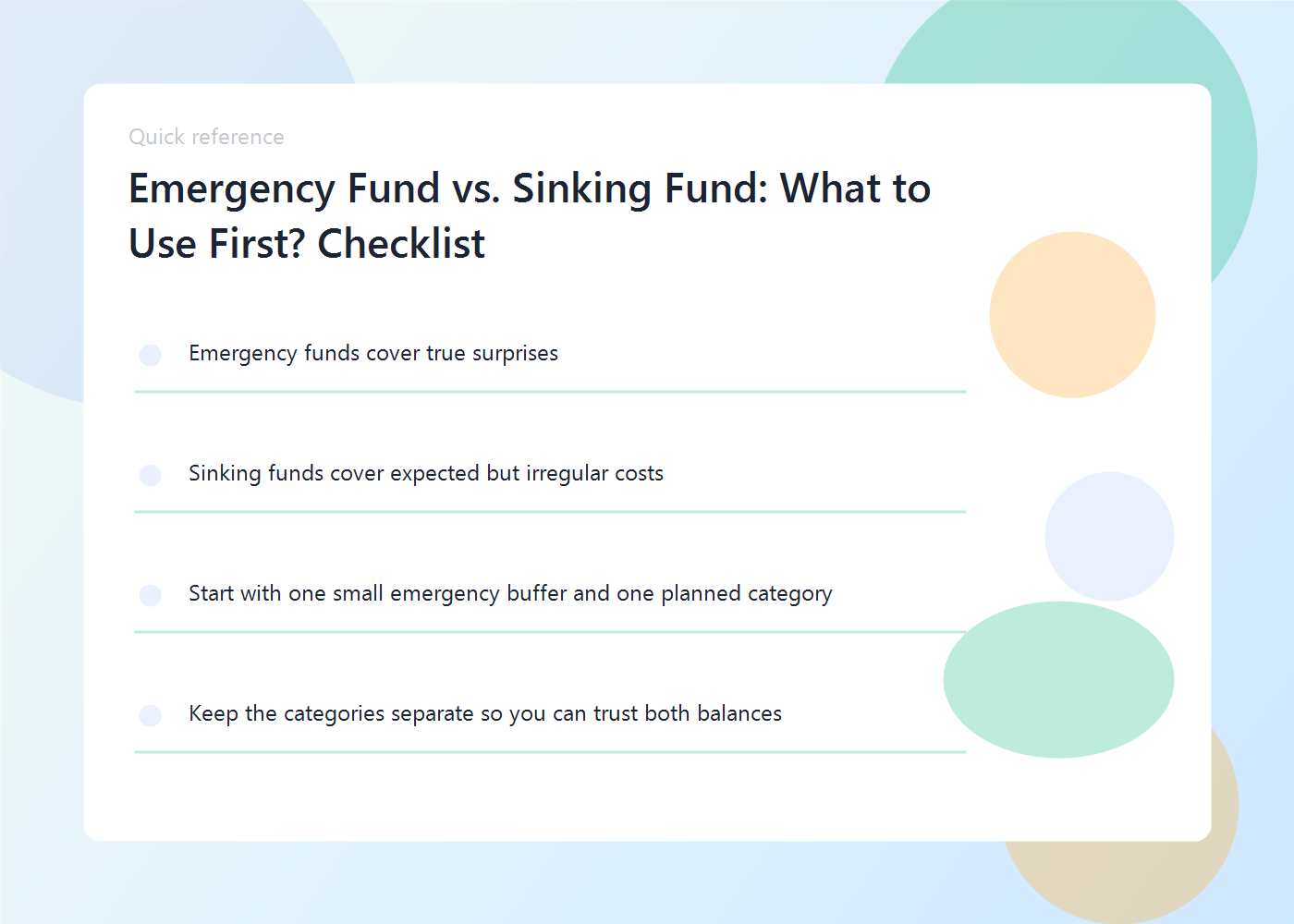
- Emergency funds cover true surprises
- Sinking funds cover expected but irregular costs
- Start with one small emergency buffer and one planned category
- Keep the categories separate so you can trust both balances
FAQ
Can I keep both funds in the same bank account?
Yes, if the account lets you label or track the amounts clearly. The important part is keeping the purposes separate so you do not spend from the wrong bucket.
Is a car repair an emergency or a sinking-fund expense?
Routine maintenance and predictable wear are better treated as sinking-fund expenses. A sudden major breakdown that threatens essential transportation may draw on emergency savings.
What if I can only save a small amount?
Small, consistent saving still helps. Start with a starter emergency cushion and one recurring irregular expense that causes the most stress.
Related reads on Eight2Infinity
Why this topic matters right now
- Consumer budgeting guidance emphasizes accounting for less frequent expenses instead of pretending every month looks identical.
- Search demand remains strong for emergency funds, irregular-expense planning, and simple cash systems that reduce reliance on credit cards.