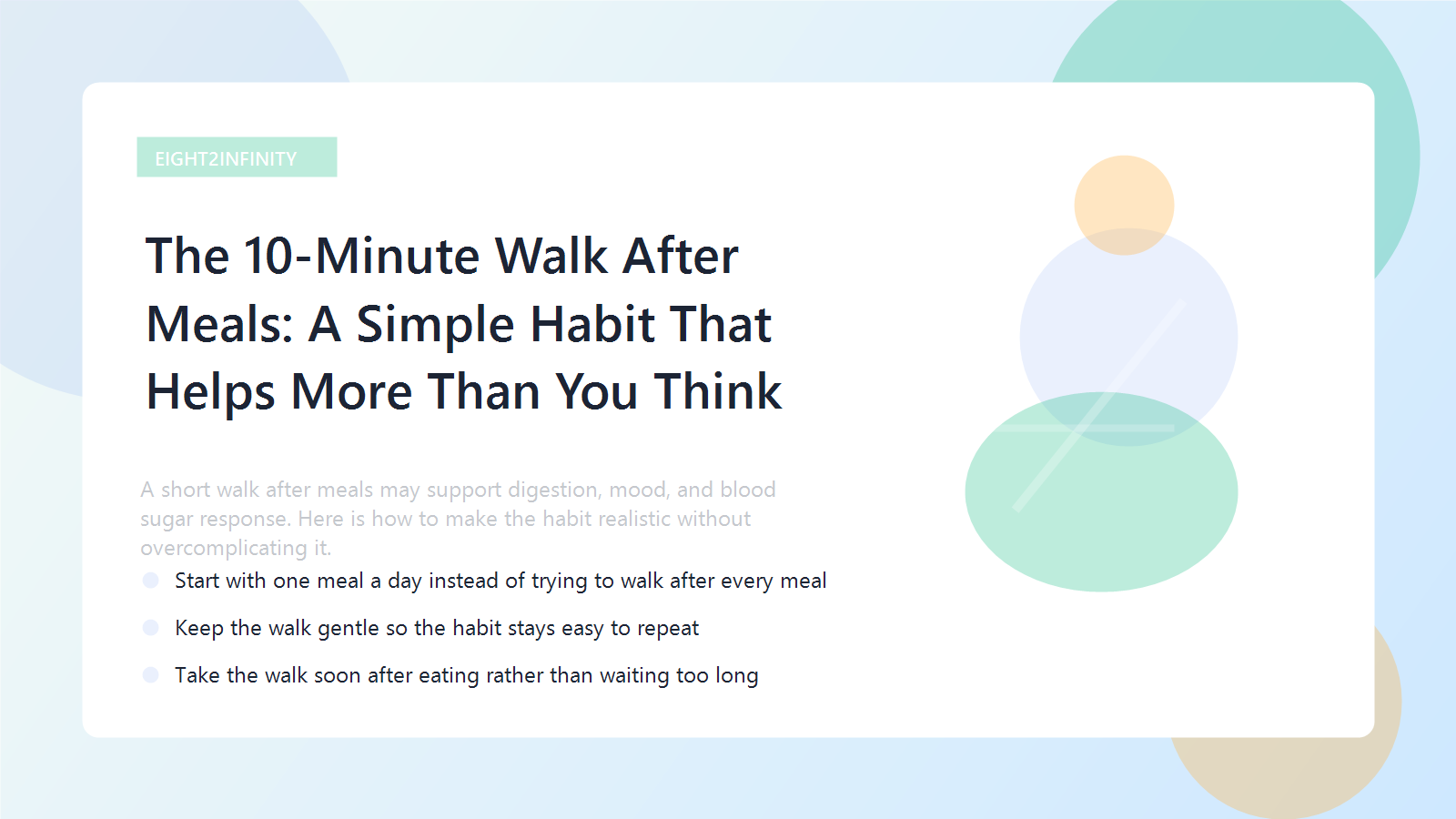
Short answer: A short walk after meals may support digestion, mood, and blood sugar response. Here is how to make the habit realistic without overcomplicating it.
A lot of health advice asks people to rebuild their lives all at once. Wake earlier, train harder, measure everything, and stay perfect. That is one reason so many useful habits get ignored.
A ten-minute walk after meals is different. It is small, low-drama, and easy to fit into a normal day. It can also feel better immediately, which gives it a better chance of sticking.
This is not a miracle cure or a substitute for medical care. It is a simple wellness habit that may support digestion, energy, and a healthier post-meal rhythm when used consistently.
Important: This article is for general wellness education only and is not medical advice, diagnosis, or treatment.
Why timing matters more than people think
Walking after eating works differently from a workout you do at some unrelated time. Gentle movement soon after a meal may help your body handle that meal more smoothly and can reduce the heavy sluggish feeling that often follows sitting down right away.
That is part of why the habit keeps showing up in current wellness coverage. It offers a practical way to connect movement with a specific daily moment.
What kind of walk actually works
This is not supposed to be a hard workout. A calm or moderate walk is enough. Think neighborhood loop, dog walk, treadmill stroll, hallway laps, or a few minutes of movement while you take a phone call.
The easier it feels, the more likely you are to repeat it. Repeatability is where a small habit starts creating useful results.
A good beginner setup
- Choose one meal a day to pair with walking
- Start with 5 to 10 minutes
- Walk at a comfortable pace
- Use the same route so the habit feels automatic
- Keep a backup indoor option for bad weather
Benefits people often notice first
Many people notice that digestion feels easier and that they feel less sleepy after a meal. Others find the habit useful because it breaks up long periods of sitting without requiring a full exercise block.
The habit can also create a small mental reset. A few minutes of movement after dinner or lunch often helps the next part of the day feel less sticky and stagnant.
When to be more cautious
If you have dizziness, chest pain, recent surgery, uncontrolled medical issues, or symptoms that worsen after meals, talk to a qualified clinician before turning this into a routine. General advice should not replace care that matches your health situation.
People managing diabetes or other medical conditions may especially benefit from individualized guidance rather than treating internet advice as a care plan.
How to make the habit last
Tie the walk to something that already happens, like clearing the table, rinsing a plate, or taking out the trash. Habits stick better when the cue is obvious.
Keep your expectations small. A short walk done most days is more valuable than an ambitious routine you stop within a week.
Quick recap
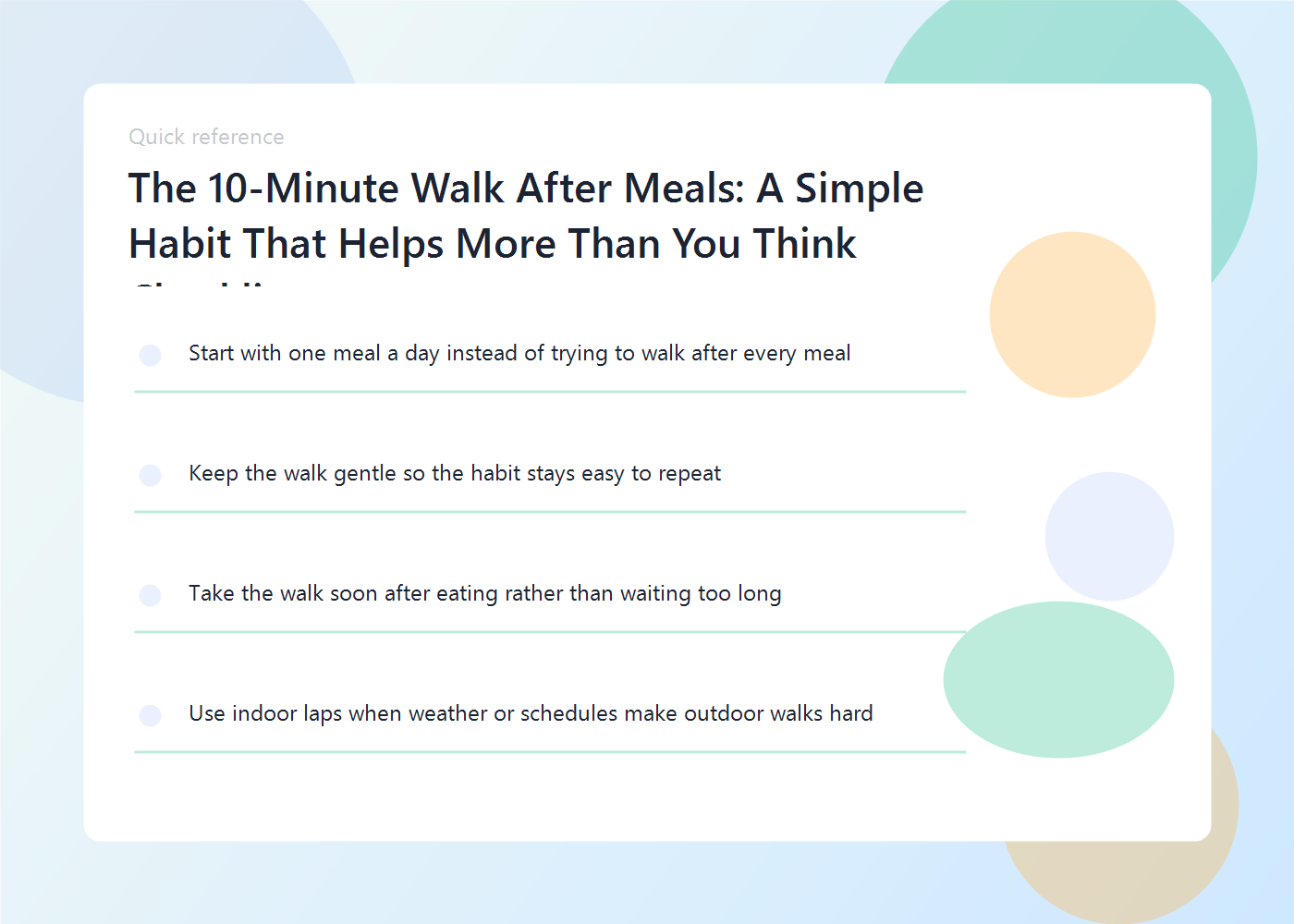
- Start with one meal a day instead of trying to walk after every meal
- Keep the walk gentle so the habit stays easy to repeat
- Take the walk soon after eating rather than waiting too long
- Use indoor laps when weather or schedules make outdoor walks hard
FAQ
Is 10 minutes really enough?
Yes, especially for a habit this easy. Consistency matters more than intensity here.
Should I walk after every meal?
If that fits your life, great. If not, start with the meal after which you usually feel the most sluggish.
Can this replace exercise?
No. It is a useful wellness habit, not your entire fitness plan.
Related reads on Eight2Infinity
Why this topic matters right now
- Health reporting and clinical commentary in 2026 continue highlighting short post-meal walks as an accessible habit with possible digestion and blood-sugar benefits.
- The topic attracts steady search demand because people want realistic wellness habits rather than high-friction fitness plans.