Test a rectangle for line symmetry with a paper fold
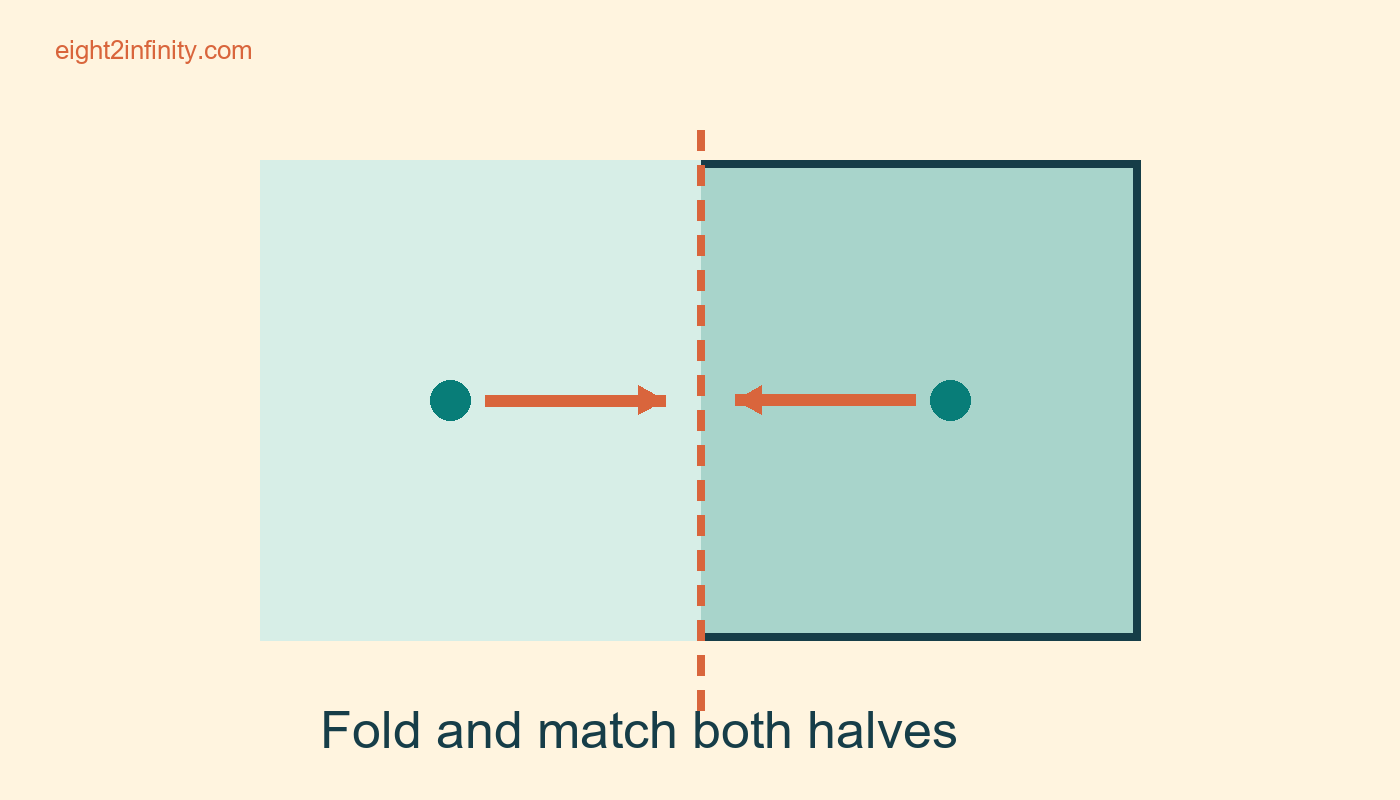
A line of symmetry divides a shape so that folding along the line makes its two halves match. You can test a plain paper rectangle by folding it through the middle and comparing the edges. A rectangle that is not a square has two lines of symmetry, one through the midpoints of each pair of opposite sides. Its diagonals are not lines of symmetry. Use a deliberately long rectangle so that distinction is easy to see.
Prepare a shape that makes the question clear
Use a clean piece of scrap paper and draw or prepare a rectangle about 12 cm long and 8 cm wide. The exact size is less important than having straight sides and four right angles. Avoid starting with a square, because a square has extra symmetry and can obscure the lesson. If cutting is needed, use an appropriate tool safely or ask someone who can prepare the shape. No decorative pattern is needed for the first test.
Label the corners A, B, C, and D in order around the rectangle. Keep the labels small and near the corners. They are reference marks for your explanation; the main object being tested is the rectangle's outline. Writing a large word across the paper would introduce another question about whether the printed design is symmetric. Separate the geometry of the paper from the appearance of any marks placed on it.
Make the first midpoint fold
Bring the two short sides together carefully, matching their corners. Make a crease only after the edges line up. Open the rectangle and inspect the crease. It runs between the midpoints of the two long sides and divides the rectangle into equal matching halves. Fold again along the same crease and look for overhanging paper. If the shape was prepared accurately and the fold is centered, the outline on one side should coincide with the outline on the other.
Describe what you observed in a full sentence: The left half matches the right half when folded along the central vertical line. The words left and right depend on how you hold the rectangle, so also point to the actual crease. Rotate the paper and repeat your explanation. A line of symmetry belongs to the shape; it does not stop being valid when the shape is turned to a different orientation on the table.
Make the second midpoint fold
Unfold the first crease. Bring the two long sides together, again matching the corners before pressing the paper. Open the rectangle. The second crease crosses the first at the center and provides another line of symmetry. Fold along it to check the overlap. These two folds divide the rectangle into four smaller rectangles, but the symmetry test concerns reflection across each whole crease, not simply the number of pieces visible on the sheet.
Draw a small point near one corner and fold along the first symmetry line. Mark where the point would land on the other half. The pair should be the same perpendicular distance from the crease on opposite sides. This gives a useful visual reason for the matching halves. Reflection connects corresponding locations, not just equal areas. Two pieces can have equal area without being mirror images across the line that separates them.
Test the tempting diagonal
Now try a diagonal fold from one corner to the opposite corner. In a rectangle that is longer than it is wide, the halves do not coincide as complete outlines. Some paper projects beyond the other half. The diagonal divides the rectangle into two triangles with equal area, but that alone does not make it a line of symmetry. The fold test asks whether reflection across that specific line maps the entire shape onto itself.
Compare this with a square if one is available. A square's diagonals do produce matching halves because its equal side lengths provide additional symmetry. Do not use that special case as evidence that all rectangles have diagonal lines of symmetry. A square is a special rectangle, while the long rectangle in this exercise deliberately excludes equal adjacent side lengths. Name the shape precisely when reporting how many symmetry lines it has.
Explain imperfect results sensibly
If a supposed midpoint fold leaves a thin strip exposed, inspect the preparation and fold before rejecting the geometric property. Handmade paper models are approximate. A slightly crooked cut or an off center crease can produce mismatch even when the ideal rectangle has the stated symmetry. Redraw or refold carefully and compare the difference. This distinction between an ideal shape and a physical model is part of the lesson rather than a reason to ignore all imperfect observations.
Use a ruler to locate midpoints if matching the edges is difficult. Keep the test focused on one line at a time, and open the paper fully between tests. Too many competing creases can confuse a learner about which reflection is being checked. For a group activity, ask each person to predict the result before folding. Their explanation after the fold should identify the matching boundaries, not merely say that the paper became smaller.
Try an independent prediction
Draw a new long rectangle and mark a proposed symmetry line that is parallel to a short side but noticeably off center. Predict whether the two halves will match, then test it. Explain why a line can point in the right direction yet fail because it is in the wrong position. Finish by drawing only the two valid symmetry lines on a fresh rectangle. What evidence distinguishes those lines from a diagonal that creates equal area triangles?