The 50/30/20 Budget Rule Explained for Beginners
Slug: 50-30-20-budget-rule-explained-beginnersCategory: Business and Finance > Financial PlanningKeyword: 50 30 20 budget rule beginnersExcerpt: The 50/30/20 rule is one of the simplest budgeting frameworks for beginners. Here's exactly how it works, with examples and tips to make it work for your income.
What Is the 50/30/20 Rule?
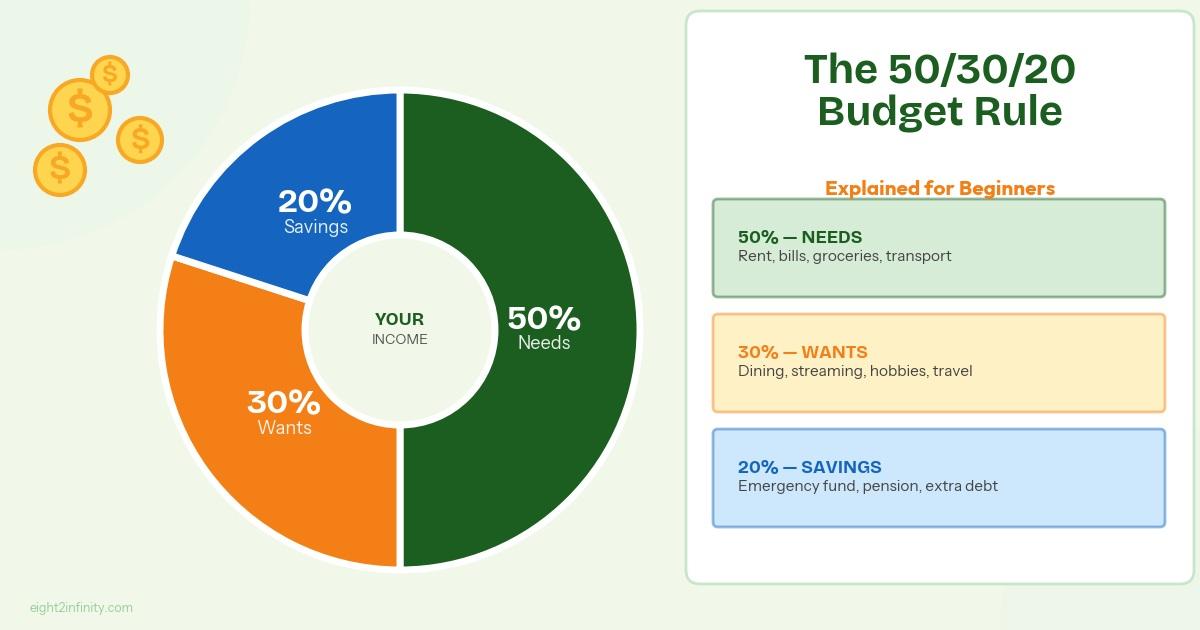
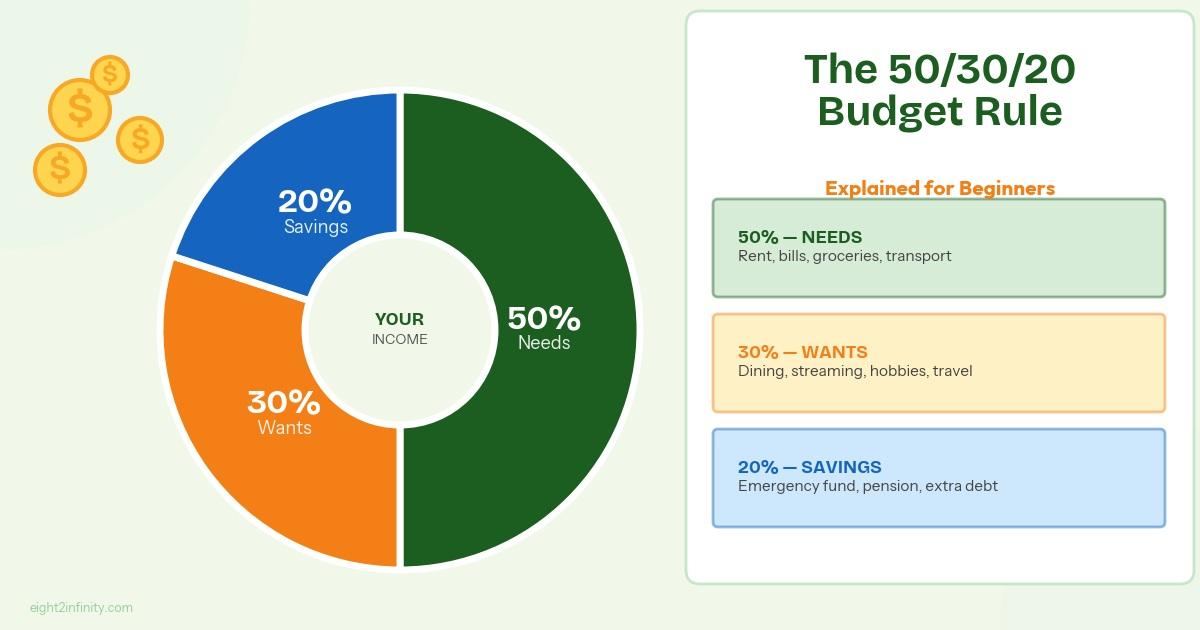
The 50/30/20 rule is a budgeting framework that divides your after-tax income into three categories: 50% for needs, 30% for wants, and 20% for savings and debt repayment. It was popularised by US Senator Elizabeth Warren in her book All Your Worth and remains one of the most recommended starting budgets for anyone new to personal finance.
Its appeal is simplicity. Rather than tracking every individual purchase in a spreadsheet, you manage three broad buckets — which makes it far easier to stick to long term.
Breaking Down the Three Categories
50% — Needs
Needs are essential expenses you cannot reasonably live without: rent or mortgage payments, utility bills (gas, electricity, water), groceries, transport to work, minimum debt repayments, and basic insurance. If you find that your needs exceed 50% of your take-home pay — common in high cost-of-living cities — you'll need to either reduce spending in this category over time or adjust the percentages to suit your situation.
30% — Wants
Wants are everything that improves your quality of life but isn't strictly essential: streaming subscriptions, dining out, gym memberships, holidays, hobbies, clothes beyond the basics, and entertainment. Many people find this the trickiest category — it requires honestly categorising expenses. A gym membership might feel like a need, but it's technically a want (you could exercise for free). That's fine — but know what it is.
20% — Savings and Debt Repayment
This 20% should be directed toward building your financial future: an emergency fund (aiming for three to six months of expenses), pension or retirement contributions, paying off non-essential debt faster than the minimum, and longer-term savings goals like a house deposit. Pay yourself first — set up an automatic transfer on payday so this 20% moves to savings before you can spend it.
A Practical Example
Say your take-home pay is £2,500 per month. Under the 50/30/20 rule: £1,250 goes to needs (rent, bills, food, transport), £750 goes to wants (eating out, subscriptions, hobbies), and £500 goes to savings and debt repayment. Simple to calculate, simple to monitor.
When the 50/30/20 Rule Needs Adjusting
The rule is a starting point, not a law. If you have high-interest debt, some financial advisers recommend temporarily flipping to a 50/20/30 allocation — directing 30% to debt repayment until you're clear. If you live in a very expensive city, your needs may naturally consume 60–65%, requiring you to shrink the wants category. The underlying principle — be intentional about every pound — matters more than hitting exact percentages.
Tools to Implement It
Budgeting apps like YNAB, Emma, or Monzo's budgeting features make tracking these three categories straightforward. Set up spending categories that map to your three buckets and review weekly. Most apps will send alerts when you're approaching a category limit.
For more financial guidance, visit our Business and Finance section. Please note: this article is for informational purposes only and does not constitute financial advice. For advice tailored to your personal circumstances, consult a qualified financial adviser.
Frequently Asked Questions
Does the 50/30/20 rule work on a low income?
It can be difficult to apply rigidly on a very low income where needs may exceed 50%. In these cases, focus on saving whatever percentage is possible — even 5% — and work to reduce essential costs over time. The priority should be building any emergency fund, however small.
What counts as a "need" vs a "want"?
A need is something you genuinely cannot live and work without. Rent, basic groceries, utilities, and transport to work are needs. A Netflix subscription, takeaway meals, and gym membership are wants — valuable, but not essential to survival or employment.
Should I include pension contributions in the 20%?
Yes — pension contributions, ISA deposits, emergency fund top-ups, and additional debt payments all belong in the 20% savings bucket. Workplace pension contributions (including employer match) are especially valuable and should be maximised where possible.
What if I have a lot of debt?
Prioritise high-interest debt (credit cards, payday loans) as aggressively as possible within your 20% — or temporarily increase it to 30% by reducing the wants category until the debt is cleared.
Is the 50/30/20 rule the best budgeting method?
It's one of the best for beginners due to its simplicity. Zero-based budgeting (allocating every pound a job) is more precise but requires more time. The best method is the one you'll actually stick to.