Plan a Small Cookie Test Batch Before Baking the Whole Tray
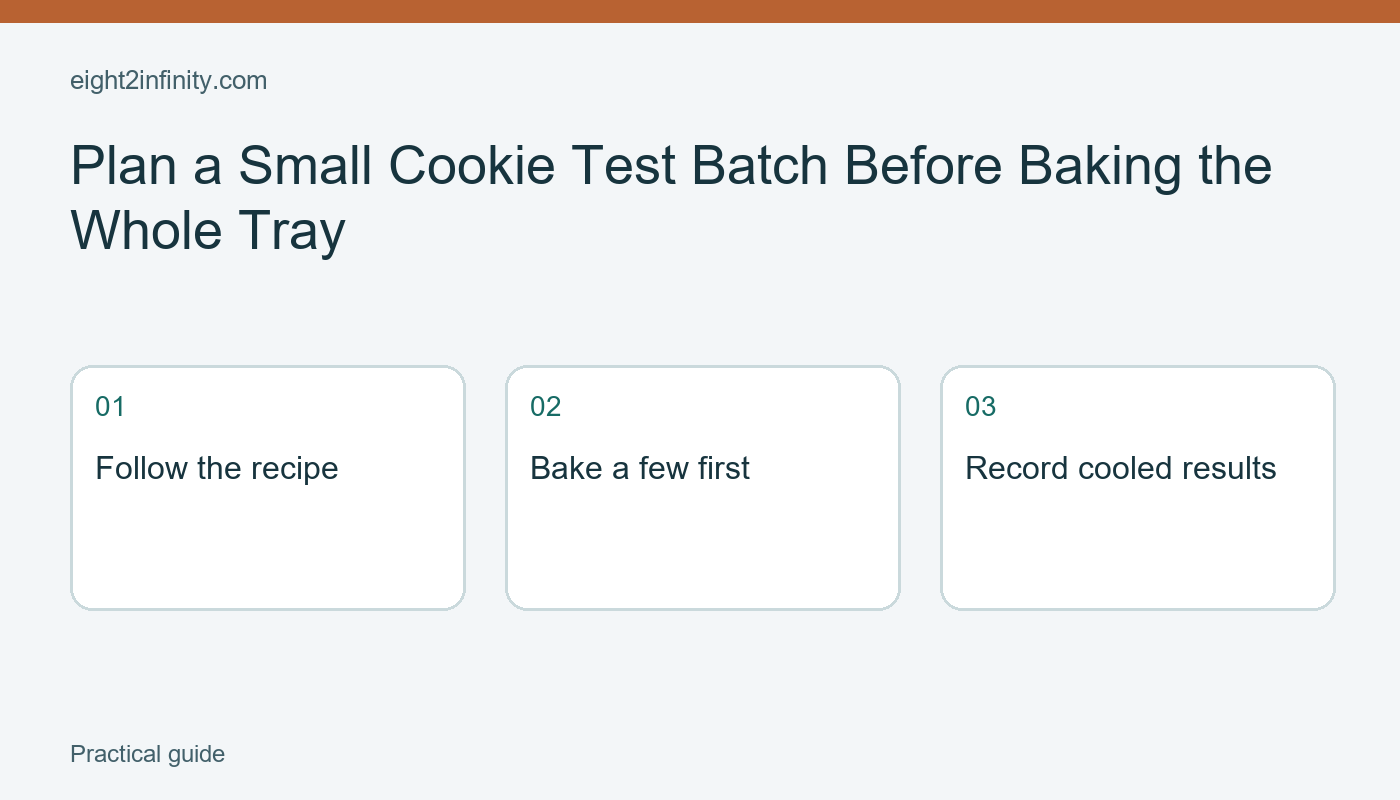
Bake a few cookies first, let them cool as the recipe directs, and inspect the result before portioning the rest of the dough. Keep the recipe, portion size, tray, and oven settings consistent. The small batch gives you a chance to notice excessive spreading, uneven sizing, or a timing issue while most of the dough is still unbaked. It is a practical check rather than a guarantee that every recipe will behave identically.
Use a reliable recipe with clear baking and cooling instructions. This guide describes how to organize the trial; it does not supply a new cookie formula or claim that a particular batch was tested in our kitchen. King Arthur Baking recommends trying a few cookies before committing the full batch. The observation sheet and fictional example below help you apply that idea without changing several variables at once.
Read the complete recipe first
Identify the specified ingredients, portion size, oven temperature, tray preparation, chilling requirement, baking interval, and cooling instructions. Write down anything you intend to substitute. If the recipe asks for chilled dough and you skip that step, the trial no longer represents the stated method. A test is most informative when you know which conditions it actually represents.
Prepare only the equipment needed for the recipe. Use suitable oven mitts and keep the work area clear for the hot tray. Do not taste raw dough, including dough made without eggs, because raw flour can carry harmful germs. FDA guidance advises following cooking directions and cleaning hands, tools, and work surfaces after handling raw flour and dough.
Choose a time when you can stay nearby and pay attention to the recipe's checking interval. A test batch is not a reason to leave the oven unattended while preparing several unrelated dishes. Keeping the trial simple also makes the notes more useful: you can identify which setting, tray, and dough state produced the result you are evaluating.
Make the first portions comparable
Follow the recipe's portion guidance. If it specifies a weight, use a scale. If it specifies a scoop or measured spoon, use that measure consistently. Place only a few portions on the prepared tray with the spacing the recipe recommends. Do not crowd them together to imitate a full batch if that prevents you from seeing how each portion spreads.
Record the tray type and whether the dough was used directly from a specified chilling step. An invented note might read: Trial A, recipe portions followed, three cookies, light metal tray, parchment as directed, chilled dough. This note describes the setup without claiming that one tray material or liner is correct for every recipe. Use the recipe's requirements as the starting point.
Set the oven to the recipe's specified temperature and allow it to preheat as directed. Place the tray on the recommended rack. Start a timer when the tray goes in. Avoid changing the temperature during the trial just because the first few minutes look uneventful. You need a clear baseline before you can interpret a difference or decide whether the recipe's checking instructions need closer attention.
Observe without inventing a universal timing rule
Check the cookies at the point the recipe recommends and use its stated doneness cues. Different cookie styles can have different intended textures and appearances. A darker edge may be appropriate for one recipe and excessive for another. This article does not prescribe a single colour or minute count that makes every cookie done.
Follow the specified cooling process before evaluating texture. A cookie can change as it cools, so comparing one immediately off the tray with another after a long rest is not a fair comparison. Record when you assessed it. If the recipe's instructions are unclear or the result seems underbaked, do not taste uncertain dough to decide whether it is ready.
For the fictional observation sheet, record spread, shape, texture after cooling, and any uneven browning. Use concrete descriptions such as the three cookies touched or the portions differed visibly in diameter. Avoid vague comments such as bad batch. A useful note points to something you can check in the setup instead of turning one disappointing result into a broad conclusion about your baking ability.
Change one relevant factor at a time
If the portions were inconsistent, correct that before altering the recipe. If the dough was supposed to be chilled, follow the stated chilling step before testing again. If you used an unlisted substitution, consider returning to the specified ingredient. Record the change so Trial B can be compared with Trial A. Multiple simultaneous changes make it difficult to know what mattered.
Keep the remaining dough according to the recipe's storage and handling instructions while you assess the sample. A test batch adds time, which can matter for recipes sensitive to temperature or resting. Do not leave perishable dough out indefinitely. If a second trial is needed, use a suitably prepared tray and the same defined portion size so the comparison remains meaningful.
Make the next batch easier
Once the result meets the recipe's expectations, continue with the remaining dough and keep the successful setup. Save a short dated note with the recipe name and actual observations. Our digital-scale guide can help you make portion measurements repeatable. For your next batch, which detail would make the biggest improvement to your notes: portion size, chilling state, tray setup, or the point at which you assessed the cooled cookie?