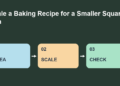
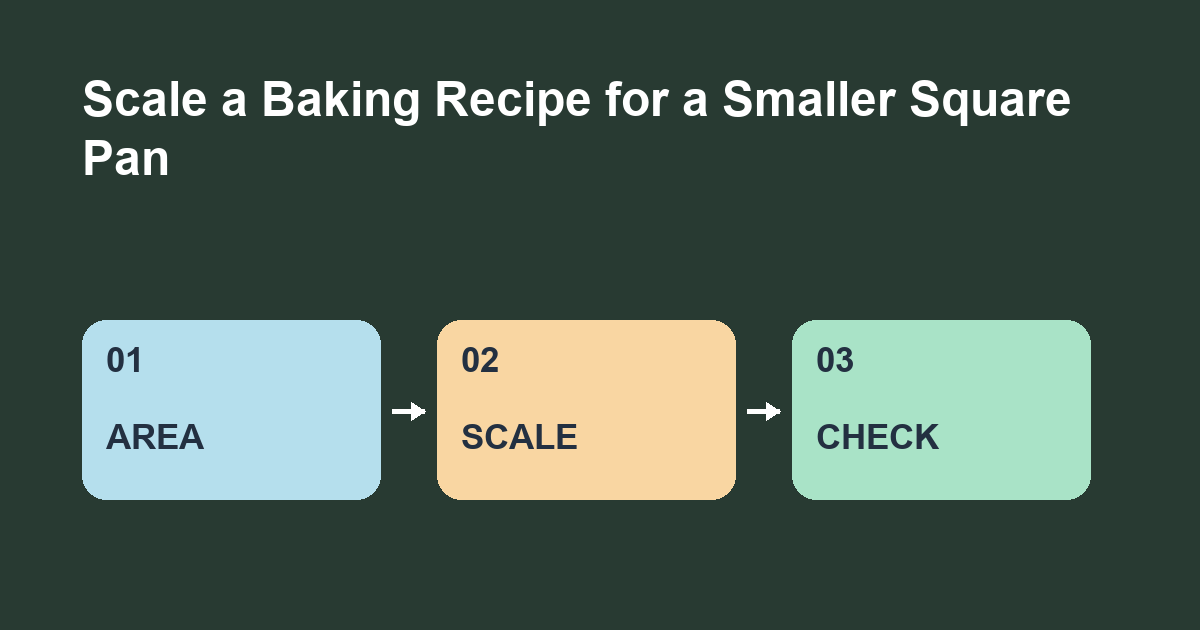
Divide the area of the smaller pan by the area of the original pan, then multiply the ingredient amounts by that ratio. This gives approximately the same batter depth when the pans have comparable shapes and usable depths.
Calculate with inside dimensions
Suppose a simple bar recipe uses a 9-inch square pan and your available pan is 8 inches square. The original base area is 81 square inches and the new base area is 64. The ratio is about 0.79. For 150 grams of sugar, multiply by 64 and divide by 81 to get roughly 119 grams. A 100 gram ingredient becomes roughly 79 grams.
Prepare the scaled batch
Write a new ingredient list before mixing so you do not scale one ingredient twice. If a scaled amount includes a fractional egg, beat the egg first and weigh the portion needed using the recipe's reference weight. Keep a record of rounding, especially for small quantities. Check the pan depth and leave the headroom appropriate to the original recipe. Use the recipe's doneness cues and monitor the batch as it bakes because timing can vary with the pan and oven.
Check the arithmetic
A recipe for an 8-inch square pan uses 160 grams of flour. If you move to a 6-inch square pan, what amount follows from the area ratio? The ratio is 36 divided by 64, so the answer is 90 grams.