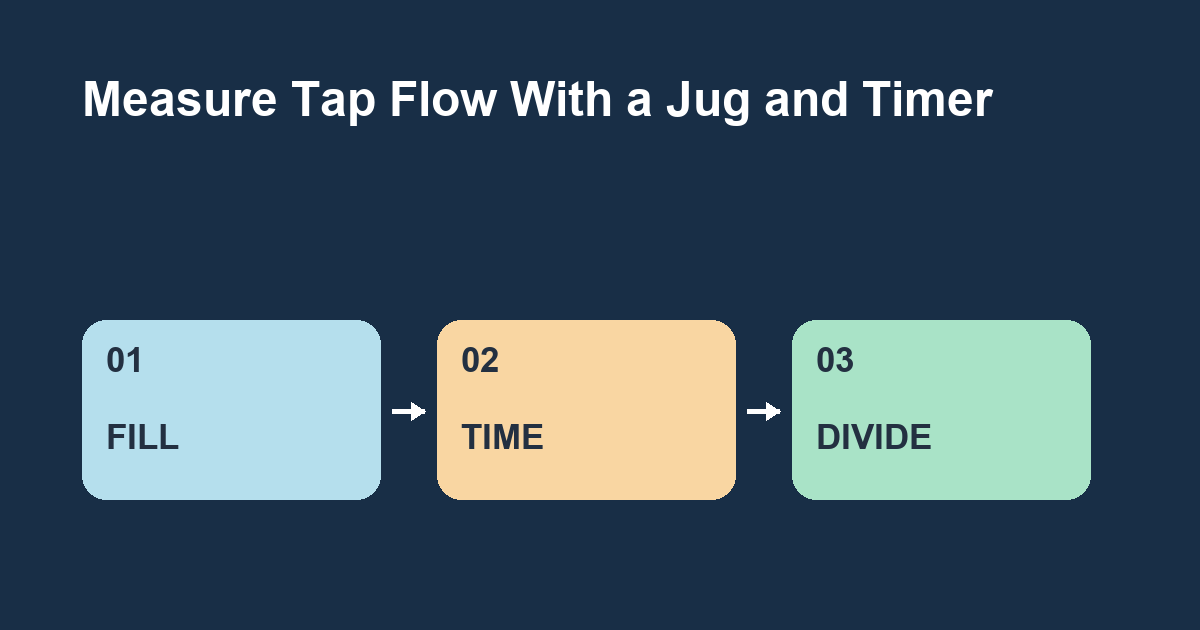
Collect water for a measured interval and divide the volume by the elapsed time to estimate the flow at that tap setting. A kitchen measuring jug and a timer are enough for a household comparison.
Keep the measurement repeatable
Place a stable jug in the sink and use cold water. Open the tap to the position you want to measure and let the stream settle. Move the jug under it and start timing. Stop before the jug fills to the rim. Read the volume at eye level on a flat surface and record the elapsed seconds.
Convert and compare
If you collect 750 milliliters in 10 seconds, multiply by six for 4,500 milliliters per minute, or 4.5 liters per minute. Repeat at the same handle position and compare your numbers. If they differ widely, check when you started the timer or use a larger jug. A single household reading describes the conditions during your check. EPA fixture ratings use their own test conditions, so a jug reading serves as a practical comparison.
Try one small change
Check a second handle position and label both readings. Which position gives a steady stream for rinsing while using less water in the same ten seconds? Save the collected water for another household use if appropriate.