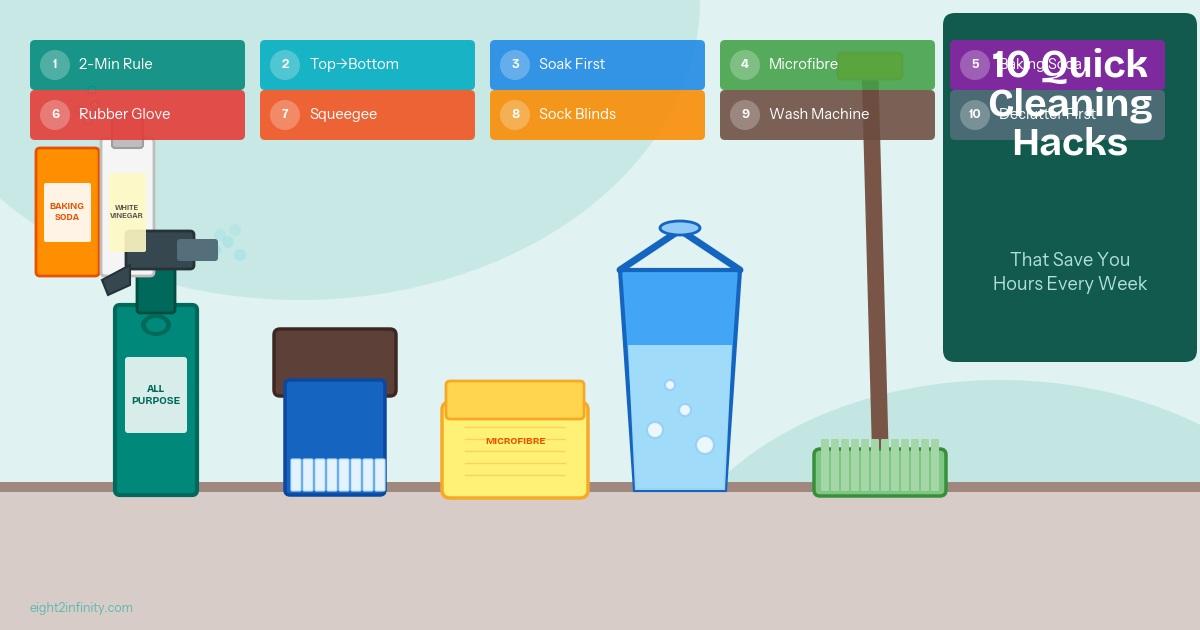
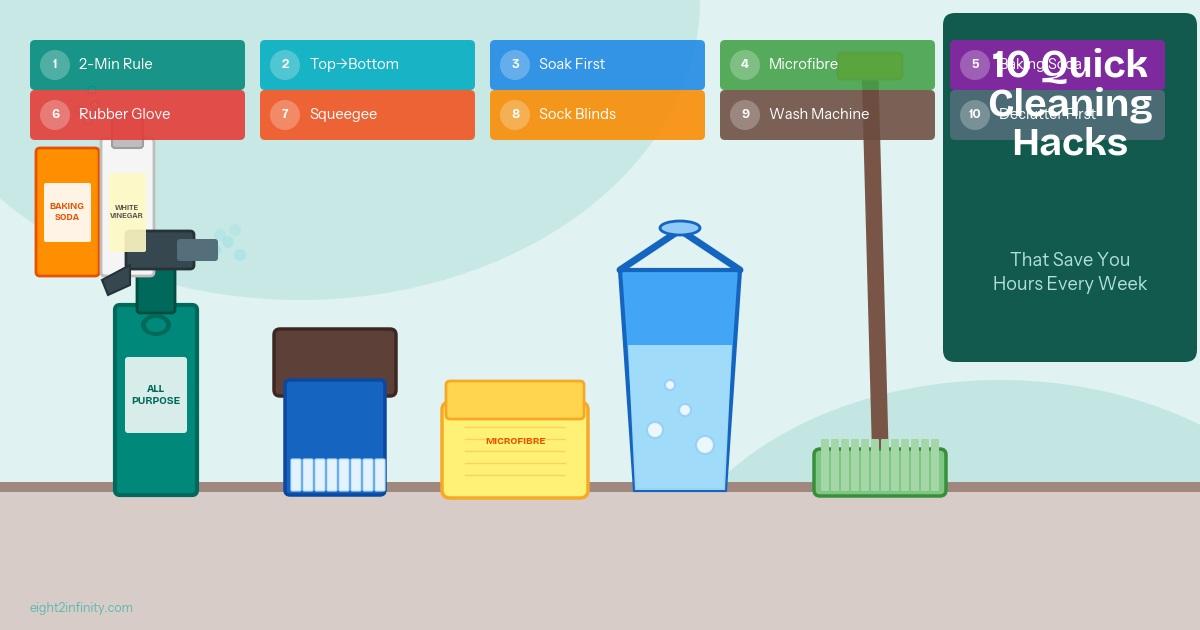
10 Quick Cleaning Hacks That Save You Hours Every Week
Slug: quick-cleaning-hacks-save-hoursCategory: Practical Living > CleaningKeyword: quick cleaning hacks save timeExcerpt: Work smarter, not harder. These 10 quick cleaning hacks cut your weekly housework in half — with tips that actually work for real homes and busy lives.
Why Cleaning Smarter Beats Cleaning Harder
Most people approach cleaning the same way every week: a long, exhausting block of time spent on everything at once. But professional cleaners and organised households share a different philosophy — clean little and often, use the right tools, and let products do the heavy lifting. The result is a consistently tidy home with far less effort invested per week.
These ten hacks are used by people who keep genuinely clean homes without spending their weekends doing it. None require expensive equipment or special skills.
The 10 Hacks
1. The Two-Minute Rule
If a cleaning task takes less than two minutes, do it immediately rather than saving it for "cleaning day." Wiping down the hob after cooking, rinsing a mug straight after use, and hanging up clothes as you take them off prevents the small jobs compounding into an overwhelming backlog. This single habit, applied consistently, dramatically reduces total cleaning time.
2. Clean Top to Bottom, Left to Right
Always dust and wipe from the highest point in a room downwards, and work systematically around the room. Dust falls. If you clean the floor first and then the shelves, you'll be cleaning the floor twice. Professional cleaners follow this rule without exception — it cuts time and ensures nothing gets missed.
3. Let Products Sit and Work for You
Apply bathroom cleaner, oven spray, or descaler at the start of your cleaning session, then leave it to work while you tackle other tasks. Return to wipe it away at the end. Instead of scrubbing for ten minutes, you spend thirty seconds. This is the most underused time-saving technique in home cleaning — most people wipe products away immediately before the chemistry has had any effect.
4. Microfibre Cloths Over Paper Towels
Microfibre cloths clean glass, surfaces, and appliances with water alone — no spray required. They're reusable, dry quickly, and pick up bacteria and dust that cotton cloths push around. Keep a stack in the kitchen and bathroom. Switching to microfibre typically cuts both cleaning product spend and the time spent wiping surfaces by around 30%.
5. The Baking Soda and Vinegar Combination
Sprinkle baking soda on a wet sink, bath, or tile grout, then spray with white vinegar. The fizzing reaction breaks down limescale, soap scum, and grime without abrasive scrubbing. Leave for five minutes and rinse. For shower heads, fill a bag with white vinegar, seal it around the head with a rubber band, leave overnight, and rinse in the morning — no tools or descaler required.
6. Rubber Gloves for Pet Hair
Dampen a rubber glove and run your hand over sofas, car seats, or fabric chairs. Pet hair clumps together and lifts off in seconds. This works vastly better than lint rollers or vacuuming alone and takes under a minute per piece of furniture.
7. A Squeegee in the Shower
Thirty seconds with a shower squeegee after every shower prevents soap scum and limescale building up on glass and tiles. Hang it inside the shower so it's always to hand. People who do this virtually never need to deep-clean their shower — the surface never gets the chance to build up.
8. The Sock Hack for Dusty Blinds
Put an old sock over your hand, spray lightly with a diluted all-purpose cleaner, and run your fingers along each slat of Venetian or faux-wood blinds. You clean both sides simultaneously and the sock traps the dust rather than spreading it. A set of blinds that would take twenty minutes with a cloth takes three minutes this way.
9. Clean the Washing Machine Monthly
Run an empty hot wash with two tablespoons of citric acid (or a dedicated machine cleaner) once a month. This prevents the musty smell that builds in drum seals and detergent drawers, and keeps your machine working efficiently. Clean the rubber seal weekly by wiping it with a damp cloth — mould accumulates here before anywhere else.
10. Declutter Before You Clean
You cannot clean around clutter efficiently. A five-minute declutter pass — returning items to their home, binning rubbish, putting washing in the basket — before you start cleaning means every subsequent step takes half the time. This single habit change typically saves 20–30 minutes per cleaning session.
Building a Faster Weekly Routine
Combine these hacks into a system: apply products first (hack 3), do your two-minute tasks daily (hack 1), top-to-bottom in each room (hack 2), declutter before the main clean (hack 10), and tackle specific problems with the right tools (hacks 4–9). Most people who adopt this approach reduce their weekly cleaning time from two or three hours to under 45 minutes.
For more home efficiency tips, visit our Practical Living guides. And if your home office needs attention too, read our piece on decluttering your home office.
Frequently Asked Questions
How often should I clean my home?
High-traffic areas (kitchen surfaces, bathroom sinks) benefit from daily wiping. Full cleaning of bathrooms and vacuuming should be done weekly. Deep cleaning tasks like oven cleaning, descaling appliances, and washing windows can be done monthly or quarterly.
What's the single most effective cleaning hack?
Letting cleaning products sit and work before wiping — hack 3. Most people waste significant time and elbow grease scrubbing surfaces that a five-minute product dwell time would sort effortlessly.
How do I keep a home clean with kids?
Focus on containment: give everything a home, make tidying up a five-minute daily habit for the whole family, use washable covers on sofas and chairs, and accept that some mess is temporary. The two-minute rule (hack 1) works especially well with children when framed as a quick team game.
Are natural cleaning products as effective as chemical ones?
For many everyday tasks, yes. Baking soda and white vinegar tackle most bathroom and kitchen cleaning jobs effectively. For deep disinfection or heavy grease, commercial cleaners tend to be faster. The best approach is using the right product for the job rather than defaulting to one type for everything.
What cleaning tools are worth buying?
A quality microfibre cloth set, a shower squeegee, a rubber-bristle broom (picks up pet hair and fine debris better than traditional bristles), and a steam cleaner for floors and tile grout are the highest-return purchases for most households.