

Short answer: Pantry moths often arrive inside dry goods. This simple checklist helps you stop infestations early and protect flour, cereal, rice, nuts, and pet food.
Pantry moths rarely show up because a kitchen is dirty. More often, they hitch a ride home in flour, cereal, rice, nuts, dried fruit, birdseed, or pet food, then multiply quietly until you see one fluttering near a cabinet door.
That is why prevention matters more than panic. If you build a few simple habits into how you buy, store, and rotate dry goods, you can avoid the full-cabinet cleanout that pantry pests usually force on people.
The goal is not to make your pantry perfect. The goal is to make it harder for moths to arrive, easier to spot them early, and much less likely that one contaminated package turns into a bigger kitchen problem.
Why pantry moths spread so easily
Pantry moths are frustrating because the visible adult is usually the late sign, not the first sign. Eggs or larvae may already be tucked into packaging seams, food dust, or forgotten corners by the time you notice a moth near the light.
Thin plastic, paper bags, and cardboard boxes are also weaker protection than many people assume. A package can look normal from the outside and still be the source of the issue, especially if it has been sitting for a while.
The smartest pantry moth prevention habits
Start at the grocery stage. Give flour, oats, cereal, birdseed, nuts, and other dry goods a quick inspection before they go into the pantry. If you buy in bulk or shop where products may have been stored for a long time, freezing riskier items for a few days can add a useful layer of protection.
Next, move vulnerable food into hard airtight containers. Glass jars and solid plastic bins make a real difference because they protect clean food and make it easier to notice if anything looks off.
Your prevention checklist
- Inspect high-risk packages before storage
- Freeze flour, grains, or seeds when practical
- Transfer dry goods to hard sealed containers
- Label containers so older food gets used first
- Keep only the amount you can rotate in a reasonable time
What to clean and how often
Crumbs, grain dust, and forgotten packets create hiding places. A weekly shelf wipe is usually enough for regular upkeep, and a more careful monthly check helps you catch trouble early before it spreads through multiple shelves.
Large bags of pet food and birdseed deserve extra attention because they are often opened repeatedly and stored for longer periods. If possible, transfer them into sealed bins right away instead of rolling the original bag closed and hoping for the best.
What to do if you already spotted one moth
Do not assume you need to throw out every single item immediately, but do act fast. Check nearby dry goods first, especially older open packages. Look for webbing, clumping, fine dust, or tiny larvae around the seams.
Discard anything clearly affected, vacuum shelf seams, wipe surfaces, and move safe items into hard containers. If moths keep reappearing after cleanup, the missing source is often a forgotten bag hidden in the back of the pantry.
How to keep the problem from returning
Pantry moth prevention works best when it becomes part of normal kitchen maintenance. A five-minute monthly check is far easier than repeating a full cleanout every few months.
If your home stores a lot of dry goods, build a habit around purchase dates, visible limits, and regular rotation. Most repeat infestations happen because questionable items stay around too long or vulnerable foods remain in weak packaging.
Quick recap
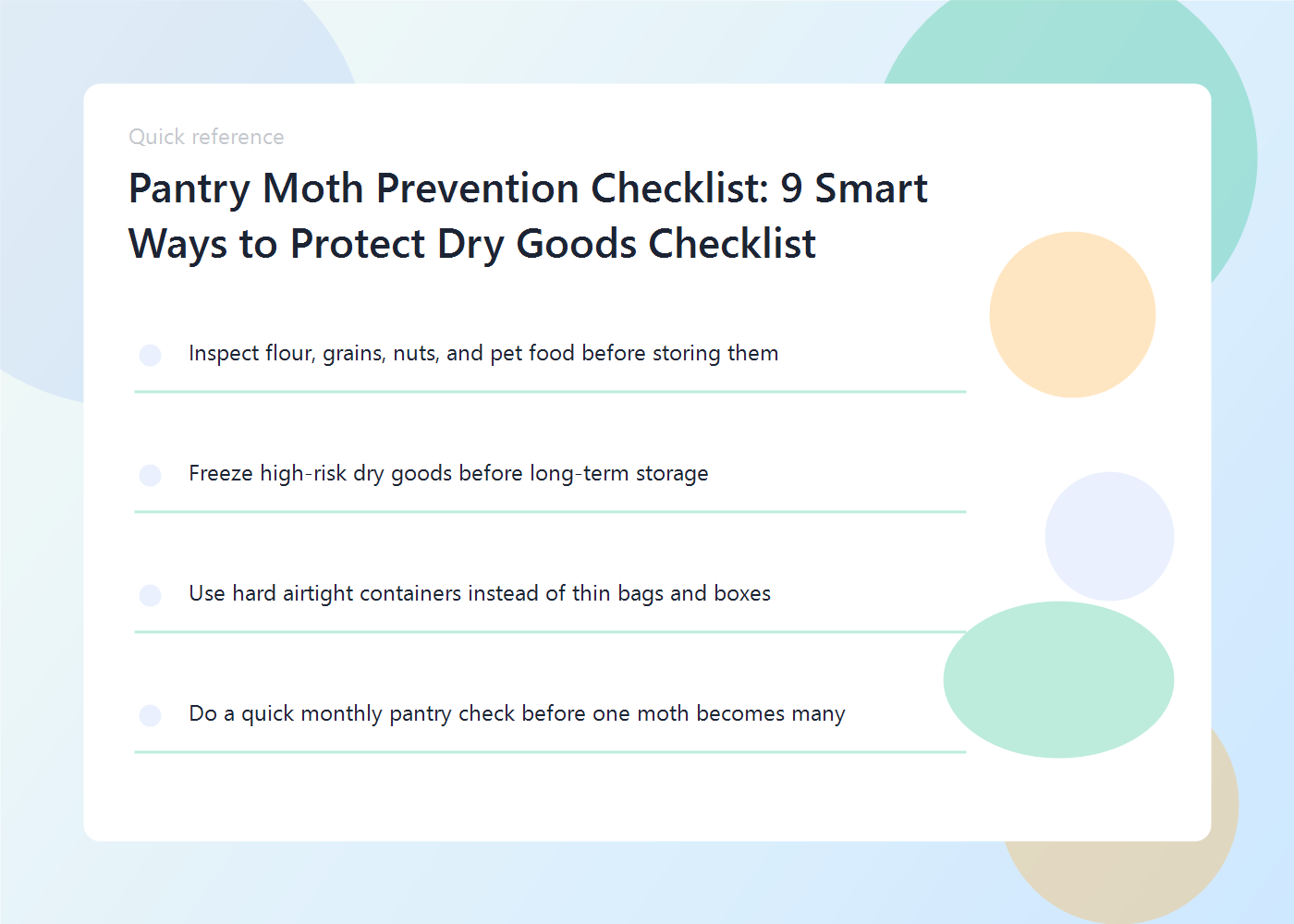
- Inspect flour, grains, nuts, and pet food before storing them
- Freeze high-risk dry goods before long-term storage
- Use hard airtight containers instead of thin bags and boxes
- Do a quick monthly pantry check before one moth becomes many
FAQ
Can pantry moths get into sealed food?
They often begin in food that was already contaminated or in packaging that is easier to penetrate than people expect. Hard containers are much safer than paper or thin plastic.
Should I throw out every pantry item if I see one moth?
Not always. Inspect carefully and discard anything with webbing, larvae, clumping, or damage. Protected unopened items in hard containers may still be fine.
How often should I check the pantry for moths?
A quick weekly wipe and a more careful monthly inspection are enough for most homes.
Related reads on Eight2Infinity
Why this topic matters right now
- Extension and home-pest guidance in 2026 still points to inspection, freezing, sealed storage, and fast cleanup as the most practical pantry-moth prevention steps.
- Search demand stays steady because people usually notice pantry moths only after dry goods have already been compromised.