
Short answer: A good summer boredom list gives kids real options before they reach for a device. Use this plan to lower whining and add easy activity momentum.
Summer boredom is not really the problem. The problem is what boredom turns into when kids have no visible next step except asking for a screen, rejecting every idea you say out loud, and spiraling the mood of the whole house by 10 a.m.
That is why the best boredom list is not a giant printable that looks good on Pinterest and then gets ignored. It is a short, usable system that gives children enough choices to feel ownership without flooding them with twenty-seven fancy crafts no one will actually set up.
When the list works, it does two things at once. It lowers the constant ‘What can I do?’ loop, and it helps kids move from passive waiting into choosing, trying, helping, building, or playing.
Important: Every child and family situation is different. Use this guidance as a practical starting point and seek professional support when safety or mental health concerns are involved.
Why boredom lists work better than repeated suggestions
When adults keep supplying ideas out loud, children can fall into a habit of rejecting each one without ever owning the next move. A visible list changes the energy because the child is choosing from known options instead of evaluating a live performance from a tired parent.
This is especially useful in summer when routines loosen and the day has too many open hours. A simple system gives the day shape without turning every afternoon into a camp schedule.
Build four kinds of options, not one giant random list
The easiest boredom lists are grouped by type: quick solo options, outside play, creative activities, and helpful jobs. That structure matters because a child who does not want to paint might still happily do a water challenge, a scavenger hunt, or a snack-prep task.
Children also need different energy levels reflected in the list. Some moments call for movement. Others call for a quiet reset. A good list should help with both.
A practical boredom list template
- Quick choices: drawing prompt, sticker scene, puzzle, card game
- Outside choices: water play, chalk track, bug hunt, scooter loop
- Creative choices: build a fort, make a mini menu, create a comic
- Helpful choices: sort laundry, wipe the table, prep fruit, water plants
- Calm choices: audiobooks, reading basket, rest corner, journal page
How to make the list usable for different ages
Young children usually do better with visual prompts or a smaller list. Too many options can feel as paralyzing as no options at all. Older children often like a challenge-style list where they can check items off over a week.
Shared activities also help when siblings are involved. A list that includes at least a few things they can do together reduces the argument that no activity works unless an adult fully joins in.
What to do when kids still say everything sounds boring
That reaction does not always mean the list failed. Sometimes it means the child wants help getting started, is tired, or is hoping a complaint will reopen the device conversation. In those moments, narrowing the choice can work better than debating it.
Instead of offering ten new ideas, try two clear paths: pick one outside option or one helping job first, then choose something creative after. Boundaries plus choice usually land better than endless brainstorming.
How this supports a calmer summer routine
A boredom list works best when it is part of a larger rhythm. Low-tech mornings, snack times, outside anchors, quiet reset periods, and a visible activity list all support each other.
The goal is not to remove boredom from childhood. Boredom can be useful. The goal is to make it easier for boredom to turn into initiative instead of a daily family fight.
Quick recap
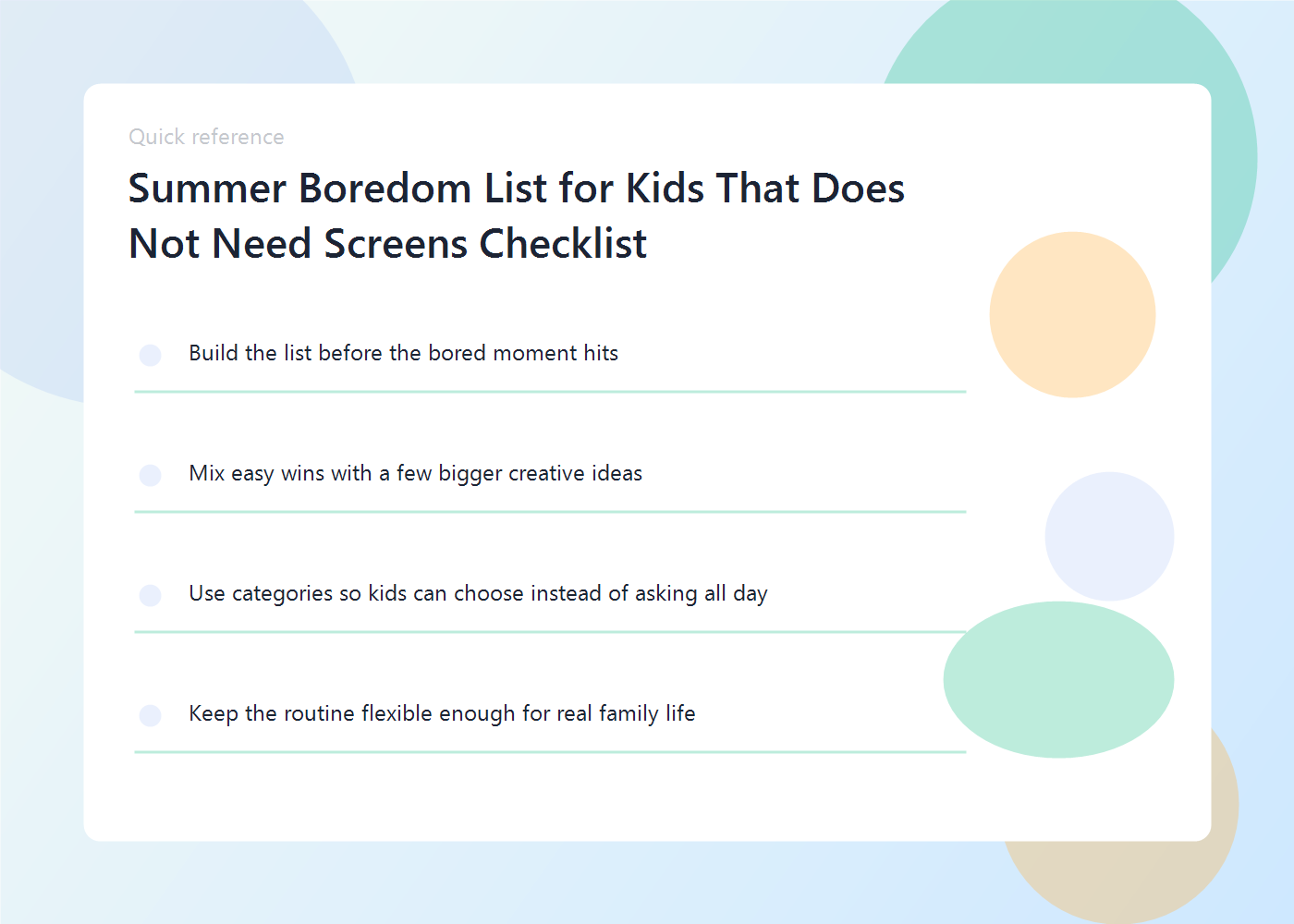
- Build the list before the bored moment hits
- Mix easy wins with a few bigger creative ideas
- Use categories so kids can choose instead of asking all day
- Keep the routine flexible enough for real family life
FAQ
Should I put chores on a boredom list?
Yes, if they are simple and clearly explained. Helpful jobs can be grounding, especially when they are not framed only as punishment.
How many activities should be on the list?
Enough to offer variety, but not so many that kids freeze. Many families do well with 12 to 20 rotating options.
What if my child still wants screens first?
Keep the screen rule separate and predictable. The list works best when it is not negotiated in the same moment.
Related reads on Eight2Infinity
- A Summer Screen Time Routine That Kids Won’t Fight All Day
- Toddler Home Safety Checklist for Busy Parents
Why this topic matters right now
- Recent children”’s-hospital summer activity resources continue to favor simple indoor, outdoor, creative, and helping tasks over expensive entertainment-heavy plans.
- Search demand stays strong in late spring because parents need realistic options before summer days lose their structure.