
Short answer: Morning light is a simple wellness habit that can support alertness by day and better sleep timing at night. Keep the routine practical and low-pressure.
A lot of sleep advice becomes so complicated that people stop trying. Buy this device, track that metric, fix ten habits at once, and maybe then you will feel normal again. Morning light is useful partly because it is simpler than that.
The point is not that sunlight magically solves every sleep issue. The point is that your body responds to time cues, and light is one of the strongest ones. Getting outside or near strong natural light early in the day can help reinforce that it is time to be awake, alert, and moving forward.
That makes this one of the rare wellness habits that is both low-tech and genuinely practical. It is easy to start, easy to pair with other routines, and helpful enough that many people notice the difference when they stop doing it.
Important: This article is for general wellness education only and is not medical advice, diagnosis, or treatment.
Why morning light matters more than people think
The body does not run only on willpower. It responds to signals that help regulate alertness and sleep timing, and natural light is one of the clearest ones. That is why mornings spent entirely in dim indoor light can feel oddly sticky for some people.
Morning light helps anchor the start of the day. Over time, that can support a steadier rhythm between daytime wakefulness and nighttime sleepiness.
What the habit can realistically help with
Think of morning sunlight as support, not as a cure-all. It may help you feel more awake earlier, create a cleaner start to the day, and make it easier for your sleep schedule to stay consistent.
It is especially useful when you tend to wake up groggy, drift through the morning indoors, or let your sleep schedule slide later and later.
A simple way to do it
- Get outside or into bright natural light soon after waking when possible
- Stay there long enough to become mentally awake, not just to check a message
- Pair it with a short walk, gentle stretch, or water routine
- Repeat most days so the cue stays familiar
- Keep expectations modest but consistent
What makes the habit easier to keep
Attaching the routine to something you already do is the biggest win. Step outside with coffee, walk once around the block, sit on the balcony before opening work apps, or take a brief daylight break before the house fully wakes up.
This habit works because it is small enough to survive real life. If it only counts when you take a perfect twenty-minute sunrise walk every day, you will probably stop.
Where people overcomplicate it
Many people get stuck trying to optimize the exact number of minutes, exact timing, or exact brightness. That can matter in clinical contexts, but for general wellness, the more important step is usually doing the habit at all.
Another mistake is expecting it to erase sleep debt, stress, shift work, late-night screen habits, or underlying sleep disorders by itself. Morning light helps. It does not replace the bigger picture.
When to be more cautious
If you are dealing with severe insomnia, mood instability, eye-related sensitivity, or a medical condition that affects sleep, individualized care matters more than internet habit advice. This article is for general wellness education only and is not medical advice.
Still, for many people, morning sunlight is one of the most practical starting habits because it nudges the day in the right direction without requiring expensive tools or dramatic lifestyle overhauls.
Quick recap
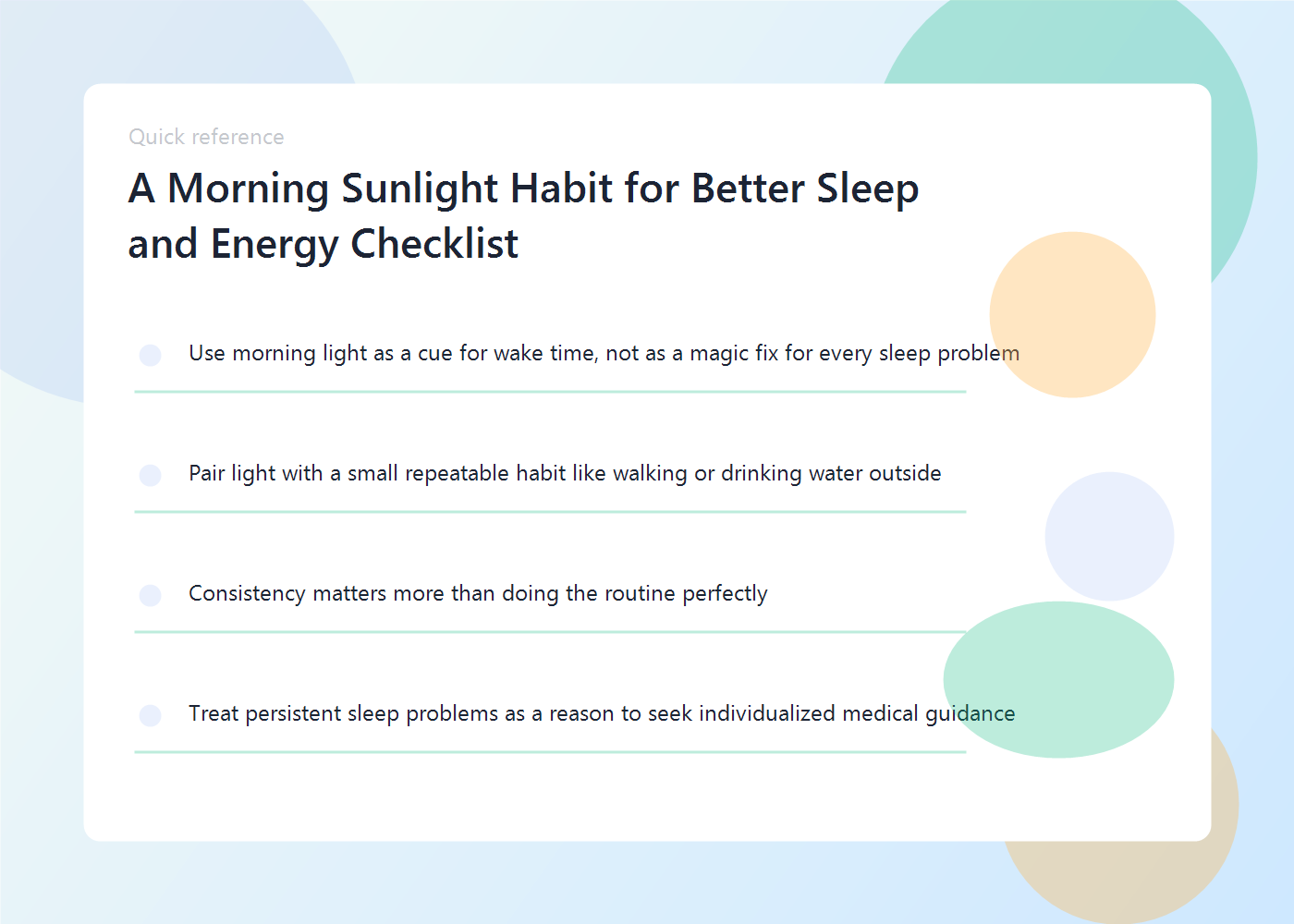
- Use morning light as a cue for wake time, not as a magic fix for every sleep problem
- Pair light with a small repeatable habit like walking or drinking water outside
- Consistency matters more than doing the routine perfectly
- Treat persistent sleep problems as a reason to seek individualized medical guidance
FAQ
How long should I stay in morning light?
There is no single magic number for everyone. The more important part is building a repeatable exposure routine rather than chasing perfect timing.
Does this replace other sleep habits?
No. It works best alongside a reasonable sleep schedule, lower late-night stimulation, and other basic sleep-supportive habits.
What if I wake up before sunrise or work odd hours?
You may need a more personalized approach. Morning light is still useful when available, but your schedule may change how you apply general advice.
Related reads on Eight2Infinity
- The 10-Minute Walk After Meals: A Simple Habit That Helps More Than You Think
- How to Build a Walking Habit You Will Keep
Why this topic matters right now
- Current CDC sleep materials and circadian-rhythm guidance continue to support stable routines and morning light exposure as useful inputs for better sleep timing and alertness.
- Search demand stays high because people want low-cost habits that support sleep without turning every answer into a supplement or gadget.