
Short answer: New shoes should not destroy your day. Use these low-risk break-in steps to reduce friction, protect your feet, and know when the fit is wrong.
There is a difference between a normal break-in period and a shoe that is trying to ruin your week. A little stiffness can soften. A hard pressure point that keeps chewing the same part of your heel usually means you need a smarter plan or a different pair.
People often make the same mistake with new shoes: they wear them for a full day too early, then spend the rest of the week negotiating with blisters. A better approach is slower, more deliberate, and much less dramatic.
If you have diabetes, circulation issues, neuropathy, severe foot pain, or a foot condition that affects sensation or skin health, it is safer to get personalized advice from a qualified clinician rather than relying only on general shoe tips.
Why new shoes cause trouble
Blisters happen when friction, pressure, heat, and moisture team up on the same spot. New shoes are especially good at this because their shape has not adapted to your movement yet, and you have not learned where the danger points are.
Material matters too. Leather, stiff synthetics, structured heels, and strap placements can all create very different break-in patterns. The goal is not to force the shoe into submission overnight. It is to let your feet reveal the real pressure points before you commit.
This is also why fit matters more than hacks. If a shoe is dramatically narrow, lifts off the heel badly, or crushes your toes from the first try-on, a break-in trick will not magically turn it into your best pair.
The safest way to break in new shoes
Start indoors. Wear the shoes on a clean floor for short intervals so you can notice rubbing before damage happens. Twenty to thirty minutes is enough for the first session. If a problem shows up fast, that is useful information.
Add protective layers early, not after the blister forms. Use socks that match the shoe type, friction balm, or heel patches in known hot spots. Prevention works better than trying to rescue already irritated skin.
Increase wear time gradually over several sessions. A structured loafer, boot, or sneaker may need multiple short wears before it is ready for commuting, errands, or an event that keeps you on your feet for hours.
A simple break-in progression
- Day 1: wear indoors for 20 to 30 minutes
- Day 2: repeat with socks or blister protection
- Day 3: take a short outdoor walk if the fit still feels promising
- Day 4 and beyond: extend wear time slowly
- Stop early if the same pressure point worsens each time
Smart tools that help and mistakes that do not
Thin performance socks, blister balm, moleskin-style protection, and shoe stretchers can all help in the right situation. A heel grip can reduce slippage, while a stretcher may help if one area feels slightly too tight rather than fundamentally wrong.
What tends to go wrong is impatience. People blast shoes with too much heat, soak materials that were not meant to be soaked, or wear painful pairs all day hoping the problem will disappear by force. That usually leaves you with hurt feet and still-untrustworthy shoes.
Use gentle methods first. Minor shaping can happen with repeated wear and controlled support. If the shoe still feels hostile after a few careful sessions, take that feedback seriously.
How to tell the fit is wrong
Some discomfort is temporary stiffness. But numb toes, a heel that will not stop slipping, arch pain that appears quickly, or a toe box that crowds your foot from the start usually points to fit problems, not break-in drama.
Pay attention to repeat patterns. If the exact same spot is getting rubbed raw despite different socks and shorter wear, the shoe may be cut wrong for your foot. The same is true if your gait changes because you are protecting one painful area.
It is better to return or rehome a pair early than to keep trying to justify money already spent. Comfortable style has a much better long-term return than stubborn style.
How to protect your feet while you test new pairs
Trim nails, keep skin dry, and choose the right socks for the shoe. Even a well-fitting pair can create friction if your socks slide or trap moisture badly. For open styles, a blister stick or low-profile protective patch can help.
Do not choose a high-stakes first outing. Weddings, long office days, airport runs, and city walks are terrible debut moments for untested shoes. Give yourself a low-risk trial where you can change pairs if needed.
Once a shoe proves itself, note what helped. The sock thickness, insole choice, or heel pad that worked for one style may save you time the next time you buy something similar.
Quick recap
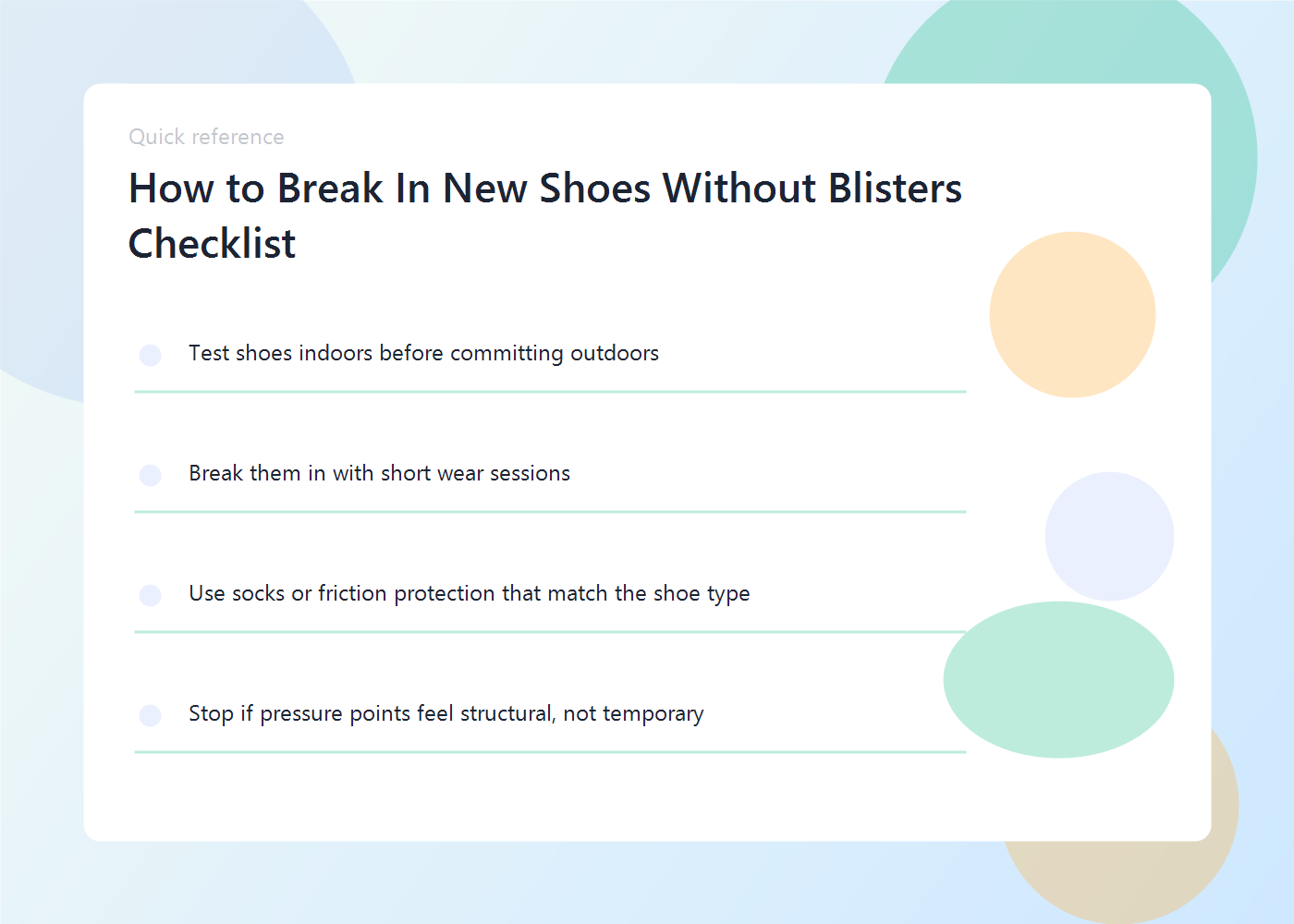
- Test shoes indoors before committing outdoors
- Break them in with short wear sessions
- Use socks or friction protection that match the shoe type
- Stop if pressure points feel structural, not temporary
FAQ
How long does it take to break in new shoes?
It depends on the material and fit, but several short sessions are usually safer than one long wear day.
Can I use heat to break in shoes faster?
Only very cautiously, because too much heat can damage materials or create a fit that changes unpredictably. Gentle wear and protection are safer first steps.
When should I stop trying and return the shoes?
If pressure points are severe, the heel slips badly, or the fit stays obviously wrong after a few short test sessions, returning them is often the smarter choice.
Related reads on Eight2Infinity
Why this topic matters right now
- Current footwear and podiatry-style guidance continues to focus on gradual wear, friction prevention, and recognizing when a shoe is simply the wrong fit.
- Search demand remains strong for pain-free shoe break-in help because comfort is now a major buying priority, not an afterthought.